
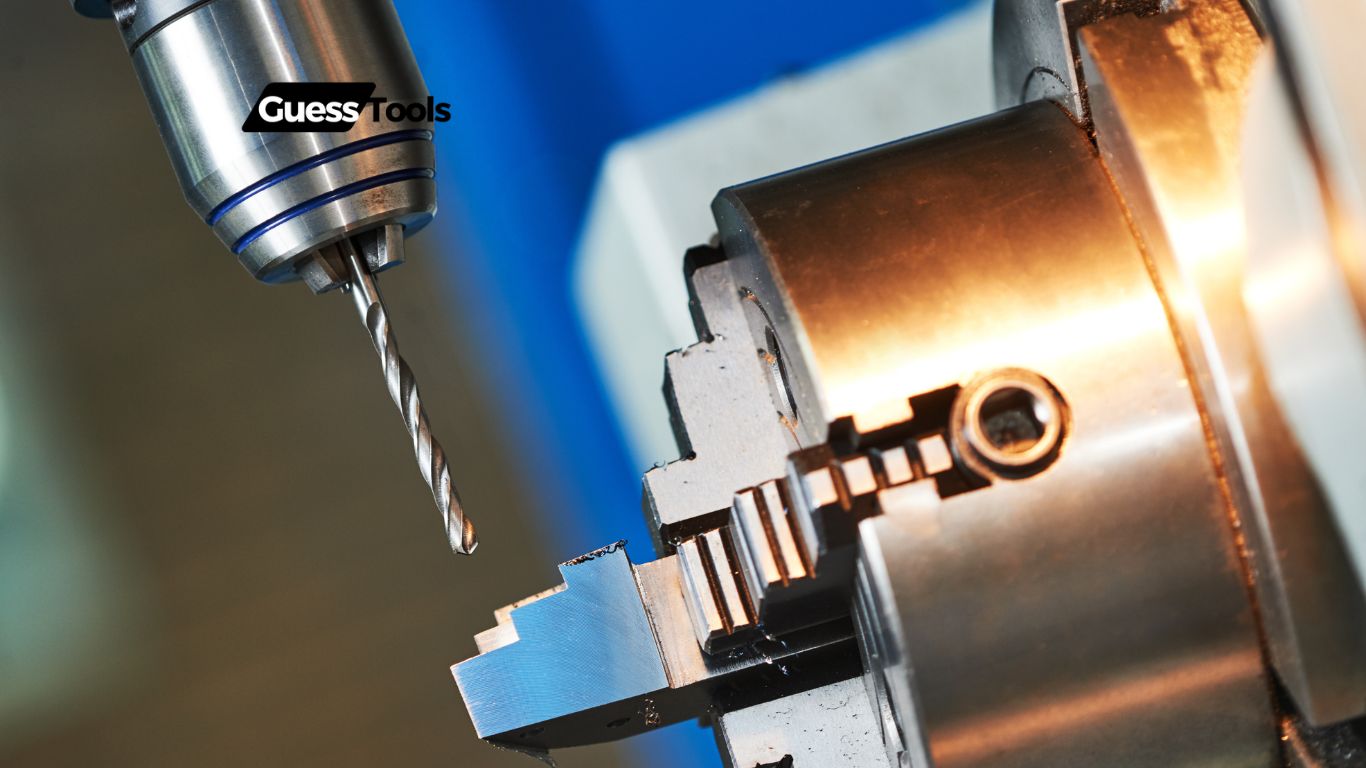
What is deep hole drilling? It’s a special way to make long, narrow holes in materials like metal. Deep hole drilling is defined by a depth-to-diameter ratio greater than 10:1, allowing for precise, straight holes with excellent surface finishes. This method differs from regular drilling because it needs special tools and techniques to keep the hole straight and accurate.
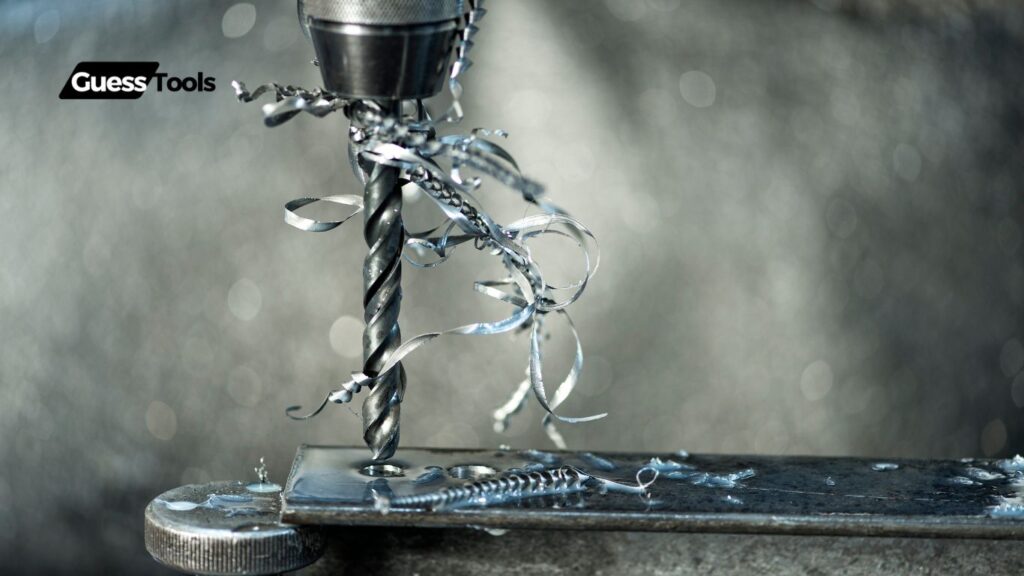
We see deep hole drilling used in many industries today. From gun barrels (where it began) to aerospace parts, automotive components, and medical equipment. What makes this process unique is how kylande smörjmedel måste pumpas till skäreggarna under högt tryck. Detta hjälper till att kyla borren och smörja kontaktytorna mellan arbetsstycket och skärverktyget.
När du behöver mycket exakta, repeterbara hål med överlägsen finish, är djuphålsborrning rätt väg att gå. Den erbjuder precision och effektivitet som standardborrmetoder inte kan matcha för de utmanande projekt som kräver långa, smala hål. Olika typer av tekniker för djuphålsborrning finns, var och en lämpad för specifika applikationer och material.
Typer av tekniker för djuphålsborrning
Djupa hålsborrning finns i flera former, var och en med sina egna fördelar för specifika applikationer. Dessa tekniker har förfinats under decennier för att skapa exakta hål med höga förhållanden mellan djup och diameter.
BTA (Boring And Trepanning Association) Drilling
BTA drilling is perfect for larger diameter holes, typically ranging from 0.8 to 24 inches. Unlike other methods, the kylvätskas through the gap between the tool and workpiece, then exits with chips through the center of the drill.
What makes BTA special? The cutting head attaches to a hollow boring bar with a single point. This design allows for:
- Högre Materialborttagningshastigheter than gun drilling
- Better straightness in deep holes
- Improved surface finish quality
- Capability to drill holes with depth-to-diameter ratios up to 100:1
The BTA process uses external coolant delivery, which helps flush chips efficiently and prevents them from scratching the newly formed hole surface.
Gun Drilling
Gun drilling is named after its original use in making gun barrels. It’s ideal for smaller diameter holes, usually between 0.08 and 1.25 inches.
How does it work? A gun drill has a single cutting edge with internal coolant channels. The coolant flows through the tool and exits near the cutting edge, helping to:
- Clear chips away from the cutting zone
- Cool the drill bit during operation
- Lubricate the cutting process
- Achieve depth-to-diameter ratios of 20:1 or greater
We find gun drilling particularly useful for creating precise, straight holes in long workpieces. The method excels in applications requiring tight tolerances and excellent surface finish.
Comparison Between Techniques
When choosing between these methods, several factors come into play:
| Särdrag | BTA Drilling | Gun Drilling |
|---|---|---|
| Diameter Range | 0.8-24 inches | 0.08-1.25 inches |
| Depth Capability | Up to 100:1 ratio | Up to 20:1 ratio |
| Chip Removal | Through center of drill | External V-groove |
| Coolant Flow | External to internal | Internal to external |
| Production Speed | Faster for large holes | Better for small diameters |
Material hardness also affects your choice. Gun drilling works well with harder materials, while BTA drilling handles softer materials more efficiently.
Cost considerations matter too. BTA systems typically require more expensive equipment but can achieve higher production rates for larger holes.
Applikationer över hela branscher

Deep hole drilling technology has found its way into numerous sectors, transforming manufacturing processes across the industrial landscape. These specialized drilling techniques solve unique challenges that conventional drilling methods simply can’t handle.
Bil
In the automotive industry, djuphålsborrning plays a crucial role in creating engine components that require precision and durability. We commonly see this technique used for:
- Engine blocks and cylinder heads
- Fuel injection systems
- Transmission shafts
- Crankshafts and camshafts
These parts often need holes with depth-to-diameter ratios exceeding 10:1 while maintaining tight tolerances. For example, oil galleries in engine blocks require perfectly straight passages to ensure proper lubrication under high pressures and temperatures.
The process helps car manufacturers produce reliable parts that can withstand the stress of daily operation. With improved surface finishes that enhance chip removal, these components last longer and perform better.
Flyg och rymd
The aerospace sector relies heavily on deep hole drilling for critical components where failure isn’t an option. We find this technique essential for:
- Hydraulic systems in landing gear
- Engine turbine shafts
- Structural components in wings and fuselage
- Fuel delivery systems
These applications demand extreme precision as safety is paramount in aircraft manufacturing. Deep hole drilling allows us to create cooling channels in turbine blades that prevent overheating during flight.
The ability to drill long, straight holes through tough materials like titanium and high-temperature alloys makes this process invaluable. Aerospace engineers appreciate how these techniques maintain tight tolerances even when working with difficult-to-machine materials.
Energy Sector
In the oil and gas industry, deep hole drilling techniques prove essential for both equipment manufacturing and extraction processes. We see widespread applications in:
- Drilling equipment components
- Subsea valves and manifolds
- Heat exchangers
- Hydraulic cylinders for heavy machinery
The process offers exceptional depth-to-diameter ratios in long workpieces without compromising wall thickness or roundness accuracy. This is crucial when creating boreholes for oil and gas extraction that must withstand extreme pressures.
In power generation, turbine shafts require precisely drilled holes to maintain balance during high-speed rotation. The renewable energy sector also benefits from these techniques in manufacturing specialized components for wind turbines and hydroelectric systems.
Medicinsk
Medical device manufacturing requires the highest levels of precision, making deep hole drilling an ideal process. We commonly utilize this technique for:
- Kirurgiska instrument
- Orthopedic implants
- Dental equipment
- Drug delivery devices
The medical field demands components with excellent surface finishes to prevent contamination and ensure patient safety. Deep hole drilling delivers the smooth, burr-free holes needed for these critical applications.
Bone screws and plates require precise holes with specific surface characteristics to promote healing. The ability to create small diameter holes with exceptional depth makes this process perfect for manufacturing specialized instruments used in minimally invasive surgeries.
Case Studies Showing Real-World Applications
Automotive Fuel Injection Systems A major engine manufacturer needed to drill 1.2mm diameter holes to a depth of 15mm in hardened steel injector nozzles. Using specialized gun drilling techniques, we achieved a remarkable 12.5:1 depth-to-diameter ratio while maintaining position accuracy within 0.01mm.
Aerospace Turbine Cooling For a leading aircraft engine producer, we developed a process to create cooling channels in turbine blades. The challenge was drilling multiple 0.8mm holes through a nickel superalloy to depths of 12mm without deviation. The solution involved custom BTA (Boring and Trepanning Association) tooling that reduced production time by 30%.
Medical Bone Screw Manufacturing A medical device company required 0.5mm diameter holes in titanium bone screws. Using micro-deep hole drilling techniques, we created clean, burr-free holes that met FDA requirements for implantable devices. The process eliminated the need for secondary operations, reducing production costs by 22%.
Advantages And Technical Challenges
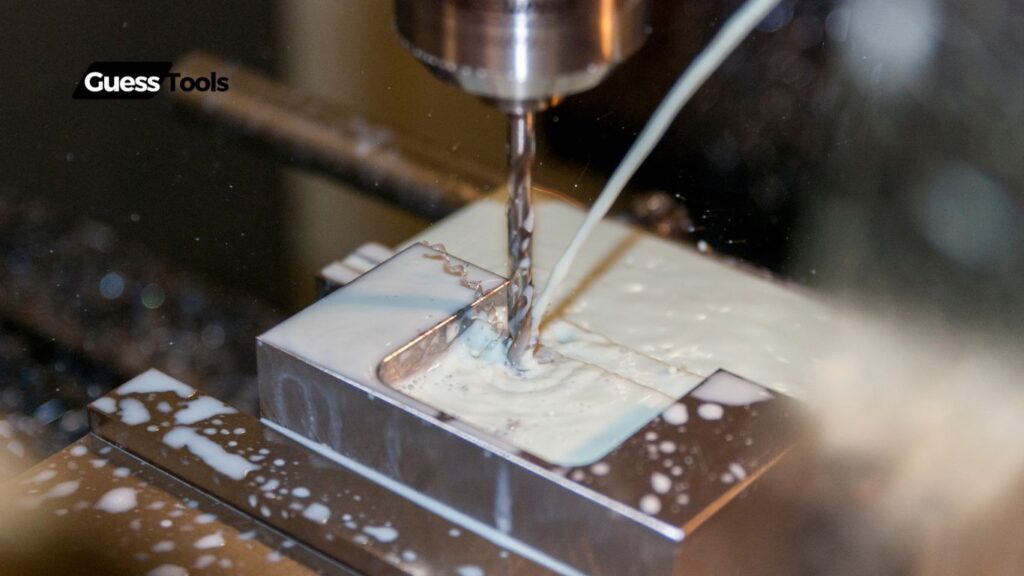
Deep hole drilling offers significant benefits but comes with unique technical challenges that manufacturers must address. When performed correctly, this specialized process delivers exceptional results that standard drilling simply cannot match.
Precision And Straightness Capabilities
Deep hole drilling achieves remarkable precision that few other machining processes can match. Modern systems can maintain straightness tolerances of 0.001 inches per 12 inches of depth, which is crucial for applications like fuel injector components and hydraulic systems.
We’ve seen manufacturers achieve hole depth-to-diameter ratios exceeding 300:1 while maintaining tight tolerances. This level of precision isn’t just impressive—it’s often mandatory for critical components.
What makes this possible? The specialized tools use guide bushings and supports that keep the drill centered as it progresses deeper into the material. Think of it like a train staying on tracks rather than a car that might drift off course.
Many high-precision applications also utilize BTA (Boring and Trepanning Association) drilling systems that provide additional stability through their unique cutting design.
Chip Evacuation Systems
Ever wonder how chips don’t clog deep, narrow holes? The answer lies in specialized chip evacuation systems.
In gun drilling (a common deep hole technique), high-pressure coolant flows through the drill’s internal channels directly to the cutting edge. This coolant serves two purposes:
- Cools the cutting edge during operation
- Forces chips back through flutes or channels away from the cutting area
BTA drilling systems work differently—they pump coolant around the outside of the drill and remove chips through the tool’s center. This “reverse flow” system is particularly effective for larger diameter holes.
Without proper chip evacuation, you’ll face:
- Verktygsbrott
- Dålig ytfinish
- Dimensional inaccuracies
- Increased production costs
We recommend monitoring chip formation carefully during operations, as changes in chip appearance often signal problems before they become serious.
Coolant Management
Coolant management in deep hole drilling isn’t just about cooling—it’s a crucial aspect of the entire process.
Most operations require specialized high-pressure coolant systems that can deliver coolant at 300-1000 PSI depending on the application. This high pressure ensures coolant reaches the cutting edge even in holes that might be several feet deep.
The coolant performs several essential functions:
- Reduces cutting temperature
- Lubricates the cutting interface
- Assists with chip evacuation
- Prevents tool binding
We’ve found that coolant filtration is especially important in deep hole applications. Even small particles can cause scoring on the hole surface or accelerate tool wear.
For difficult materials like titanium or Inconel, specialized coolant formulations with enhanced lubricity may be necessary. These can reduce cutting forces by up to 25% compared to standard coolants.
Materialöverväganden
Different materials present unique challenges in deep hole drilling. We need to adjust our approach based on what we’re working with.
Mjuka material like aluminum can produce long, stringy chips that may wrap around the tool. Special chip breakers and higher coolant pressures typically solve this problem.
Hårda material like hardened steel or titanium create different concerns:
- Higher cutting forces
- Accelerated tool wear
- Greater heat generation
- More difficult chip formation
The material’s hardness and consistency directly impact the drilling parameters. For instance, stainless steel requires slower speeds and feeds than aluminum, with typical cutting speeds about 60-70% lower.
We’ve also found that composite materials require specialized tooling with unique geometries to prevent delamination and fiber pullout. Carbon fiber composites, for example, work best with diamond-coated tools that resist the abrasive nature of the material.
Common Challenges And Their Solutions
Deep hole drilling inevitably presents obstacles, but experienced machinists have developed effective solutions for most common issues.
Drill drift occurs when the drill veers off course during operation. We combat this by:
- Användning pilothål to establish direction
- Employing specialized guide bushings
- Starting with slower speeds until the drill is established
- Using vibration-dampening tool holders
Verktygsbrott represents another significant challenge. Prevention strategies include:
- Progressive pecking cycles for chip clearance
- Rätt verktygsval based on material
- Regular tool inspection for wear
- Maintaining consistent coolant pressure
Ytbehandlingsproblem beror ofta på vibrationer eller felaktig evakuering av spånet. Lösningar inkluderar justering skärparametrar och säkerställa korrekt verktygsstöd.
Värmehantering förblir kritisk under hela processen. Överdriven värme kan orsaka materialexpansion som klämmer borren, vilket leder till katastrofala fel. Korrekt applicering av kylvätska och då och då “andas” cykler tillåter värmeavledning i krävande applikationer.
Utrustning Och Teknik

Djupa hålsborrning kräver specialiserad utrustning och avancerad teknik för att uppnå exakta resultat. Rätt verktyg gör hela skillnaden när det gäller att skapa exakta hål med höga djup-till-diameter-förhållanden.
Specialiserade maskiner och dubbla spindelsystem
When it comes to deep hole drilling, standard drilling equipment simply won’t cut it. Specialized machines are designed specifically to handle the unique challenges of deep hole applications.
Dual spindle systems are a game-changer in this field. These systems allow for simultaneous drilling from both ends of a workpiece, which significantly reduces production time. We’ve seen this approach cut drilling time by up to 50% in many applications!
The machines often feature:
- Rigid beds to minimize vibration
- High-pressure coolant systems
- Advanced chip evacuation mechanisms
- Specialized workholding fixtures
For extremely deep holes, gun drilling machines provide the stability needed for holes with depth-to-diameter ratios of 100:1 or even greater. These machines maintain the straightness and accuracy that’s critical in aerospace and defense applications.
Cutting Tools And Materials
De skärverktyg used in deep hole drilling are quite different from standard drill bits. Pistolborrar och BTA (Boring and Trepanning Association) tools are the most common types.
Gun drills feature:
- Single cutting edge design
- Internal coolant channels
- Special flute geometry for chip evacuation
BTA tools, on the other hand, use:
- Multiple cutting edges
- External coolant supply through the tool head
- Internal chip removal systems
The materials used for these tools need to withstand extreme conditions. We typically see:
- Karbid
- Coated carbide
- High-speed steel with special coatings
Verktygets livslängd är avgörande vid djuphålsoperationer, med många tillverkare som rapporterar att den är av hög kvalitet hårdmetallverktyg kan hålla 2-3 gånger längre än standardalternativ när de används på rätt sätt.
Nya tekniska framsteg
Området för djuphålsborrning har sett imponerande tekniska framsteg de senaste åren. Datormodellering tillåter nu ingenjörer att simulera borroperationer innan de skär material.
Kylvätsketeknologin har också utvecklats, med nya formuleringar som:
- Minska friktion och värmeutveckling
- Förbättra flisevakueringen
- Förläng verktygets livslängd med upp till 40 %
Nya beläggningstekniker som PVD (Physical Vapour Deposition) och CVD (Chemical Vapour Deposition) skapar superhårda ytor på skärverktyg. Dessa beläggningar kan öka verktygets livslängd med 30-200% beroende på applikation!
En annan spännande utveckling är Minsta kvantitetssmörjning (MQL) system som minskar miljöpåverkan samtidigt som skärprestanda bibehålls.
Automation och precisionskontrollsystem
Modern djuphålsborrning är starkt beroende av automatisering och exakta styrsystem. CNC (Computer Numerical Control) Tekniken gör det möjligt för operatörer att programmera exakta parametrar för varje borroperation.
Realtidsövervakningssystem spårar:
- Spindelhastighet och vridmoment
- Kylvätsketryck och flöde
- Verktygsposition och matningshastighet
- Vibrationer och temperatur
När dessa parametrar går utanför acceptabla intervall kan automatiserade system göra justeringar eller stoppa operationer för att förhindra skador.
Vision systems and in-process measurement tools verify hole quality without removing the workpiece from the machine. This integration of quality control into the production process has reduced rejection rates by up to 35% in many facilities.
Smart factory integration allows deep hole drilling machines to communicate with other production equipment, creating seamless workflows.
Framtida trender och innovationer
The deep hole drilling landscape is rapidly evolving with exciting technological advancements that promise to transform precision engineering capabilities. These innovations are reshaping how industries approach complex drilling operations.
Ny teknik vid djuphålsborrning
Automation revolutionerar processer för djuphålsborrning 2025. Vi ser smarta system med realtidsövervakningsmöjligheter som kan justera borrparametrar automatiskt baserat på återkopplingsdata. Detta minskar mänskliga fel och förbättrar konsekvensen.
AI-drivet prediktivt underhåll är en annan spelväxlare. Dessa system kan upptäcka potentiella verktygsfel innan de inträffar, vilket sparar företag tusentals i stilleståndskostnader.
Digital tvillingteknik skapar virtuella kopior av borroperationer. Ingenjörer kan simulera olika scenarier utan att slösa med material eller riskera att skada utrustningen.
Högprecisionssensorer mäter nu hålets rakhet till mikronnivå noggrannhet under borrningsprocessen. Denna omedelbara feedback möjliggör korrigeringar som inte var möjliga med traditionella metoder.
Robotintegrationen ökar borr positioneringsprecision och hantering av arbetsstycken, särskilt värdefullt för komponenter som kräver exceptionella toleranser.
Industritillväxtprognoser
Marknaden för djuphålsborrning förväntas växa med en CAGR på 6,8 % fram till 2032. Denna tillväxt drivs av ökande efterfrågan från flyg-, fordons- och medicintekniska tillverkningssektorer.
Flygtillämpningar leder efterfrågan på marknaden, med krav på bränslesystemkomponenter och landningsställsdelar som avsevärt bidrar till industriexpansion.
Medical device manufacturing represents the fastest-growing segment, with specialized drilling needs for surgical instruments and implantable devices.
The Asia-Pacific region shows the highest growth potential due to rapid industrialization in countries like China and India. These markets are investing heavily in manufacturing capabilities requiring precision drilling.
North America maintains a strong market position thanks to its aerospace and defense industries. Their need for high-precision components drives continuous innovation in drilling technologies.
Hållbarhetsöverväganden
Energy efficiency has become a priority in modern deep hole drilling. New electric drilling systems use up to 40% less energy than traditional hydraulic systems while maintaining or improving performance.
Teknik för återvinning av kylvätska minskar vätskeavfallet med upp till 85 %. Dessa slutna system filtrerar och återanvänder skärvätskor, vilket minskar miljöpåverkan och driftskostnader.
Torrborrningstekniker växer fram för vissa applikationer. Dessa metoder eliminerar behovet av att skära vätskor helt och hållet och tar hänsyn till miljöproblem relaterade till vätskeavfall.
Innovationer för verktygsbeläggning förlänger borrkronans livslängd med 2-3 gånger. Detta minskar materialspillet och frekvensen av byten.
Tillverkare antar i allt högre grad ISO 14001 miljöledningsstandarder. Vi ser att denna certifiering blir en konkurrensfördel på marknaden för borrtjänster.
Nya material och applikationer
Avancerade hårdmetallkompositer revolutionerar borrkronans hållbarhet. Dessa material tål högre temperaturer och motstår slitage bättre än traditionella alternativ.
Nanobeläggningar som appliceras på borrkronor minskar friktionen med upp till 30 %. Detta möjliggör snabbare borrhastigheter och svalare drift även i utmanande material.
Exotisk legeringsborrningskapacitet har utökats avsevärt. Material som Inconel, titanlegeringar och specialiserade rostfria stål som en gång var svåra att borra kan nu bearbetas med högre precision.
Elfordonsindustrin har skapat nya applikationer för djuphålsborrning. Batterikylkanaler och motoraxelkomponenter kräver den extrema precision som endast avancerad djuphålsborrning kan ge.
Miniatyrisering inom elektronik har flyttat gränserna för mikroborrning. Hål med diametrar under 0,5 mm och förhållanden mellan djup och diameter som överstiger 50:1 kan nu uppnås med specialutrustning.


