

When choosing taps for your machining projects, you’ve probably wondered: carbide or HSS (High-Speed Steel)? We’ve been there too! The difference matters a lot for your work quality and efficiency. Carbide taps are much harder than HSS, giving them longer tool life and faster cutting speeds, but they’re also more brittle and can snap under pressure.

Are you working with harder materials? Carbide might be your best friend. For hand tapping or general use, quality HSS taps like Greenfield Tap & Die are often recommended because they’ll bend rather than break when stressed. This flexibility makes HSS more forgiving, especially for beginners or in less stable conditions.
The numbers are impressive – carbide taps can last 5-20 times longer than HSS when used correctly! But they require more stability and precision. We’ve found that HSS works great for most regular projects, while carbide shines when you need accuracy and efficiency in harder materials. What’s your experience been with these different types of taps?
Material Science: Understanding Carbide and HSS
The difference between carbide and HSS (High-Speed Steel) tools comes down to their unique material properties. These properties determine how each performs in various cutting applications and why you might choose one over the other.
Composition and Properties of Each Material
HSS (High-Speed Steel) is an alloy steel that contains tungsten, molybdenum, chromium, and vanadium. These elements give HSS its heat resistance and toughness. Most HSS tools contain about 18% tungsten, though some newer varieties use molybdenum instead.
HSS is known for its:
- Good toughness (less brittle than carbide)
- Ability to be resharpened multiple times
- Lower cost compared to carbide options
- Better shock resistance
Carbide tools, specifically Tungsten Carbide, consist of tungsten carbon particles (WC) held together with a cobalt binder. This creates a metal-ceramic composite material.
Padat carbide tools are made entirely of carbide, while carbide-tipped tools have HSS bodies with carbide cutting edges. The cobalt content typically ranges from 6-12%, with higher cobalt making the tool tougher but less wear-resistant.
Hardness Comparisons (with HRC Values)
When comparing hardness, we see significant differences that explain performance variations:
| bahan | Hardness (HRC) | Hot Hardness | Nota |
|---|---|---|---|
| HSS | 62-65 HRC | Softens at 600°C | Maintains edge up to moderate temps |
| karbida | 70-90 HRC | Retains hardness up to 1000°C | Significantly harder than HSS |
This hardness difference is why carbide tools can run at much higher speeds. While HSS begins to soften at around 600°C, tungsten carbide maintains its hardness at temperatures nearly twice as high!
Have you noticed that carbide tools feel heavier in your hand? That’s because tungsten carbide is about twice as dense as HSS.
How Material Properties Affect Performance
The material properties directly impact how these tools perform in real-world applications. Carbide’s extreme hardness makes it ideal for high-speed machining and working with abrasive materials like cast iron and hardened steels.
We’ve found that carbide tools can often run 2-3 times faster than HSS equivalents. This translates to higher productivity in production environments.
However, carbide’s brittleness is its main weakness. It chips more easily under interrupted cuts or when used in machines with vibration issues.
HSS shines in applications requiring toughness. It handles impact better and is more forgiving of operator errors. This makes HSS ideal for:
- Hand tapping operations
- Working with gummy materials like aluminum
- Situations where tool flexibility is needed
The cost difference is significant too. While HSS taps might cost $15-30, comparable carbide versions often run $75-150. But when considering the longer tool life, carbide often provides better value for high-volume production.
Performance Comparison

When choosing between carbide and HSS taps, understanding how they perform in different situations can save you time and money. The right choice depends on your specific project needs and material conditions.
Cutting Speeds and Capabilities
HSS taps are versatile workhorses that perform well in most common materials. We’ve found they excel when cutting speeds are moderate, typically between 10-35 SFM (surface feet per minute) for general steels. They’re particularly well-suited for softer materials like aluminum and brass.
Carbide taps, however, can operate at 3-5 times higher cutting speeds than their HSS counterparts. This means you can run them at 30-100 SFM depending on the material. This difference becomes crucial when:
- Working with hardened materials (above 35 HRC)
- Handling pengeluaran volum tinggi runs
- Needing to reduce cycle times
For UNC and UNF threading applications in production environments, carbide’s ability to maintain higher speeds without overheating gives it a clear advantage.
Tool Life Expectancy (featuring the ‘Up to 520 Times Longer’ Statistic)
The lifespan difference between these tools can be dramatic. In controlled tests with hardened steels, premium carbide taps lasted up to 520 times longer than standard HSS taps! While this represents an extreme case, even in everyday applications:
Carbide taps typically last 5-20 times longer than HSS when used in similar conditions. This extended tool life comes from carbide’s superior:
- Wear resistance
- Heat tolerance
- Hardness (89-93 HRA vs 65-70 HRA for HSS)
We’ve seen shops reduce tool changes dramatically by switching to carbide for high-volume work, despite the 3-5x higher initial cost.
Thread Quality Outcomes
Thread quality differs noticeably between these two options. HSS taps generally produce good-quality threads with:
- Smoother finishes in softer materials
- Less chance of tearing in gummy materials like certain aluminums
- Better thread pitch accuracy when hand tapping
Carbide excels in creating precise, consistent threads in harder materials. The rigid nature of carbide means less deflection during cutting, resulting in more accurate threads, especially in deep holes or when maintaining tight tolerances.
However, carbide’s brittleness can be a disadvantage. When tapping by hand or in unstable setups, HSS taps’ ability to flex slightly rather than break can save your workpiece from damage. Quality taps in either material will outperform cheaper options significantly.
Panduan Keserasian Bahan
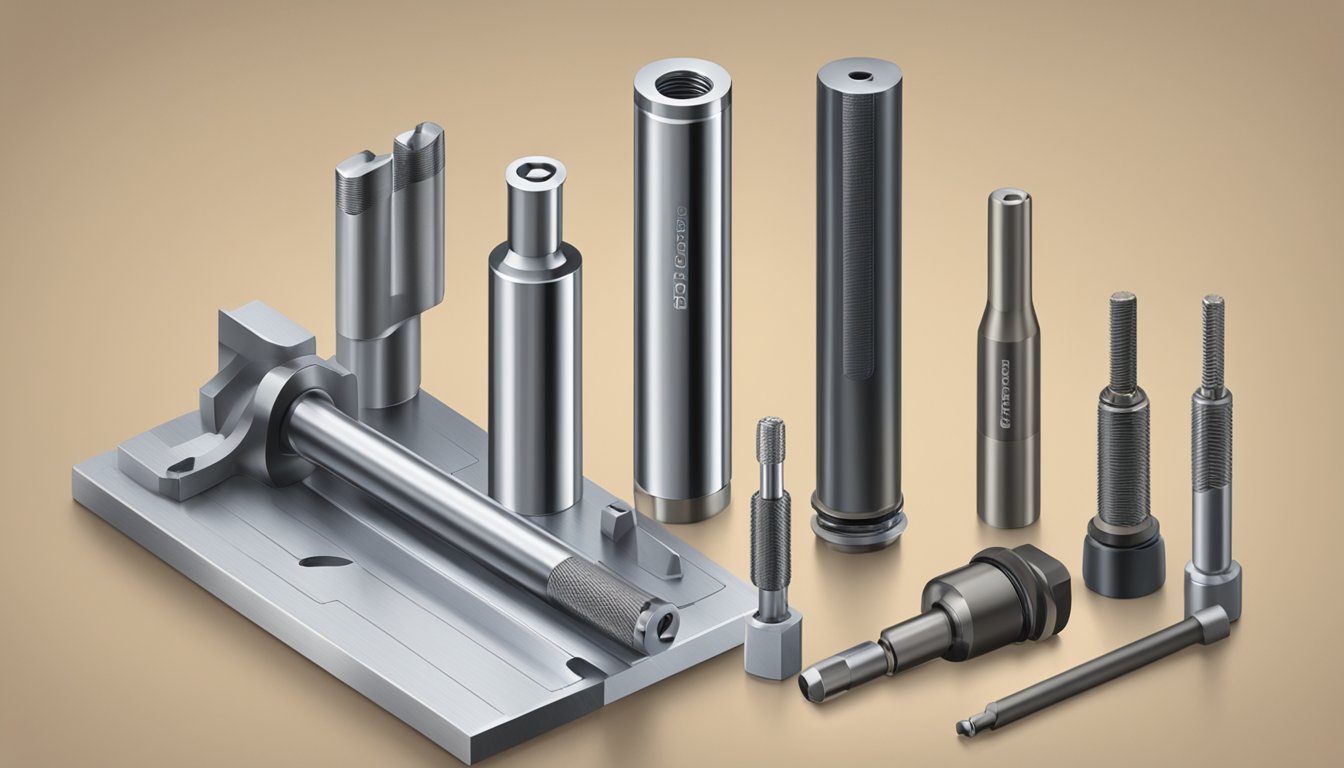
Choosing the right tap material for your project depends greatly on what you’re cutting. Different materials require different tap types to ensure optimal performance and tool life.
Which Materials Work Best with Carbide (Up to 65 HRC)
Carbide taps excel when working with hard and abrasive materials. They’re your best choice for tough jobs where other tools might fail.
Ideal materials for carbide taps include:
- Hardened steels (up to 65 HRC)
- Besi tuang
- Stainless steel alloys
- Titanium and titanium alloys
- Inconel and other superalloys
- Abrasive composites
When tapping hardened tool steels, carbide is often the only practical option. We’ve found carbide drill bits and taps can last 5-20 times longer than HSS when working with these challenging materials.
Carbide drills maintain their cutting edge and dimensional accuracy far better in these tough applications. This means fewer tool changes and more consistent hole quality.
Ideal Applications for HSS (Up to 35-40 HRC)
HSS taps shine when working with softer, less abrasive materials where their toughness provides an advantage over more brittle carbide options.
Best materials for HSS taps:
- Mild carbon steel (below 35 HRC)
- Aluminum and aluminum alloys
- Brass and bronze
- Plastics and composites
- Wood and wood products
- Soft copper alloys
HSS carbon steel taps are particularly good for general-purpose work in production environments. They’re less likely to snap when encountering minor interruptions or when operators are less experienced.
We recommend HSS for most automotive repair work and general fabrication with mild steels. Their lower cost makes them great for shops that occasionally need to tap threads.
Critical Hardness Thresholds for Decision-Making
Understanding material hardness is crucial when selecting between carbide and HSS taps. Here’s a quick guide to help you decide:
| Material Hardness | Recommended Tap Material | Nota |
|---|---|---|
| Below 35 HRC | Either HSS or Carbide | HSS more economical |
| 35-45 HRC | Coated HSS or Carbide | Carbide preferred for production |
| 45-55 HRC | karbida | HSS will wear quickly |
| Above 55 HRC | Carbide only | HSS not suitable |
For tool steels between 40-50 HRC, we see a significant difference in performance. HSS tool life drops dramatically, while carbide maintains cutting efficiency.
Consider your application’s cutting speed needs too. If you need high-speed machining, carbide’s heat resistance becomes increasingly important even in softer materials.
Economic Analysis: Total Cost of Ownership
When comparing carbide and HSS taps, looking beyond just the price tag gives us the full financial picture. The total cost of ownership includes several factors that affect your bottom line in both the short and long term.
Initial Investment Comparison
Let’s face it – carbide taps are more expensive upfront. You’ll typically pay 2-4 times more for a carbide tap compared to its HSS equivalent. For example, a standard M10 HSS tap might cost $15-25, while a similar carbide version could run $45-80.
Is this price difference justified? It depends on your application. For occasional use or soft materials, the higher initial cost of carbide might not make sense. However, if you’re working with harder materials (over 35 HRC) or need tight tolerances, the investment becomes more reasonable.
Many shops make the mistake of focusing only on tool purchase price without considering the bigger financial picture. Your tooling budget might look better initially with HSS, but that’s just one piece of the puzzle.
Long-Term Value Calculation
Carbide taps typically last 3-5 times longer than HSS taps in most applications. This extended Kehidupan Alat significantly reduces replacement frequency and associated costs.
Let’s do some quick math:
- HSS tap: $20 × 5 replacements = $100
- Carbide tap: $60 × 1 needed = $60
The longer life of carbide means fewer tool changes, resulting in:
- Reduced machine downtime
- Less operator intervention
- Lower labor costs for tool changes
- More consistent thread quality
When calculating long-term value, don’t forget to factor in reduced scrap rates. Carbide taps maintain their cutting edges longer, which means fewer rejected parts due to poor thread quality.
Production Volume Considerations
Are you running a high-volume production? Then carbide taps will likely save you money. The higher your production volume, the more you’ll benefit from carbide’s longevity and speed advantages.
For low-volume or prototype work, HSS taps might be more cost-effective. If you’re only tapping a few hundred holes in mild materials, the premium price of carbide probably won’t pay off.
Consider these production scenarios:
- High volume (1000+ parts): Carbide usually wins on cost-per-thread
- Medium volume (100-1000 parts): Either could be optimal depending on material
- Low volume (<100 parts): HSS often makes more financial sense
Remember that your machine hourly rate matters too! On expensive CNC equipment, the faster cutting speeds of carbide (up to 2-3× faster than HSS) can free up valuable machine time.
Cost-per-Thread Analysis for Different Scenarios
The true measure of tapping efficiency is cost-per-thread. This calculation considers all factors: tool cost, tool life, cycle time, and machine rates.
Example calculation:
- Machine hourly rate: $75
- Thread cycle time: HSS (6 seconds) vs. Carbide (3 seconds)
- Tool life: HSS (200 threads) vs. Carbide (800 threads)
- Tool cost: HSS ($20) vs. Carbide ($60)
For 1,000 threads, the math works out to:
- HSS: $20 × (1000÷200) + $75 × (6×1000÷3600) = $100 + $125 = $225
- Carbide: $60 × (1000÷800) + $75 × (3×1000÷3600) = $75 + $62.50 = $137.50
That’s a 39% cost savings with carbide! However, if your material is softer or your machine rate lower, the equation could favor HSS instead.
Different industries see varied results. Automotive and aerospace typically benefit from carbide, while job shops with diverse, small-batch work might stick with HSS.
Application-Specific Recommendations
Choosing between carbide and HSS taps depends greatly on your specific machining needs. The right choice can save you time, money, and frustration while delivering superior results.
High-Volume Production Scenarios
In high-volume production, carbide taps often provide the best value despite their higher initial cost. Why? They maintain sharpness longer, reducing downtime for tool changes.
We’ve seen manufacturing plants achieve up to 3-5 times more holes per tap using carbide versus HSS in continuous operations. This advantage grows when working with harder materials above 35 HRC.
A practical approach is to:
- Use carbide for dedicated machines running the same operation repeatedly
- Consider HSS-PM (powder metal) as a middle-ground option for variable batch sizes
- Calculate cost-per-hole rather than just tool price
Remember that production speeds can be increased 30-50% with carbide, dramatically improving throughput in high-volume settings.
Low-Volume or Occasional Machining
For low-volume or occasional machining, HSS taps typically offer the best balance of cost and performance. They’re more forgiving with hand tapping and irregular use.
HSS taps are about 60-75% less expensive than comparable carbide options, making them economical for shops that don’t need extended tool life.
Are you working in a small shop or doing repairs? HSS is likely your friend. The tools:
- Tolerate less rigid setups better than carbide
- Can be resharpened multiple times
- Are less likely to snap when used intermittently
Hobbyists and maintenance personnel particularly appreciate HSS’s forgiveness with variable hand pressure and interrupted cutting conditions.
Challenging Materials Case Studies
When facing difficult materials, your tap choice becomes even more critical. Our case studies reveal interesting patterns:
Case 1: Aerospace titanium components HSS-PM (powder metal) taps surprisingly outperformed carbide, with 40% fewer broken taps despite slower speeds. The material’s work-hardening properties favored HSS’s toughness.
Case 2: Stainless steel medical devices Carbide taps with specialized coatings achieved 78% longer tool life and better thread finish in 316L stainless.
Material Guide:
| bahan | Recommended Tap | Key Benefit |
|---|---|---|
| Titanium | HSS-PM | Better process stability |
| Hardened Steel (>45 HRC) | karbida | Only viable option |
| Aluminium | HSS | Cost-effective, good finish |
| Stainless | Coated Carbide | Reduced galling |
When to Absolutely Choose One Over the Other
There are scenarios where your choice is essentially made for you. We must use carbide taps when:
- Machining hardened materials over 45 HRC
- Requiring extremely tight tolerances (±0.0002″)
- Needing thread surface finishes under 32 μin
- Working with highly abrasive materials like carbon fiber composites
Conversely, HSS taps are the clear choice when:
- Hand tapping without powered equipment
- Working with limited budgets or one-off projects
- Operating in situations with poor rigidity
- Needing to modify the tap geometry for special applications
The risk of catastrophic failure with carbide in unstable conditions can’t be overstated. We’ve seen entire production runs ruined when carbide taps snapped in poorly supported workpieces.
Implementation Best Practices

Successful tapping operations depend on proper setup and technique. We’ve found that both HSS and carbide taps can deliver excellent results when you follow these key guidelines for setup, speed adjustments, and maintenance.
Setup Requirements for Carbide (Addressing Brittleness)
Carbide taps require more precise setups due to their inherent brittleness. When working with these tools, we recommend using rigid machine setups with minimal runout. A CNC machine with proper alignment is ideal for carbide tapping operations.
For challenging applications, consider starting with a taper tap first. This helps establish the thread path before using intermediate or bottoming taps to finish the job.
Proper alignment is critical! Even slight misalignment can cause carbide taps to snap. We suggest using floating tap holders that compensate for minor misalignments.
Remember to use high-quality tapping fluid specifically designed for carbide tools. The right lubricant reduces friction and heat generation, protecting your investment.
Optimal Speeds and Feeds
Speed and feed rates differ significantly between HSS and carbide taps:
| Tap Material | Speed Recommendation | Best Applications |
|---|---|---|
| HSS | Lower speeds (30-60% of carbide) | Tough materials, manual tapping |
| karbida | Higher speeds | Production environments, harder materials |
Untuk HSS taps, we recommend starting at about 50% of the speed you’d use for carbide. This is particularly important when using bottoming taps, which experience more torque at the bottom of blind holes.
With carbide taps, you can run at higher speeds, but always start conservative and increase gradually. Monitoring temperature is crucial – if the tap gets too hot, decrease speed immediately.
Extending Tool Life for Both Types
Proper care extends the life of both tap types significantly. Here are our top recommendations:
- Always use tapping fluid – This reduces heat, removes chips, and provides lubrication
- Perform regular cleanings – Remove built-up material after each use
- Store properly – Keep taps in individual compartments to prevent edge damage
Untuk bottoming taps and other finishing taps, consider using a plug tap first to establish threads before finishing. This approach reduces strain on your finishing tools.
We’ve found that reversing direction periodically during tapping helps clear chips, especially with smaller thread sizes like #6-32. This technique is particularly valuable for HSS taps which don’t handle chip evacuation as efficiently as carbide.
Lastly, inspect taps regularly for wear. Even slight damage can affect thread quality and increase the risk of tap breakage.
Decision Framework
Choosing between HSS and carbide taps doesn’t have to be complicated. We’ve created a practical framework to help you make the right decision based on your specific needs, budget, and application requirements.
Simple Decision Tree for Selection
When deciding between HSS and carbide taps, start by considering your workpiece material:
For Soft Materials:
- Aluminum, brass, copper, plastic
- Best Choice: HSS taps
- kenapa: Lower cost, adequate performance, less breakage risk
For Medium-Hard Materials:
- Mild steel, stainless steel (below 35 HRC)
- Best Choice: HSS or HSS-E (cobalt-enhanced)
- kenapa: Good balance of cost and performance
For Hard Materials:
- Hardened steel, titanium alloys (above 35 HRC)
- Best Choice: Carbide taps
- kenapa: Superior hardness, better heat resistance, longer tool life
Remember that production volume matters too. For one-off projects, HSS is usually sufficient. For high-volume production, carbide’s longer life often justifies the higher initial cost.
Key Questions to Ask Before Purchasing
Before buying your next tap, ask yourself these important questions:
- What material am I working with?
- Hardness (HRC rating)
- Material composition (alloy type)
- What’s my production volume?
- Low volume = HSS may be more economical
- High volume = Carbide’s longevity may offset initial cost
- What’s my machine capability?
- Can your equipment handle the higher speeds ideal for carbide?
- Is your setup rigid enough for carbide taps?
- What’s my tolerance requirement?
- Need high precision? Carbide holds dimensional accuracy longer
- What’s my budget situation?
- Initial cost vs. long-term value
- Can you justify 5-20× longer tool life at 3-5× the price?
Future Trends in Tapping Technology
The tapping technology landscape is constantly evolving. Here are some trends we’re seeing in the industry:
Coating Innovations New coatings are dramatically improving HSS performance, narrowing the gap with carbide. TiN, TiCN, and AlTiN coatings can boost HSS tap life by 200-300% in certain applications.
Hybrid Solutions Kami melihat lebih banyak lagi “best of both worlds” options with carbide-tipped HSS taps. These provide the wear resistance of carbide with the toughness of HSS at a middle-range price point.
Smart Tapping Systems Modern tapping systems now include adaptive feedback to optimize speeds and feeds in real-time. This technology helps prevent tap breakage—especially important when using expensive carbide taps.
Sustainability Focus Manufacturers are developing more recyclable and regrindable options for both HSS and carbide taps, reducing the environmental impact and total lifetime cost.


