

When it comes to making holes in your workpiece, choosing the right tool makes all the difference. You might be wondering whether to use a flat bottom drill or an end mill for your next project. Flat bottom drills excel at creating shallow flat-bottomed holes quickly and efficiently, while molins finals are more versatile tools that can handle various machining operations but may not be optimal for dedicated hole-making tasks.
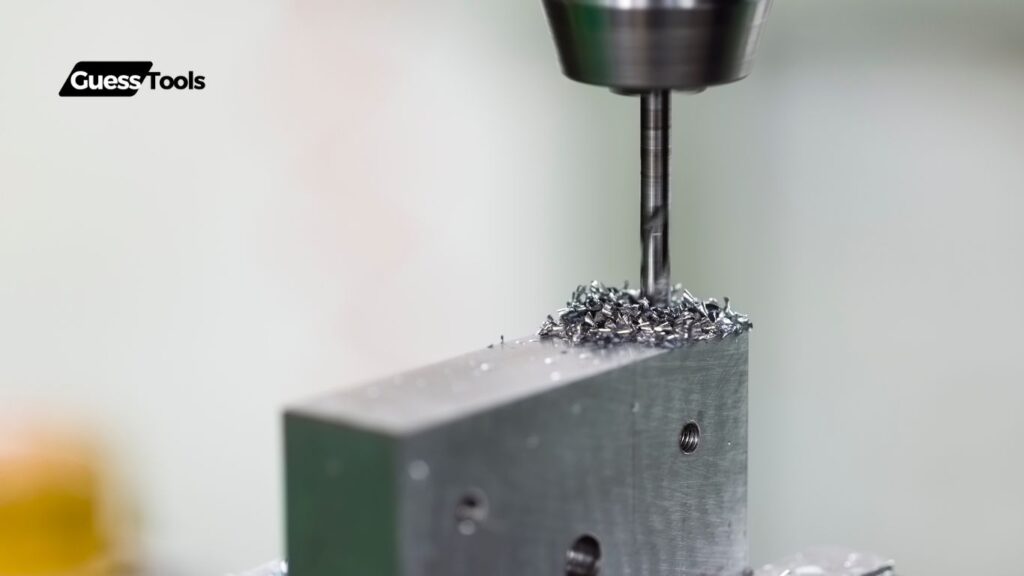
We often see confusion about these two types of tooling in our machine shop. Flat bottom drills are specifically designed to create holes with flat bottoms, eliminating the pointed end you’d get with a standard drill. End mills, on the other hand, can create holes but they typically leave a slightly concave surface at the bottom and aren’t available in the longer lengths common to drill bits, which limits their hole-making capabilities.
What should you consider when choosing between these tools? If you’re making lots of holes, especially smaller ones under 1.5mm in diameter, drills are usually your best bet. End mills under this size become quite fragile. Also, if you need a perfectly flat bottom hole, a flat bottom drill will save you the secondary operation that would be needed when using an end mill, which typically leaves a “dish” at the bottom of holes.
Understanding The Fundamentals
When working with machining tools, it’s essential to know the difference between flat bottom drills and end mills to choose the right tool for your project. These tools may look similar at first glance, but they have distinct features and uses that set them apart.
Definitions And Basic Design Features
Flat Bottom Drills are specialized cutting tools designed primarily to create holes with flat bottoms. Unlike traditional twist drills that produce conical bottom holes, flat bottom drills make clean, perpendicular surfaces at the base of the hole.
Les característiques clau inclouen:
- Center-cutting tip design
- Typically 2-3 flutes (cutting edges)
- Special point geometry for flat-bottomed results
- Limited cutting action on the sides
End Mills are more versatile cutting tools with multiple functions. They can cut in any direction – vertically, horizontally, or at angles.
Their design includes:
- Multiple flutes (2-16 depending on size and application)
- Cutting edges on both the end and sides
- Various end shapes (flat, ball, corner radius)
- Ability to plunge, side-cut, and contour
The diameter range for both tools can vary widely, but end mills generally offer more size options for precision work.
Key Visual And Structural of Flat Bottom Drill vs End Mill
How can you tell these tools apart? Look at these distinguishing features:
| Característica | Flat Bottom Drill | End Mill |
|---|---|---|
| Cutting action | Mainly axial (vertical) | Multi-directional |
| Flute design | Optimized for chip removal | Designed for various cutting operations |
| Tip geometry | Flat with center cutting point | Flat, ball, or radius end |
| Shank | Typically round | Can be round or have flats for better grip |
The aspect ratio (length to diameter) of flat bottom drills is usually higher than that of end mills. This makes drills better suited for deeper holes, while end mills excel at shallow operations with more complex movements.
When examining both tools side by side, notice how drill bits have more pronounced flutes running the length of the tool. End mills have more evenly spaced flutes and often show a more robust construction.
Core Purposes In Machining Operations
In our machining operations, we use these tools for different purposes:
Flat Bottom Drills excel at:
- Creating precise flat-bottomed holes
- Drilling operations requiring clean hole bottoms
- Working with high aspect ratio holes (deep relative to diameter)
- Preparing holes for tapping or other secondary operations
- Making small holes with flat bottoms efficiently
End Mills are our go-to for:
- Contouring and profiling operations
- Cutting slots and pockets with flat bottoms
- Working on angled or irregular surfaces
- Side-cutting operations
- Creating complex 3D shapes
When dealing with challenging materials like hardened steel, we might choose a cobalt drill bit for the initial hole, then follow with an end mill to achieve the desired flat bottom. For machining processes involving thin materials, end mills often provide better control and less risk of tear-out.
Technical Comparison
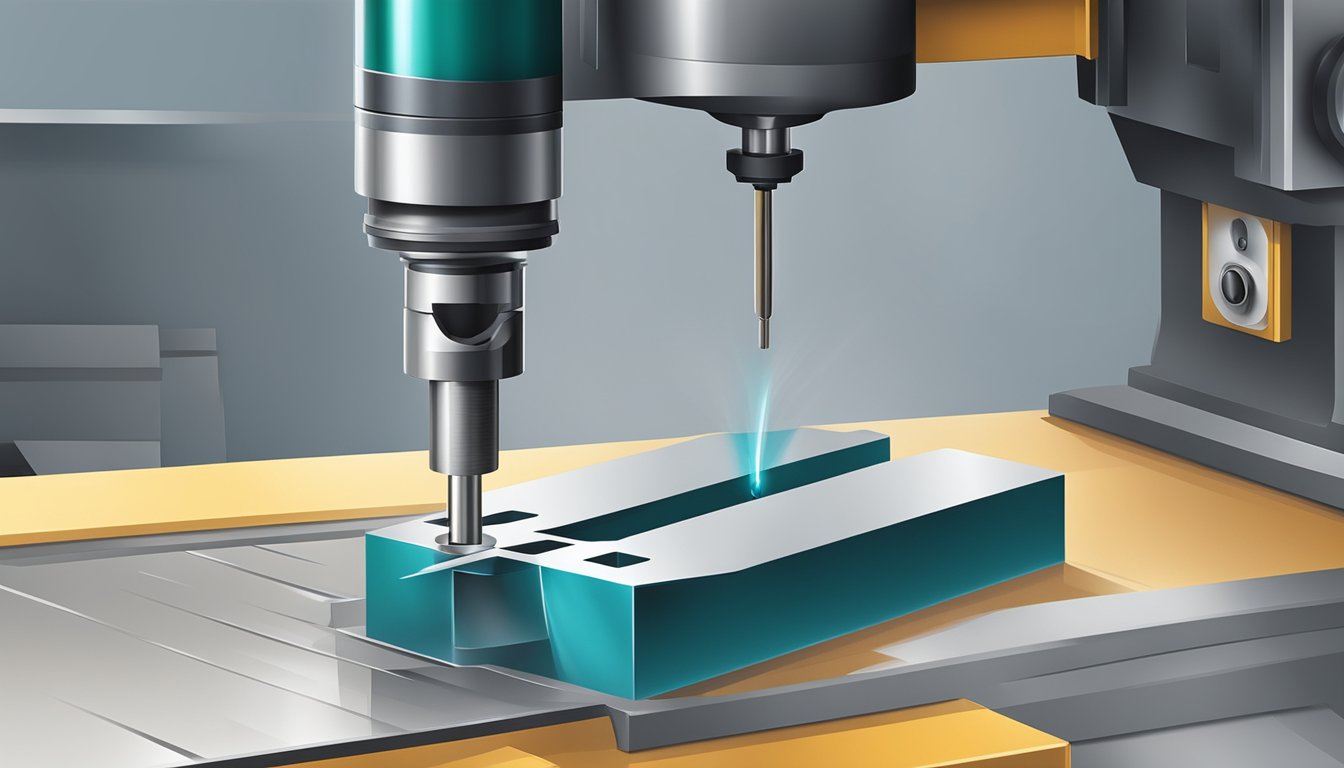
When choosing between flat bottom drills and end mills, understanding their technical differences is crucial for selecting the right tool for your project. These tools have distinct designs that affect how they perform in various applications.
Cutting Geometry And Mechanics
Flat bottom drills typically feature two flutes with a specialized tip designed to create clean, flat-bottomed holes. Unlike standard twist drills with pointed tips, flat bottom drills have cutting edges that extend across the entire bottom surface. This design allows them to plunge directly into material without creating a conical bottom.
End mills, in contrast, come with varying numbers of flutes (2-16) and more complex cutting geometry. They cut not only with their bottom edges but also along their sides. This versatility allows end mills to move in multiple directions within the workpiece.
The key difference in mechanics is the cutting motion: flat bottom drills primarily work with an axial feed motion (straight down), while end mills can be fed in any direction – axially, laterally, or in combination.
Performance Characteristics (Speed, Precision, Finish Quality)
Velocitat: Flat bottom drills typically operate at higher RPMs when drilling straight holes, as they’re designed for efficient plunging operations. End mills generally run at lower speeds but can handle various feed rates depending on the cutting operation.
Precision:
| Tool Type | Dimensional Accuracy | Positioning Control |
|---|---|---|
| Flat Bottom Drill | High for hole diameter | Limited to axial movement |
| End Mill | High for complex shapes | Excellent in multiple axes |
End mills offer superior precision for complex geometries and contours. They’re ideal for intricate machining tasks where dimensional accuracy in multiple directions matters.
Finish Quality: End mills typically produce a smoother surface finish, especially when using finishing end mills with more flutes. Flat bottom drills can leave rougher sides on holes but create clean, flat bottoms when properly used.
Strengths And Limitations Of Each Tool
Flat Bottom Drill Strengths:
- Excels at creating precise flat-bottomed holes quickly
- Better chip evacuation in deep hole applications
- More efficient for bulk hole-making operations
- Usually more economical for simple hole drilling
Flat Bottom Drill Limitations:
- Limited to axial operations only
- Not suitable for side cutting or contouring
- Less versatile for complex machining operations
End Mill Strengths:
- Extremely versatile for various cutting operations (slotting, contouring, pocketing)
- Available in specialized forms (ball nose, corner radius, etc.) for specific applications
- Can create complex 3D surfaces and cavities
- Excellent for finishing operations with high-flute options
End Mill Limitations:
- May struggle with deep hole drilling compared to purpose-built drills
- Often more expensive than drill bits
- Can deflect when extended too far from the collet
- Requires proper programming for optimal tool paths
Application Guide: When To Use Which Tool

Selecting the right tool for your machining job can save you time, money, and frustration. Both flat bottom drills and end mills have specific strengths that make them suitable for different applications.
Ideal Applications For Flat Bottom Drills
Flat bottom drills excel at creating shallow, flat-bottomed holes quickly and efficiently. They’re your go-to tool when:
- You need to drill forats precisos with flat bottoms between 1-3 times the diameter in depth
- Creant counterbores for bolt heads or washers
- Fer guide holes for longer drills (typically 0.1mm larger than the following drill)
- Working with tough materials where a standard pointed drill might wander
When using flat bottom drills, we recommend slower speeds initially since there’s no center point to guide the drill. Once the tool is fully engaged, you can increase the feed rate.
Per position-critical holes, flat bottom drills provide excellent accuracy because they don’t tend to walk across the surface like pointed drills.
Ideal Applications For End Mills
End mills offer greater versatility and are ideal when:
- Creating complex profiles or contours
- Face milling larger flat surfaces
- Cutting slots or pockets with flat bottoms
- Working on holes larger than 1.5mm diameter
- Needing to mill sidewalls as well as flat bottoms
- Performing profile milling operations
End mills shine in multi-directional cutting applications. Unlike drills that only cut axially, end mills can cut laterally, making them perfect for:
- Plunge cutting
- Side milling
- Slotting
- Contouring
We find that carbide end mills perform exceptionally well in harder materials due to their rigidity and heat resistance.
Crossover Scenarios And Versatility Considerations
Sometimes the line between using a flat bottom drill or end mill blurs. Consider these factors:
- Duresa del material: Harder materials might benefit from an end mill’s rigidity
- Hole depth: For holes deeper than 3xD, start with a flat bottom drill then switch to a regular drill
- Production volume: High-volume production typically favors specialized tools like flat bottom drills
Vida útil de l'eina is another important consideration. Flat bottom drills typically last longer for straight holes, while end mills excel in versatility but may wear faster when used primarily for drilling.
Per small diameter holes (under 1.5mm), we almost always recommend drills over end mills due to the fragility of small diameter end mills.
Quán precision is paramount, consider using a flat bottom drill for the initial hole, followed by an end mill for finishing to exact dimensions.
Material Compatibility Matrix

Choosing between flat bottom drills and end mills largely depends on the material you’re working with. Different materials require specific tool characteristics for optimal performance, safety, and efficiency.
How Different Materials Affect Tool Selection
En mecanitzar steel, we recommend using high-speed steel (HSS) flat bottom drills for basic operations and freses de carbur for more complex work. Steel’s varying hardness levels require careful tool selection.
Per alumini, end mills with fewer flutes (2-3) work best as they provide larger chip clearance, preventing material buildup. Flat bottom drills designed specifically for aluminum can prevent galling.
Fosa creates abrasive conditions that quickly wear down tools. We’ve found that eines de carbur generally outperform HSS options when working with cast iron. Flat bottom drills with specialized coatings can extend tool life significantly.
Quan es treballa amb materials endurits (above 45 HRC), stick with carbide end mills or specially designed flat bottom drills with appropriate coatings. Regular HSS tools will dull extremely quickly on these materials.
Performance Across Metals, Plastics, And Composite Materials
Tool performance varies dramatically across material types:
| Tipus de material | Flat Bottom Drill Performance | End Mill Performance |
|---|---|---|
| Soft Metals | Good for quick hole creation | Excellent for detailed work |
| Hard Metals | Limited without special coatings | Superior with proper flute design |
| Plàstics | Can cause melting/chipping | Better with specific rake angles |
| Compostos | May cause delamination | Better with compression design |
Acer inoxidable requires slower speeds and feeds with both tool types. We recommend carbide tools with appropriate coatings to resist the heat and work hardening common with stainless.
Per plàstics, specialized end mills prevent melting, while flat bottom drills must be run at carefully controlled speeds to avoid heat buildup.
Tool Life Expectations By Material Type
Vida útil de l'eina varies dramatically based on material and operating conditions. In general, end mills outlast flat bottom drills when used properly within their design parameters.
En mecanitzar steel, expect:
- HSS flat bottom drills: 10-15 holes before resharpening
- Carbide end mills: 3-5x longer life than HSS tools
- Coated tools: Additional 30-50% life increase
Hard materials significantly reduce tool life. We’ve observed that carbide flat bottom drills last approximately 50% longer than HSS versions when working with hardened steel.
Your coolant choice matters too! Proper coolant can extend tool life up to 200% when machining tough materials like acer inoxidable o titani.
Cutting parameters also impact longevity. Running at conservative speeds and feeds might double your tool life at the cost of production time. Is the tradeoff worth it for your project? That depends on your specific needs.
Anàlisi cost-benefici

When choosing between flat bottom drills and end mills, your budget and project needs will greatly impact your decision. Let’s look at the numbers and trade-offs to help you make the best choice for your shop.
Initial Investment Considerations
Flat bottom drills typically cost less upfront than quality carbide end mills. A standard flat bottom drill might run you $15-30, while comparable carbide end mills often start at $25-50 for basic models.
Comparació de preus:
- Basic flat bottom drill: $15-30
- Entry-level carbide end mill: $25-50
- Premium coated carbide end mill: $50-150
The initial savings might seem attractive, but remember that cheaper isn’t always better. We’ve found that investing in quality tools often pays off in the long run, especially when using proper fluid de tall to extend vida útil de l'eina.
Have you considered how your material types affect tool selection? Harder materials may justify spending more on premium carbide tools.
Long-Term ROI Comparison
End mills generally offer better longevity and versatility than specialized flat bottom drills. A quality carbide end mill might cost twice as much initially but could last 3-4 times longer when properly used.
Here’s what affects your ROI:
- Tool life: Carbide end mills typically outlast flat bottom drills by 300-400%
- Regrinding costs: End mills can be resharpened several times, extending useful life
- Production speed: End mills often allow faster material removal rates
Using the right cutting fluid can extend tool life by 25-50%. We’ve seen shops reduce their annual tooling costs by switching to proper carbide end mills with appropriate cooling.
Would your specific projects benefit more from speed or longevity?
Versatility Vs. Specialization Trade-Offs
Flat bottom drills excel at one task: creating precise, flat-bottomed holes quickly. End mills can perform multiple operations but might take longer for simple hole-making.
Tingueu en compte aquests factors:
- Project variety in your shop
- Setup time between operations
- Space and budget for multiple tools
For small shops with diverse projects, we recommend starting with versatile carbide end mills. They might cost more upfront but eliminate the need for multiple specialized tools.
What’s your typical workload look like? If you’re drilling hundreds of identical holes, specialized flat bottom drills with good cutting fluid might be more economical despite their limitations.
Aplicacions específiques de la indústria
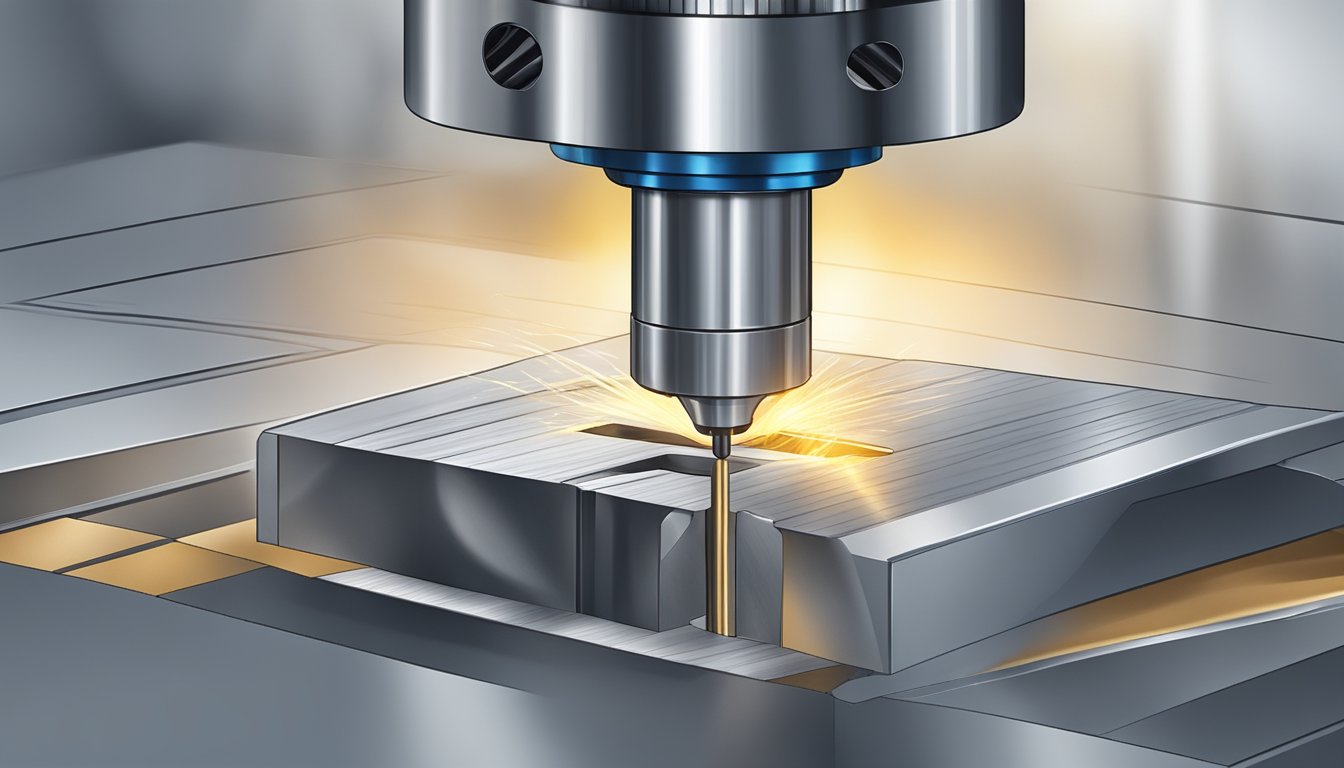
Different industries have unique requirements when choosing between flat bottom drills and end mills. The right tool selection can significantly impact production efficiency, part quality, and overall costs.
Automotive Manufacturing Requirements
In automotive manufacturing, we often see flat bottom drills used for creating precise mounting holes in engine blocks and transmission housings. These components require exceptional flatness at the bottom of blind holes to ensure proper seating of gaskets and seals.
When manufacturing brake components, end mills are preferred for creating complex channel geometries that flat bottom drills simply can’t achieve. Many automotive factories use specialized fixtures to hold parts while machining, and these fixtures often need flat-bottomed holes with tight tolerances.
For aluminum cylinder heads, we’ve found that carbide end mills provide excellent surface finish and longer tool life compared to traditional drills. In high-volume production environments, this translates to:
- Reduced tool changes
- Better part consistency
- Lower cost per part
Aerospace Precision Needs
Aerospace applications demand the highest levels of precision and reliability. For titanium and nickel-based alloy components, flat bottom drills excel at creating shallow, flat-bottomed holes without generating excessive heat.
When working with composite materials like carbon fiber, end mills with specialized geometries prevent delamination while maintaining dimensional accuracy. Have you noticed how aerospace parts often have complex weight-reduction pockets? These are typically machined using end mills rather than drills.
For aircraft structural components, we recommend using:
- Spot drills to create initial pilots
- Standard drills for through-holes
- Flat bottom drills for creating perfect mounting surfaces
This approach ensures parts meet the strict quality standards required for flight safety.
General Fabrication And Maintenance Uses
In general fabrication shops, versatility often trumps specialization. We find that many shops keep a variety of end mills on hand because they can perform multiple operations, including drilling when necessary.
For maintenance and repair operations, flat bottom drills provide a quick solution for repairing damaged bolt holes where a perfect flat bottom is needed. When working with sheet metal, end mills allow for creating slots and features that would be impossible with traditional drills.
Small fabrication businesses appreciate tools that can multitask. A good quality carbide end mill can:
- Create slots and channels
- Perform side cutting operations
- Drill holes when needed
- Create flat bottomed features
This versatility makes end mills a popular choice despite their generally higher cost compared to purpose-built flat bottom drills.
Guia de selecció per a professionals

Choosing between flat bottom drills and end mills doesn’t have to be confusing. We’ve created this guide to help you make the right tool selection for your specific machining needs based on our years of experience in the field.
Decision Flowchart Based On Project Requirements
Start by asking yourself these key questions:
- What is your primary goal?
- Creating flat-bottomed holes → Flat bottom drill
- Complex cutting operations (slotting, profiling) → End mill
- What material are you working with?
- Harder materials like steel → Consider carbide end mills for durability
- Softer materials → Either tool works well, but end mills offer more versatility
- What machine will you use?
- CNC mill → Both tools work well, with proper programming
- Drill press → Better suited for flat bottom drills; end mills can be used but with limitations
Project-specific recommendations:
- For precision hole making with flat bottoms → Use flat bottom drills
- For slots and pockets → Use end mills (flat or ball nose depending on desired finish)
- For counterboring operations → Flat bottom drills often work best
Common Selection Mistakes To Avoid
Don’t make these costly errors:
- Using end mills as regular drills. While end mills can drill holes, they’re not designed for this primary purpose and may wander off center.
- Running end mills at drill speeds. End mills typically require different speeds and feeds than drills. Using incorrect settings leads to poor results and broken tools.
- Ignoring material-specific tooling. Not all end mills and drills work for all materials. For example, aluminum requires different tooling than stainless steel.
- Overlooking coatings. TiN, TiAlN, and other coatings dramatically improve rendiment de l'eina for specific materials.
- Using the wrong type of end mill. Flat end mills, ball nose, and corner radius end mills all have specific applications. Choosing the wrong type wastes time and materials.
When To Invest In Both Tool Types
Many professionals eventually need both flat bottom drills and end mills in their toolbox. Here’s when it makes sense:
High-volume production shops benefit from having dedicated tools for specific operations. Flat bottom drills for hole making and end mills for contours and pockets maximize efficiency.
Complex part manufacturers often use flat bottom drills to create initial holes, then follow with end mills for additional features. This combination approach yields better results than using either tool exclusively.
Consider budget options: For those just starting out, we recommend:
- A set of good quality flat bottom drills in common sizes
- A few versatile end mills (¼” and ½” flat end mills, plus a ¼” ball nose)
This starter collection handles most common machining tasks without breaking the bank. You can expand your tooling as specific project needs arise.
Tendències i innovacions futures

The machining industry is constantly evolving with new developments that enhance both flat bottom drills and end mills. These innovations focus on improving efficiency, extending tool life, and expanding application capabilities.
Emerging Technologies In Tool Design
Tool design has come a long way in recent years, and we’re seeing exciting new developments. Digital twins are becoming popular, allowing manufacturers to simulate tool performance before physical production. This helps optimize designs for specific applications.
Has notat l'augment de modular tool systems? These systems let machinists quickly swap between flat-bottom drilling and end milling operations without complete tool changes.
Hybrid tools that combine the best features of both drills and end mills are gaining traction. For example, some newer tools feature:
- Center-cutting capabilities like drills
- Multiple flute designs similar to end mills
- Specialized geometries for particular materials
We’re also seeing more tools with built-in chip evacuation channels that prevent clogging during deep hole operations, a common challenge when using end mills for drilling tasks.
Material Science Advancements
Material innovations are transforming what’s possible with both tool types. Nano-coatings now provide unprecedented wear resistance, extending tool life by up to 300% in some applications.
Recent advancements in cermet composites (ceramic-metal hybrids) offer better heat resistance than traditional carbide. This allows higher cutting speeds without premature tool failure.
What about additive manufacturing? 3D-printed tool bodies with brazed cutting edges allow for internal cooling channels impossible to create with traditional manufacturing methods.
Cryogenic treatment of tool materials is showing promising results too. The process alters the molecular structure, creating more uniform hardness and improved edge retention during machining operations.
Manufacturers are developing application-specific substrates optimized for particular materials, moving beyond the one-size-fits-all approach of standard carbide tools.
Automation Compatibility Considerations
As shops move toward lights-out manufacturing, tool design must adapt. Auto-measurement features are being integrated into newer tools, allowing machines to compensate for wear without operator intervention.
We’re seeing increased focus on consistent tool geometry to ensure predictable performance in automated systems. This is especially important when switching between drilling and milling operations.
RFID tagging embedded in tool holders helps tracking tool life and maintenance schedules autonomously. The system can alert when a tool needs replacement before failure occurs.
Has pensat quick-change systems specifically designed for robotic tool changers? These systems reduce downtime between operations and increase overall efficiency.
Software integration is becoming crucial too. Modern tools often include digital performance profiles that can be loaded directly into CAM systems for optimal cutting parameters without extensive testing.


