

When it comes to machining, choosing between a face mill and an end mill can significantly impact your project’s success. Face mills excel at creating flat surfaces quickly with excellent finish quality, while eindmeulens offer more versatility for various cutting tasks including complex shapes and cavities. The difference matters because using the wrong tool could result in wasted time, poor results, or even damaged materials.

Have you ever wondered why some machinists seem to reach for different tools for seemingly similar jobs? We’ve found that face mills typically work on horizontal milling machines, removing material across their larger diameter with multiple cutting edges. End mills, on the other hand, usually operate in vertical milling machines and can cut using both their sides and bottom surfaces.
Material removal rate is another key difference to consider for your projects. Face mills generally remove material faster due to their larger cutting diameter and multiple inserts, making them perfect for larger flat surfaces. End mills might work more slowly but give you the precision needed for detailed work like slots, pockets, and contoured surfaces where accuracy matters more than speed.
Introduction
Milling is a common machining process that removes material using rotating cutting tools. Today, we’re going to explore two primary milling techniques: face milling en end milling.
Ever wondered what makes these two methods different? While they might seem similar at first glance, they serve distinct purposes in metalworking and have unique applications.
Face milling and end milling differ primarily in how they cut material. Face milling uses the top of the tool to create flat surfaces perpendicular to the tool axis. End milling, on the other hand, mainly uses the sides of the tool to cut along the same axis as the spindle.
Did you know that end mills can perform some face milling tasks, but face mills can’t handle end milling jobs? This interesting fact highlights the versatility of end mills despite their different design purpose.
The choice between these two techniques depends on several factors:
- The surface you need to create
- Material removal rate requirements
- The precision needed
- The equipment available in your shop
We’ll break down these differences to help you understand when to use each method for your projects. Let’s dive into the world of milling to make your next machining decision easier!
Understanding The Basics
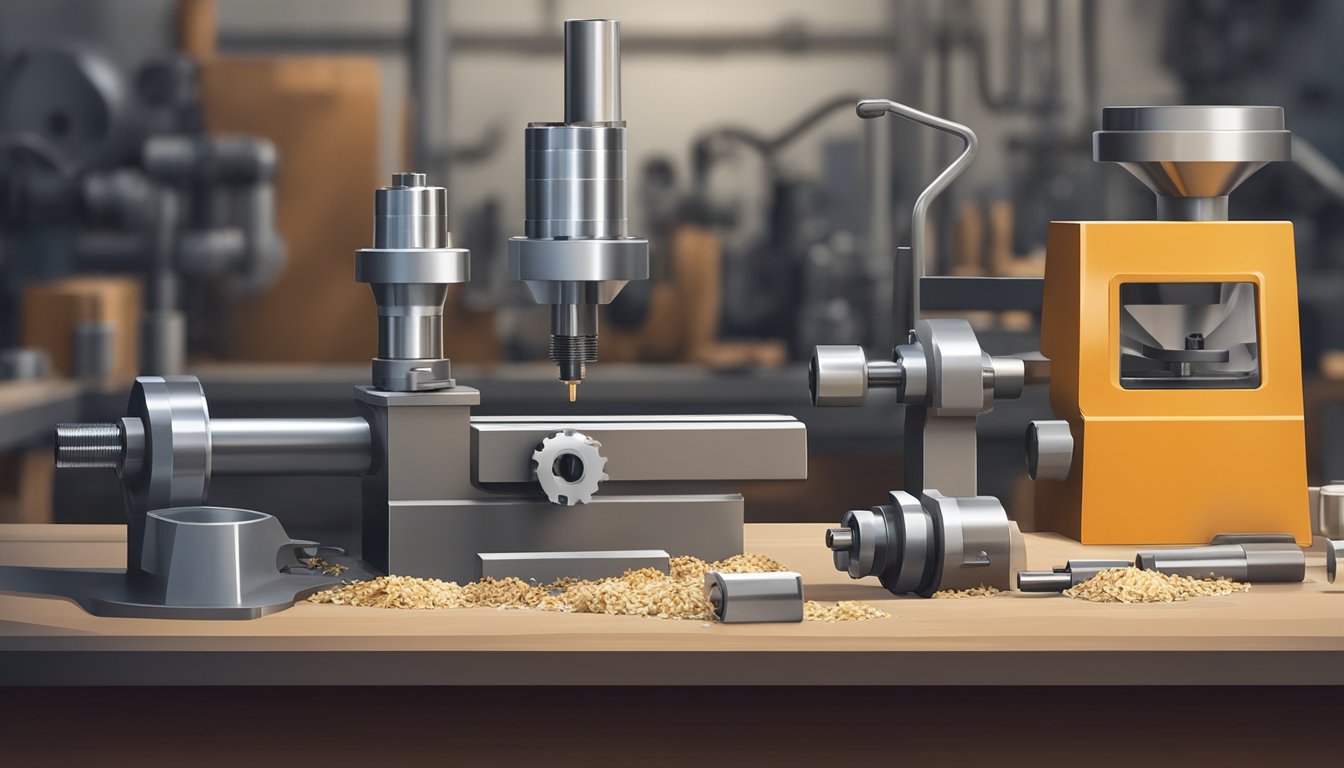
When choosing the right tool for your milling project, it’s essential to understand the fundamental differences between face mills and end mills. These two common milling cutters serve distinct purposes and have unique design features that make them suitable for specific applications.
What Is A Face Mill?
A face mill is a cutting tool designed primarily to create flat surfaces perpendicular to the spindle axis. It typically has multiple cutting edges (or inserts) arranged along the periphery of the tool body. These cutting edges do the actual work of removing material.
Face mills are generally larger in diameter than end mills, which allows them to cover more surface area in a single pass. They excel at high material removal rates, making them ideal for large-scale surfacing operations.
The cutting action of a face mill occurs mainly at its bottom face, with the peripheral edges creating the finished surface. Most face mills can only cut in the horizontal plane and cannot create vertical walls like end mills can.
What Is An End Mill?
An end mill is a more versatile milling cutter that can cut in multiple directions. Unlike face mills, end mills can cut using both their sides and bottom edges, allowing them to create various features including slots, pockets, and contours.
These tools come in many varieties including:
- Flat end mills for general-purpose work
- Ball end mills for curved surfaces
- Bull nose end mills for blended features
End mills are typically smaller in diameter than face mills but can perform more types of operations. They’re excellent for detail work and creating complex geometries.
We often use end mills when we need to cut vertically or create three-dimensional shapes. While they can perform some facing operations, they’re not as efficient as face mills for large flat surfaces.
Key Terminology For Newcomers
If you’re new to milling, here are some essential terms to understand:
| Term | Definition |
|---|---|
| Fluite | Cutting edges on the tool; more flutes usually mean finer finishes |
| Chipload | Amount of material removed by each cutting edge per revolution |
| Feed rate | Speed at which the tool moves through the material |
| RPM | Rotational speed of the cutting tool |
Climb milling vs. conventional milling refers to the direction of the cut relative to the rotation of the tool. In climb milling, the cutter rotates in the same direction as the feed, which often produces better finishes.
Die laag on milling cutters affects performance and tool life. Common coatings include TiN (titanium nitride), AlTiN (aluminum titanium nitride), and ZrN (zirconium nitride).
Understanding these basics will help you make better decisions when selecting between face mills and end mills for your specific machining needs.
Design And Functionality Comparison

Face mills and end mills differ significantly in their design features, which directly impacts their performance and applications. These differences influence how each tool handles various materials and cutting operations.
Cutting Edge Configurations
Face mills typically feature multiple cutting inserts arranged around the periphery of the tool body. These inserts are removable and replaceable, which is cost-effective when they wear out.
Most face mills have between 4-24 inserts depending on the diameter. The positioning of these inserts creates a wide cutting path, perfect for large flat surfaces.
End mills, on the other hand, usually have 2-8 flutes (cutting edges) that run along the side and sometimes across the bottom of the tool. The number of flutes affects:
- Chip evacuation space (fewer flutes = more space)
- Cutting strength (more flutes = stronger cutting action)
- Surface finish (more flutes often = smoother finish)
For aluminum and non-ferrous materials, we recommend 2-3 flutes, while steel machining typically needs 4+ flutes for better results.
Size And Diameter Differences
Face mills are generally larger in diameter than end mills, typically ranging from 2-20 inches. This larger size allows them to cover more surface area in a single pass, making them efficient for facing operations.
The substantial diameter of face mills means they need more powerful machines with rigid setups to handle the cutting forces involved.
End mills come in much smaller diameters, typically from 1/64″ to 3″ with the most common sizes being:
- 1/8″ (0.125″)
- 1/4″ (0.25″)
- 1/2″ (0.5″)
- 3/4″ (0.75″)
This smaller size gives end mills versatility for creating pockets, slots, and contoured surfaces where precision matters more than material removal rate.
Ball end mills, square end mills, and radius end mills are all variations that offer different profiles for specific applications.
Helix Angle Variations
The helix angle on cutting tools significantly impacts their performance. For end mills, the helix angle refers to the spiral of the flutes around the tool body.
Standard end mills typically have a 30° helix angle, which offers a good balance between strength and chip evacuation.
High helix end mills (45°-60°) excel at:
- Reducing cutting forces
- Improving chip evacuation
- Providing smoother cutting action
- Better performance in softer materials
Face mills generally have a fixed or slight helix angle on their inserts. This design focuses more on the lead angle (the angle between the cutting edge and the workpiece).
The lead angle in face mills typically ranges from 0°-45°, with 45° being common for general purposes and lower angles for finishing operations.
Tool Geometry Impact On Performance
The geometry of milling tools directly affects their performance capabilities. Face mills with positive rake angles reduce cutting forces and heat generation, making them suitable for machining materials like aluminum.
Negative rake angles on face mills increase tool strength but require more power. This makes them better for tough materials like stainless steel.
For end mills, we find that different geometries serve specific purposes:
- Flat end mills: Perfect for creating square shoulders and flat bottom pockets
- Ball end mills: Ideal for 3D contours and fillets
- Radius end mills: Combine attributes of both, offering strength with some contouring ability
Die corner design is also crucial. Sharp corners provide precision but are fragile, while radius corners offer durability at the expense of exact geometry.
Chip breakers and flute designs also play important roles in preventing chip recutting and ensuring proper chip evacuation during operation.
Performance Characteristics

Face mills and end mills differ significantly in their performance during machining operations. The tool you select will impact everything from how quickly you can remove material to the quality of your finished surface. Let’s explore these critical performance factors to help you make better machining decisions.
Material Removal Rates
Face mills generally offer higher material removal rates than end mills. This advantage comes from their larger diameter and multiple cutting edges. A typical face mill can remove up to 3-5 times more material per pass than an end mill of similar quality.
When we need to quickly clear large flat surfaces, face mills are our go-to choice. They excel at rough machining operations where speed matters more than fine detail.
End mills, while slower at material removal, provide better control for precision milling. They’re ideal when you need to balance material removal with accuracy on more complex parts.
Remember that pushing either tool beyond its recommended snyparameters can lead to premature wear and poor results.
Cutting Direction Capabilities
End mills offer superior flexibility in cutting directions. They can cut:
- Axially (plunging)
- Radially (side cutting)
- In combination movements for three-dimensional machining
This versatility makes end mills excellent for profiling, pocketing, and creating curved surfaces in a single setup.
Face mills are more limited, primarily cutting perpendicular to their axis. They excel at creating flat surfaces but struggle with complex contours and profiles.
The cutting force distribution also differs between these tools. Face mills spread cutting forces across multiple inserts, reducing the load on any single cutting edge and allowing for more aggressive cuts on flat surfaces.
Chip Formation And Evacuation
Proper chip management is crucial for successful milling operations. Face mills typically produce larger, thicker chips that evacuate easily from the cutting zone. Their open design allows chips to clear quickly, reducing heat buildup and extending tool life.
With face mills, we can often achieve better chip evacuation because:
- The cutting action is more direct
- There’s more space between cutting edges
- Chips are pushed away from the workpiece more efficiently
End mills can struggle with chip evacuation, especially in deep pockets or slots. Their tighter flute spacing can lead to chip packing and recutting, increasing heat and reducing tool life.
For critical operations, selecting tools with proper flute geometry and using appropriate cutting fluid can significantly improve chip evacuation for both tool types.
Surface Finish Quality
The surface finish quality depends greatly on your tool choice. Face mills typically produce excellent surface finishes on flat surfaces, often requiring minimal additional finishing operations. Their multiple cutting edges create a more consistent cutting action across the workpiece.
End mills can achieve good surface finishes but may show more tool marks, especially when cutting with the side of the tool. They excel at producing precise dimensional accuracy in complex features where surface finish might be secondary.
For highest precision milling applications, we recommend:
- Using a finishing face mill with a high insert count for flat surfaces
- Selecting end mills with more flutes for better surface finish on contoured features
- Adjusting cutting speeds and feeds based on material and desired finish
The right combination of tool selection and cutting parameters will help you achieve the best balance of machining time and surface quality.
Applications By Industry

Face mills and end mills serve different purposes across various manufacturing sectors. Each tool has specific strengths that make it ideal for particular industry applications where precision CNC machining is essential.
Automotive Applications
In automotive manufacturing, we use both face mills and end mills extensively. Face mills are perfect for creating flat engine blocks and cylinder heads where large, flat surfaces need perfect finishes. Their large cutting area makes quick work of these components.
End mills shine when machining transmission housings and complex engine parts. Their versatility allows us to create intricate cooling channels and precise valve seats. When working with aluminum parts like intake manifolds, smaller end mills help us achieve the detailed features needed.
Common automotive applications:
- Face mills: Engine blocks, cylinder heads, transmission cases
- Eindmeulens: Valve components, brake calipers, custom engine parts
For high-volume production lines, face mills reduce machining time significantly. End mills are better suited for custom or aftermarket parts where detail matters more than speed.
Aerospace Uses
Aerospace demands exceptional precision and specialized materials. We often use titanium and heat-resistant alloys that require specific cutting approaches.
Face mills excel when creating flat mounting surfaces on bulkheads and structural components. Their stability provides the tight tolerances needed for aircraft assembly. Large aircraft frames benefit from the efficient material removal face mills offer.
End mills are crucial for complex aerospace parts like turbine components and lightweight structural elements. Their ability to create 3D contours makes them essential for wing spars and control surfaces.
Material considerations in aerospace:
- Titanium components → Specialized end mills with proper coatings
- Aluminum structures → High-speed face milling for efficiency
- Composite materials → Special end mill geometries to prevent delamination
The aerospace industry often requires both tools working together in a single CNC machining center to achieve final parts.
Medical Device Manufacturing
Medical device manufacturing requires extreme precision and often uses specialized materials. End mills dominate this industry due to the intricate nature of medical components.
We use small-diameter end mills to create the precise features needed in orthopedic implants like knee and hip replacements. These tools can produce the exact surface textures that promote bone integration.
Face mills have more limited applications but are valuable for creating flat mounting surfaces on medical equipment housings and larger device components.
Key medical applications:
- Surgical instruments (end mills for detail work)
- Implantable devices (specialized end mills for biocompatible materials)
- Medical equipment housing (face mills for flat surfaces)
The extremely tight tolerances in medical manufacturing often require us to use high-speed CNC machining with premium end mills designed specifically for this industry.
Heavy Machinery Production
In heavy machinery production, efficiency and durability are essential. Face mills are workhorses in this industry, quickly removing large amounts of material from cast iron and steel components.
We regularly use face mills for machining large equipment bases, industrial pump housings, and heavy equipment frames. Their ability to take aggressive cuts reduces production time significantly.
End mills still play a crucial role when creating features like keyways, slots, and pockets in heavy machinery components. They’re particularly useful for maintenance parts that need to fit precisely with existing equipment.
Production considerations:
- Material hardness affects tool selection
- Part size often determines whether face or end mills are appropriate
- Production volume influences optimal tooling strategies
For very large components, specialized face mills with replaceable inserts provide both economy and precision in CNC machining operations.
Selection Criteria For Projects

Choosing between a face mill and end mill depends on several key factors. We’ll explore how materials, surface needs, project size, and budget influence this decision to help you make the right choice for your specific machining tasks.
Materiële oorwegings
The workpiece material plays a crucial role in tool selection. Face mills work best with harder materials like cast iron and steel because of their sturdy construction and multiple cutting edges that distribute cutting forces.
When working with aluminum or softer materials, we recommend using eindmeulens as they prevent material buildup on the cutting edges. End mills with proper flute designs allow better chip evacuation in these materials.
For tough-to-machine alloys like titanium or Inconel, specialized end mills with variable pitch and proper coatings provide better results. We’ve found that securing these materials in appropriate fixtures is essential to prevent movement during cutting operations.
Remember that material hardness affects tool life significantly. Harder materials require slower speeds and stronger tools, while softer materials allow for faster material removal rates.
Surface Requirements
The finish quality you need directly impacts your milling choice. Face mills excel at creating flat, smooth surfaces across large areas. Their multiple cutting edges produce consistent finishes, making them ideal for visible surfaces or mating components.
When you need precision of complex profiles, eindmeulens are your go-to tool. They create detailed contours, pockets, and slots with good surface quality. For tight tolerances, we recommend smaller diameter end mills with more flutes.
Surface roughness specifications matter too:
- Ra < 1.6μm: Use finish-specific face mills or fine-tooth end mills
- Ra 1.6-3.2μm: Standard face mills work well
- Ra > 3.2μm: Focus on material removal rate over finish
Proper tool holders and fixture stability are essential for achieving consistent surface quality. Even the best tool can’t overcome poor workholding.
Project Scale Factors
The size of your project significantly influences tool selection. For large flat surfaces, face mills provide efficiency through higher material removal rates. They cover more area per pass, reducing machining time on industrial-scale projects.
Eindmeulens work better for smaller projects or detailed work. They’re more versatile for various operations like slotting, contouring, and pocketing. When working with complex parts, we typically use end mills of different sizes to complete various features.
Project quantity matters too:
- One-off projects: Versatility of end mills often wins
- Production runs: Face mills’ efficiency becomes more valuable
Workshop space also impacts your choice. Face mills generally require more robust machines with higher horsepower, while end mills can work effectively on smaller machines. When setting up multiple operations, compatible fixtures that work with both tool types save significant setup time.
Budget Constraints
Cost considerations extend beyond just the initial tool purchase. Face mills have higher upfront costs but use indexable inserts that can be rotated or replaced when worn. This makes them economical for high-volume work despite the higher initial investment.
Eindmeulens cost less initially but must be replaced entirely when worn. However, they require less powerful machines, potentially saving on equipment costs. For smaller shops, we’ve found that starting with quality end mills provides more versatility per dollar spent.
Tool life factors to consider:
- Rigidity: Proper fixtures and setups extend tool life
- Cutting parameters: Appropriate speeds and feeds prevent premature wear
- Coolant use: Proper cooling extends tool life significantly
Don’t forget maintenance costs! Face mill inserts need regular rotation and replacement, while boorpunte and end mills require occasional resharpening. For tight budgets, investing in good workholding before expensive tooling often yields better results.
Machine Requirements

Selecting the right milling tool requires careful consideration of your machine’s capabilities. Both face mills and end mills have specific machine requirements that can significantly impact your machining results and tool life.
Rigidity Considerations
Machine rigidity is perhaps the most critical factor when choosing between face mills and end mills. Face mills typically demand more rigid machine setups due to their larger cutting diameters and higher cutting forces.
When using face mills, your machine must be able to handle more substantial lateral forces without deflection. Many machinists we’ve worked with have noticed that even small amounts of machine flex can cause chatter and poor surface finish with face mills.
End mills, being smaller in diameter, generally create less cutting force but may require higher spindle speeds. For precision work with end mills, your machine still needs good rigidity, especially when working with hard materials or taking deeper cuts.
Quick rigidity checklist:
- Face mills: Need robust machines with excellent rigidity
- End mills: Can work on less rigid setups, but precision still requires stability
- Both: Vibration control becomes more critical as cutting speed increases
Power Requirements
The power needs for face milling versus end milling differ significantly. Face mills typically require more horsepower due to their larger cutting area and multiple inserts engaging the workpiece simultaneously.
Your machine’s motor power must match the demands of your chosen tool. A 4″ face mill with 5 inserts might need 5-7 HP for effective cutting in steel, while a 1/2″ end mill might only need 1-2 HP for similar material.
Spindle speed requirements also vary. End mills often need higher RPMs to achieve optimal cutting speeds, especially when using solid carbide or high-speed steel (HSS) tools. Face mills generally operate at lower RPMs but need more torque.
We’ve found that many smaller machines can handle end mills effectively but struggle with larger face mills due to power limitations. Consider these factors when selecting your milling strategy:
- Motor horsepower
- Available torque at various RPM ranges
- Speed control precision
- Acceleration/deceleration capabilities
Toolholding Systems
The right toolholding system can make or break your milling operation. Face mills typically use larger arbors or shell mill holders that connect directly to the spindle, providing excellent stability for heavier cuts.
End mills require different toolholding solutions based on their shank type:
- Collet holders: Good for general purpose work
- Shrink fit: Excellent runout control and balance
- Hydraulic holders: Great damping characteristics
- Milling chucks: Solid holding power with decent runout
For high-precision work with solid carbide end mills, we recommend toolholders with runout of less than 0.0002″. This precision becomes even more critical at higher speeds.
When using indexable tools, the interface between the cutting head and holder must be clean and properly torqued. Even small amounts of contamination can lead to runout issues and premature tool failure.
Setup Best Practices
Proper setup ensures you get the most from your milling operation regardless of whether you’re using face mills or end mills.
For face milling operations, we recommend:
- Ensure the workpiece is properly supported across its entire surface
- Use multiple clamps positioned away from cutting paths
- Check for potential clearance issues before starting
- Verify spindle tram for parallel cutting surfaces
When setting up for end milling:
- Minimize tool overhang whenever possible
- Use the largest diameter tool that fits your feature requirements
- Consider climb milling for better surface finish when your machine allows
- Pay attention to chip evacuation, especially for deeper pockets
Tool runout checking should be standard practice for both types of operations. Even 0.001″ of runout can reduce tool life by 50% and compromise surface finish quality.
We’ve seen substantial improvements in tool life and machining quality when shops implement proper warmup cycles for their machines before precision work. This helps stabilize thermal conditions throughout the machine structure.
Economic Considerations
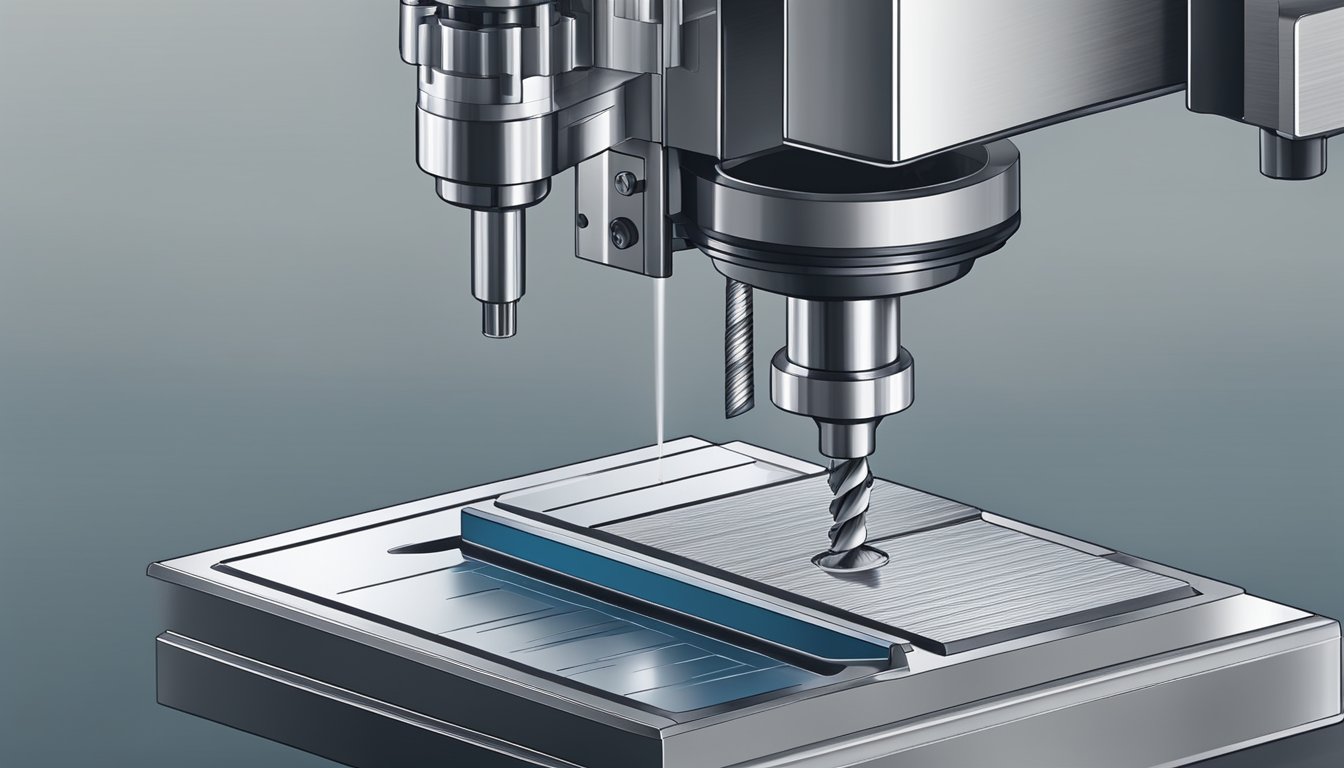
When choosing between face mills and end mills, the financial aspects often play a crucial role in decision-making. Both tools have different cost structures and economic implications that can significantly impact your workshop’s bottom line.
Aanvanklike beleggingsvergelyking
Face mills typically require a higher upfront investment than end mills. A quality face mill with replaceable inserts can cost anywhere from $150 to $800 depending on size and quality. This higher initial cost might seem daunting at first glance.
End mills, on the other hand, generally have a lower entry price point. You can find solid carbide end mills starting around $20-30 for basic models, making them more accessible for beginners or small workshops with limited budgets.
However, it’s worth noting that face mills often come with multiple cutting edges via replaceable inserts. This design feature means you’re essentially buying multiple cutting tools in one, which can offset the higher initial price tag over time.
Tool Life Expectations
Face mills typically offer longer operational lifespans due to their replaceable insert design. When one cutting edge dulls, you can simply rotate or replace the insert rather than replacing the entire tool. Most inserts provide 4-8 cutting edges, effectively multiplying your tool life.
End mills, while less expensive initially, generally have shorter lifespans as single-piece tools. Once they dull, resharpening is possible but limited, and eventually, full replacement becomes necessary.
We’ve found that in high-volume production environments, face mills can be more economical long-term despite higher upfront costs. For example, a face mill with 8 inserts (each with 4 cutting edges) could provide 32 fresh cutting surfaces before needing new inserts.
Maintenance Requirements
Maintenance costs differ significantly between these tool types. Face mills require regular insert replacement, but the body itself rarely needs replacement unless damaged. Inserts typically cost $5-20 each, depending on quality and coating.
End mills need regular resharpening, which either requires in-house equipment or outsourced services. A professional resharpening service might charge $10-15 per end mill, and each tool can only be resharpened a limited number of times.
The maintenance setup is also different. Face mills need basic torque wrenches and cleaning supplies for insert changes. End mills require either investment in sharpening equipment ($500+) or establishing a relationship with a resharpening service.
Overall Cost Efficiency
When analyzing cost efficiency, we need to consider material removal rates alongside tool costs. Face mills excel at removing large amounts of material quickly, reducing machining time and associated costs.
End mills operate more slowly but offer precision and versatility. For small projects or detail work, this efficiency balance favors end mills despite their shorter lifespan.
Workshop size and production volume heavily influence which option provides better value. Here’s a quick comparison:
| Factor | Face Mills | End Mills |
|---|---|---|
| Aanvanklike koste | Higher ($150-800) | Lower ($20-100) |
| Ongoing costs | Insert replacement | Full tool replacement or resharpening |
| Best for | Produksie met 'n hoë volume | Small batches, detailed work |
| Material removal rate | Hoër | Laat sak |
Production volume is the key determinant. For hobbyists or small shops with limited use, end mills often prove more economical despite needing eventual replacement.
Practical Decision Guide
Choosing between face mills and end mills depends on your specific project needs, available equipment, and desired results. Here’s how to make the right choice for your machining project.
When To Definitively Choose A Face Mill
Face mills are your best friend when dealing with large, flat surfaces. When you need to remove material quickly across wide areas, a face mill will outperform an end mill every time.
Ideal scenarios for face mills:
- Large workpieces with flat surfaces
- When surface finish is a priority
- High material removal rates are needed
- You have a rigid machine setup
- Initial facing operations on rough stock
Face mills typically have multiple cutting edges (inserts) that work together to create smoother finishes. We’ve found that for production environments where time equals money, face mills can reduce machining time by up to 60% on large flat surfaces.
Remember that face mills require more horsepower. Your machine needs enough power to handle the cutting forces generated by multiple cutting edges engaging simultaneously.
When To Definitively Choose An End Mill
End mills shine when precision and versatility are your top priorities. These tools excel at creating detailed features and working in tight spaces.
End mills are the clear choice when:
- Creating slots, pockets, and contours
- Working with smaller workpieces
- Machining vertical walls
- You need plunge cutting capability
- Performing detail work
One of the biggest advantages of end mills is their ability to cut in any direction. We can use them for side milling, plunge cutting, and even face milling smaller areas.
End mills are more versatile but typically remove material more slowly than face mills on large surfaces. For precise work like mold making or intricate parts, their versatility makes them indispensable.
Hybrid Approaches And Alternatives
Sometimes the best approach combines both tools or uses specialized alternatives for specific situations.
Effective hybrid strategies:
- Use face mills for initial stock removal
- Follow with end mills for detail work
- Consider shell mills for medium-sized areas
- Try fly cutters for light-duty facing with minimal investment
We’ve seen great results using modular tooling systems that allow quick changes between different cutting heads on the same holder. This flexibility can save significant setup time.
For hobby machinists or those with smaller machines, a good quality end mill can handle occasional facing operations. Single-insert face mills offer a middle ground for smaller machines while still providing some facing advantages.
Don’t forget about specialized tools like high-feed mills that combine aspects of both tool types for specific applications.
Conclusion And Resources

Choosing between face mills and end mills doesn’t have to be difficult once you understand their key differences and ideal applications. Both tools have their place in your machining toolkit depending on your specific project needs.
Summary Of Key Differences
Face mills and end mills differ in several important ways that affect when you should use each tool. Face mills excel at creating flat surfaces perpendicular to the spindle axis (90 degrees). They typically have multiple cutting edges and remove material using their faces rather than their sides.
End mills are more versatile tools that can cut using both their sides and ends. This makes them ideal for creating contours, slots, and profiles. While end mills can perform some face milling operations, they’re generally less efficient at creating large flat surfaces than dedicated face mills.
The machine setup also differs between these tools. Face mills often work best with horizontal milling machines, while end mills are commonly used with vertical milling machines.
Decision Flowchart
Use this simple flowchart to help you decide which tool is right for your project:
Face Mill is best when:
- You need to create large, flat surfaces
- Your cut needs to be perpendicular to the spindle
- Maximum material removal is the priority
- Surface finish quality is critical
- You have a rigid machine setup
End Mill is best when:
- You need versatility for different cutting operations
- You’re working with contoured surfaces or slots
- You need to cut in multiple directions
- Your project requires intricate details
- You have limited tool options and need one tool for multiple jobs
Recommended Resources For Further Learning
We recommend several resources to deepen your understanding of milling operations:
Books:
- CNC Programming Handbook by Peter Smid
- Machinery’s Handbook – A comprehensive reference for all machining operations
Online Communities:
- Practical Machinist forums (practicalMachinist.com)
- Reddit’s r/Machinists subreddit
Video Tutorials:
- NYC CNC YouTube channel
- Titans of CNC Academy
Training Programs:
- Haas Automation’s Tip of the Day series
- Sandvik Coromant’s milling training modules
Don’t forget to consult your tool manufacturer’s guidelines for specific recommendations on speeds, feeds, and applications for your particular face and end mills.


