

Tìm kiếm các công cụ phù hợp để giải quyết các dự án gia công bằng thép không gỉ? Các nhà máy kết thúc thô là những người bạn tốt nhất của bạn khi bạn cần loại bỏ một lượng lớn vật liệu một cách nhanh chóng. Các nhà máy kết thúc thô hiệu suất cao được thiết kế dành riêng cho thép không gỉ có thể cung cấp các vết cắt chính xác trong khi duy trì độ bền trong suốt quá trình cắt.

Khi chúng tôi làm việc với thép không gỉ, chúng tôi cần máy cắt có thể xử lý độ bền của vật liệu và xu hướng làm việc cứng. Các nhà máy kết thúc thô (còn được gọi là máy cắt kéo hoặc cuốc) được chế tạo khác với Nhà máy kết thúc tiêu chuẩn, với hình học răng đặc biệt phá vỡ chip thành các mảnh nhỏ hơn và giảm lực cắt. Thiết kế này giúp chúng tôi tránh những cơn đau đầu thông thường của phay thép không gỉ như hao mòn công cụ quá mức và hoàn thiện bề mặt kém.
Chúng tôi đã phát hiện ra rằng các nhà máy kết thúc thô cacbua rắn từ các nhà sản xuất như Kennametal và Ati Stellram cũ (hiện thuộc sở hữu của Kennametal) thực hiện đặc biệt tốt trên các phôi bằng thép không gỉ. Những máy cắt này cho phép chúng tôi tối đa hóa tốc độ loại bỏ vật liệu trong khi kéo dài tuổi thọ của công cụ – Một chiến thắng cho năng suất và ngân sách của bạn. Với chiến lược thô, bạn sẽ chuẩn bị các bộ phận của mình để hoàn thiện các hoạt động hiệu quả hơn bao giờ hết.
Chọn vật liệu và lớp phủ công cụ tối ưu
Choosing the right tool material and coating is crucial for successful thép không gỉ roughing operations. The proper combination will significantly impact tool life, cutting efficiency, and surface finish quality.
Why Solid Carbide Is The Industry Standard
Solid carbide end mills have become the go-to choice for machining stainless steel. Why? They offer exceptional hardness and heat resistance compared to other materials. When roughing stainless steel, you need tools that can withstand the heat and stress.
Carbide end mills maintain their cutting edge longer, even under the challenging conditions stainless steel presents. This means fewer tool changes and more consistent results throughout your machining process.
We’ve found that solid carbide provides the best balance of:
- Toughness to resist chipping
- Hardness to maintain edge sharpness
- Thermal stability to handle the heat generated
Most professional machinists we’ve worked with prefer carbide end mills with 10% cobalt content for roughing stainless steel. This composition provides excellent wear resistance without becoming too brittle.
Comparison With Alternative Materials
While solid carbide dominates the market, other materials do have specific applications. High-Speed Steel (HSS) end mills are more affordable but wear down quickly in stainless steel applications. They’re best saved for occasional or light-duty work.
Comparison Table: Tool Materials for Stainless Steel
| Vật liệu | Trị giá | Cuộc sống công cụ | Khả năng chịu nhiệt | Best Use Case |
|---|---|---|---|---|
| cacbua rắn | Cao | Xuất sắc | Xuất sắc | Professional production |
| HSS | Thấp | Nghèo | Hội chợ | Occasional use |
| HSSE (w/Vanadium) | Trung bình | Tốt | Tốt | Medium production |
HSSE (High-Speed Steel with Vanadium) offers a middle ground. These tools have better wear resistance than standard HSS and are suitable for aluminum and some stainless steel work. They cost less than carbide but don’t last as long.
For serious production work with stainless steel, the investment in solid carbide tools pays off through extended tool life and better performance.
Specialized Coatings And Their Benefits For Stainless Steel
The right coating can dramatically improve an end mill’s performance in stainless steel. TiAlN coating (Titanium Aluminum Nitride) is our top recommendation for stainless steel roughing operations.
TiAlN coated carbide end mills offer:
- Superior heat resistance (up to 800°C)
- Reduced friction between the tool and workpiece
- Increased hardness that improves with heat
This coating forms a thin aluminum oxide layer during cutting that acts as a thermal barrier, helping to direct heat into the chips rather than the tool.
Another excellent option is AlTiN coating, which provides similar benefits with slightly different characteristics. For extremely demanding applications, we sometimes recommend multi-layer coatings that combine the benefits of different materials.
When selecting your coating, consider your specific operation. Are you doing heavy roughing? A thicker TiAlN coat might be best. Working with specialized stainless alloys? A nano-composite coating could provide the edge you need.
Critical Design Features For Stainless Steel Roughing
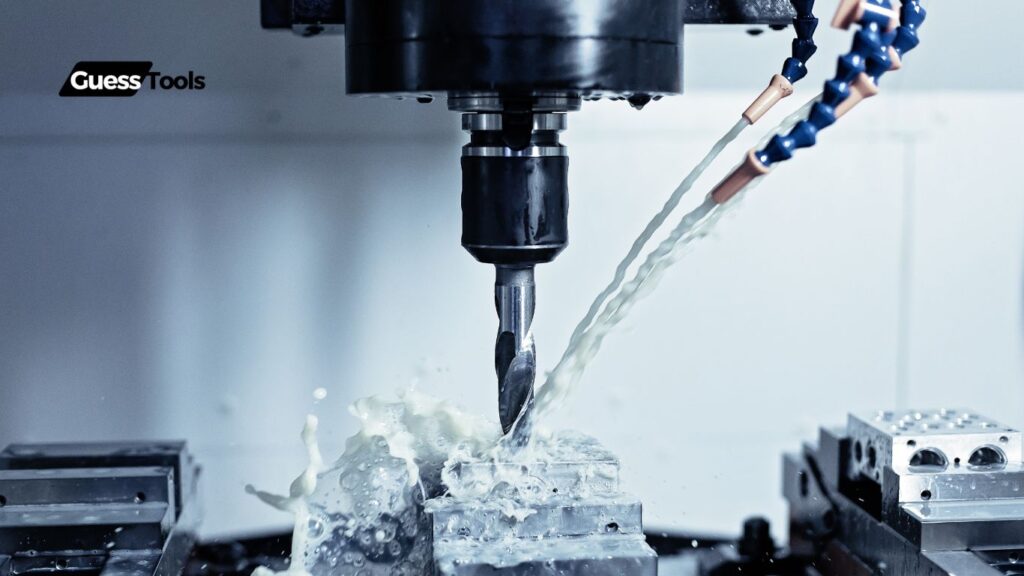
Selecting the right roughing end mill for stainless steel requires understanding specific design elements that impact performance. These features can dramatically improve your cutting efficiency while extending tool life when working with this challenging material.
Flute Count Considerations
When roughing stainless steel, the number of flutes on your end mill matters significantly. 4-5 flutes is typically ideal for most stainless steel roughing operations. Why? Let’s break it down:
- 4 sáo: Provides good chip evacuation with moderate feed rates
- 5 flutes: Allows higher feed rates while maintaining stability
- 3 sáo: Better for deeper cuts where chip clearance is critical
We’ve found that 5-flute tools generally offer the best balance for roughing applications in stainless steel. They remove material quickly while distributing cutting forces evenly. This reduces the heat buildup that’s so problematic when machining stainless.
Remember that fewer flutes create larger chip pockets, which helps prevent chip recutting—a common issue when roughing stainless steel.
Specialized Designs
Roughing end mills for stainless steel feature unique design elements that distinguish them from standard tools:
Serrated cutting edges are perhaps the most visible difference. These “teeth” break chips into smaller, manageable pieces that evacuate more easily from the cutting zone.
High helix angles (usually 35-45 degrees) help lift chips away from the workpiece surface. This design feature is crucial for stainless steel, which produces stubborn, stringy chips that can cause tool failure.
Variable pitch patterns between flutes reduce harmonic vibration, which is especially important when roughing stainless steel at high material removal rates.
Robust core thickness provides the strength needed to withstand the cutting forces encountered in stainless steel.
How These Features Address Stainless Steel’s Specific Challenges
Stainless steel presents unique machining difficulties that specific roughing end mill designs help overcome:
Work hardening resistance: The serrated edges and variable pitch design minimize the work hardening effect by maintaining consistent cutting forces and reducing vibration.
Quản lý nhiệt: Multiple flutes distribute heat across more cutting edges, while proper chip evacuation prevents heat buildup. This addresses stainless steel’s poor thermal conductivity.
Chip control: The combination of serrated edges and high helix angles transforms those problematic stringy chips into smaller, manageable fragments that clear the cutting zone efficiently.
Tool wear reduction: Specialized coatings like AlTiN or TiCN provide a protective barrier against the abrasive nature of stainless steel, extending tool life by up to 50% in rigorous applications.
By selecting roughing end mills with these design features, we can significantly improve our machining efficiency and tool life when working with stainless steel.
Optimizing Machine Parameters For Maximum Performance
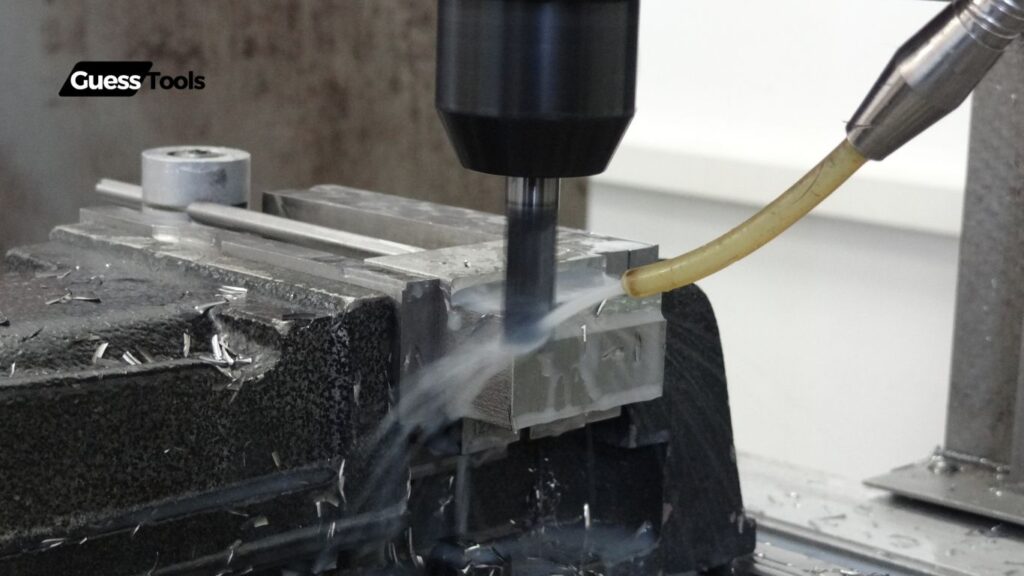
Getting the most out of your roughing end mill when working with stainless steel requires careful attention to machine parameters. The right settings can dramatically improve tool life, cutting efficiency, and surface finish quality.
Recommended Speeds And Feeds
When machining stainless steel, finding the sweet spot for speeds and feeds is crucial for success. Search results indicate that a surface feet per minute (SFM) between 100-350 is generally recommended for stainless steel.
For roughing operations, we suggest starting with these parameters:
- Chip load: Between 0.0005″ for 1/8″ tools up to 0.003″ for larger diameter tools
- Tốc độ cắt: Lower end of the range (100-150 SFM) for tougher grades
- Tỷ lệ thức ăn: Calculated based on RPM × number of flutes × chip load
For roughing operations, 5-9 flute end mills work best. Fewer flutes provide more chip space, allowing for larger step-overs and more aggressive material removal.
Are you getting chatter? Try reducing your speed by 10-15% while maintaining feed rate.
Coolant Considerations
Proper cooling is non-negotiable when roughing stainless steel due to its poor thermal conductivity and work-hardening tendencies.
Best cooling practices:
- Chất làm mát áp suất cao directed at the cutting edge helps break chips and reduce heat
- Làm mát lũ works well for general roughing operations
- Through-tool coolant is ideal for deeper pockets and holes
We’ve found that a 10% concentration of synthetic coolant provides excellent results. This helps prevent built-up edge on the tool and reduces thermal shock.
Never run stainless dry! The heat generated will dramatically shorten tool life and potentially work-harden the material, making subsequent cuts more difficult.
Parameter Adjustments Based On Different Stainless Steel Grades
Not all stainless steel behaves the same way. Different grades require specific parameter adjustments for optimal machining.
| Grade | Recommended SFM | Chip Load Adjustment | Ghi chú |
|---|---|---|---|
| 304/304L | 100-200 | Tiêu chuẩn | Most common, moderately difficult |
| 316/316L | 90-180 | Reduce by 10-15% | More gummy, reduce speed |
| 410/420 | 120-250 | Increase by 10% | Hardened types need slower speeds |
| 17-4 PH | 80-160 | Reduce by 20% | Very tough, use rigid setup |
For austenitic grades (300 series), we recommend a more conservative approach with lower speeds. These grades work-harden quickly.
For martensitic grades (400 series), slightly higher speeds can be used, but watch for tool wear carefully.
What about duplex stainless? These are the toughest to machine – reduce your speeds by 25% from what you’d use for 304.
Những thách thức phổ biến và khắc phục sự cố

Working with stainless steel using roughing end mills presents several common issues that can impact your machining results. Let’s explore how to overcome these challenges and keep your operations running smoothly.
Preventing Tool Breakage And Premature Wear
Tool wear is one of the biggest headaches when roughing stainless steel. We’ve found that incorrect cutting speeds are often the culprit. When your RPM is too high, the tool overheats quickly, especially without proper coolant.
Key prevention tips:
- Sử dụng nhà máy cuối cacbua specifically designed for stainless steel
- Reduce cutting speeds to 250-300 SFPM for 304 stainless (lower than aluminum)
- Apply abundant coolant to manage heat buildup
- Start with a 0.001″-0,002″ chip load and adjust based on results
Don’t ignore tool coatings! AlTiN and TiCN coatings significantly extend cuộc sống công cụ in stainless applications. We’ve seen tool life improvements of 30-40% with proper coatings.
Regular inspection between cuts helps catch early signs of wear before catastrophic failure occurs.
Managing Work Hardening Issues
Stainless steel loves to work harden, which can quickly destroy your end mill. This happens when you use light cuts or dwell too long in one spot.
Effective strategies include:
- Maintain consistent chip loads (never less than 0.001″ per tooth)
- Use climb milling instead of conventional milling when possible
- Keep the tool continuously engaged in the material
- Avoid dwelling or rubbing the tool against the workpiece
We recommend using roughing end mills with variable flute spacing, which helps break up harmonics and reduces chatter. This is especially important in deep pockets.
A good rule of thumb: if you see discoloration on your chips or smell burning metal, you’re probably work hardening the material.
Problem-Solving Guide For Typical Roughing Operations
When your roughing end mill clogs or burns out during stainless steel operations, try these proven solutions:
For clogging issues:
- Switch to a lower flute count (3-4 flutes for roughing rather than 7)
- Increase chip clearance with a larger flute valley design
- Make sure coolant is directed precisely at the cutting zone
For tool breakage:
- Reduce depth of cut to 30-40% of tool diameter maximum
- Check for machine vibration or weak fixturing
- Consider a more rigid tool holder (shrink fit or hydraulic)
Is your surface finish inconsistent? We often see this when feed rates are too aggressive or worn tools are used beyond their service life. Keep roughing operations between 60-70% of the tool’s rated capacity for best results.
Remember that high-temperature alloys like 304SS need more power at the spindle than standard materials. Underpowered machines will struggle regardless of tool quality.
Best Practices For Tool Management And Maintenance
Proper care of your roughing end mills for stainless steel will significantly extend their lifespan and improve your machining results. We’ve found that implementing a structured approach to Quản lý công cụ saves both time and money in the long run.
Inspection Routines To Maximize Tool Life
Regular inspection is crucial for maintaining your roughing end mills. We recommend checking your tools before and after each use for signs of wear or damage. Look for:
- Dulled cắt cạnh
- Chipping along the flutes
- Discoloration (indicating heat damage)
- Buildup of material on cutting surfaces
Một kính phóng đại 5X đơn giản hoạt động để kiểm tra nhanh, nhưng kính hiển vi 10-20X tốt hơn để kiểm tra chi tiết. Chụp ảnh các công cụ mới làm điểm tham chiếu để so sánh sau.
Thiết lập lịch kiểm tra hàng tuần cho các công cụ được sử dụng thường xuyên. Ghi Mẫu mặc Trong một nhật ký bảo trì để xác định các vấn đề định kỳ. Điều này giúp dự đoán cuộc sống của công cụ và ngăn ngừa những thất bại bất ngờ.
Công cụ sạch sau khi kiểm tra bằng cách sử dụng bàn chải mềm và dung môi thích hợp. Tránh khí nén, có thể điều khiển chip sâu hơn vào máy.
Khuyến nghị lưu trữ và xử lý
Lưu trữ thích hợp ngăn ngừa thiệt hại sớm cho các nhà máy cuối cacbua đắt tiền của bạn. Luôn lưu trữ các công cụ trong:
- Các khe hoặc ngăn riêng lẻ để ngăn liên hệ với các công cụ khác
- Môi trường khô với kiểm soát độ ẩm (40-60% là lý tưởng)
- Bao bì ban đầu hoặc chủ sở hữu công cụ được thiết kế có mục đích
Không bao giờ ném các công cụ vào các ngăn kéo nơi họ có thể chống lại nhau!
Khi xử lý các công cụ, chúng tôi luôn đeo găng tay để ngăn vân tay và dầu chuyển sang cacbua. Những dư lượng này có thể gây ăn mòn hoặc ảnh hưởng đến hiệu suất.
Tổ chức lưu trữ của bạn theo loại công cụ và kích thước để dễ dàng truy cập. Dán nhãn mọi thứ rõ ràng với kích thước, vật liệu và mục đích. Cân nhắc sử dụng mã màu để nhận dạng nhanh.
Giữ một hệ thống kiểm kê để theo dõi việc sử dụng công cụ và lịch trình thay thế. Điều này ngăn chặn các điểm dừng công việc do các công cụ bị thiếu.
Khi nào thay thế Vs. Khi nào nên sắp xếp lại
Đưa ra quyết định thông minh về việc thay thế so với việc sắp xếp lại tiết kiệm tiền mà không phải hy sinh chất lượng. Ở đây, hướng dẫn của chúng tôi:
Hãy xem xét việc sắp xếp lại khi:
- Công cụ cho thấy sự hao mòn đồng nhất mà không bị sứt mẻ
- Dưới ít hơn 25% vật liệu tiên tiến
- Lớp phủ công cụ vẫn còn nguyên vẹn
- Bạn cần một công cụ một cách nhanh chóng và có khả năng sắp xếp lại
Thay thế công cụ khi:
- Sứt mẻ hoặc vỡ đáng kể đã xảy ra
- Nhiều sự sắp xếp lại đã được thực hiện
- Đường kính cốt lõi đã được giảm quá nhiều
- Chi phí của việc sắp xếp lại tiếp cận 60-70% giá công cụ mới
Theo dõi số lượng chu kỳ sắp xếp lại cho mỗi công cụ. Hầu hết các nhà máy kết thúc thô cho thép không gỉ có thể được sắp xếp lại 2-3 lần trước khi thay thế trở nên kinh tế hơn.
Hãy nhớ rằng, một công cụ mới được tăng lại có thể yêu cầu tốc độ và nguồn cấp dữ liệu khác nhau so với công cụ mới. Điều chỉnh các tham số gia công của bạn cho phù hợp.
Dữ liệu hiệu suất trong thế giới thực và các cân nhắc ROI
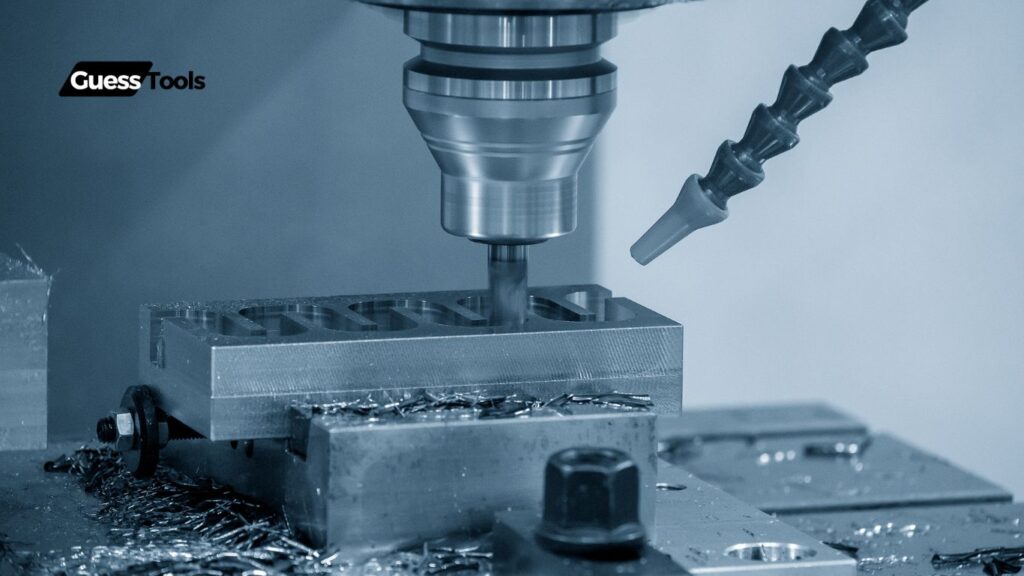
When selecting roughing end mills for stainless steel, understanding performance data and cost implications can dramatically impact your shop’s bottom line. Let’s examine the numbers behind tool selection and how they affect your overall productivity and profitability.
Industrial Statistics On Tool Life And Performance
Most shops report that premium roughing end mills for stainless steel last 2-3 times longer than standard options. Data from several major manufacturers shows an average tool life of 45-60 minutes of cutting time for standard carbide tools in 316 stainless, while premium tools often exceed 120 minutes.
Tốc độ tác động đáng kể đến cuộc sống công cụ. Như một thợ máy đã lưu ý trong nghiên cứu của chúng tôi, “Thực hiện vết cắt lớn nhất ở mức thức ăn cao nhất và tốc độ chậm nhất bạn có thể.” Cách tiếp cận này thường dẫn đến tăng 30-40% tuổi thọ công cụ.
Quản lý nhiệt độ là rất quan trọng trong không gỉ. Các nghiên cứu cho thấy các công cụ duy trì nhiệt độ dưới 800 ° F dài hơn khoảng 40% so với các công cụ thường xuyên vượt quá ngưỡng này.
Các cửa hàng sử dụng báo cáo chiến lược thô bằng thép không gỉ chuyên dụng:
- Giảm 25-35% thời gian chu kỳ tổng thể
- Giảm 50-70% thay đổi công cụ
- Chi phí thấp hơn 15-20% mỗi phần
Phân tích lợi ích chi phí của Vs. Công cụ tiêu chuẩn
Các nhà máy kết thúc thô cao cấp thường có giá cao hơn 40-60% so với các tùy chọn tiêu chuẩn. Tuy nhiên, khoản đầu tư ban đầu tăng này thường trả cổ tức thông qua tuổi thọ công cụ mở rộng và cải thiện hiệu suất.
Ví dụ so sánh chi phí:
| Loại công cụ | Chi phí ban đầu | Các bộ phận cho mỗi công cụ | Chi phí cho mỗi phần |
|---|---|---|---|
| Tiêu chuẩn | $ 45 | 25 | $ 1,80 |
| Phần thưởng | $ 75 | 65 | $ 1,15 |
Khi chúng ta yếu tố giảm thời gian ngừng hoạt động của máy để thay đổi công cụ, ROI càng trở nên hấp dẫn hơn. Một máy có chi phí vận hành 100 đô la/giờ mất khoảng 1.250 đô la hàng năm trong thời gian thay đổi công cụ với các công cụ tiêu chuẩn so với các lựa chọn thay thế cao cấp.
Nhiều cửa hàng hiện đang tái sử dụng các công cụ chiến lược. Như người quản lý sản phẩm Seco Jay Ball gợi ý, “Các công cụ tái sử dụng cho các đường chuyền dung sai thấp hơn là một phương pháp đơn giản để tăng ROI công cụ tổng thể.”
Các nghiên cứu trường hợp làm nổi bật các ứng dụng thành công
Một nhà sản xuất hàng không vũ trụ ở Seattle đã chuyển sang Hanita Varimills để tăng 17-4 thành phần không gỉ. Họ đã báo cáo sự gia tăng 65% tuổi thọ công cụ và có thể tăng Tốc độ cắt bằng 20% trong khi duy trì tính toàn vẹn cạnh.
A medical device manufacturer tested three different premium roughing end mills on 316L stainless. The winning tool decreased cycle time by 35% and increased parts per tool from 22 to 58, resulting in annual savings of $42,000 across their production line.
An oil and gas component supplier in Texas implemented a high-efficiency roughing strategy with specialized stainless steel end mills. Their results were impressive:
- Tool cost reduction of 23%
- Production increase of 31%
- Annual savings exceeding $75,000
These real-world examples demonstrate that the right roughing strategy and tool selection for stainless steel can transform production efficiency and dramatically improve your shop’s profitability.


