

Thread milling is a game-changing way to create threaded holes and surfaces in your machining projects. We love using this method because it gives us much more control compared to traditional tapping. Thread milling works by using a special cutting tool that moves in a spiral path to carve out threads, making it perfect for both internal and external threading jobs.
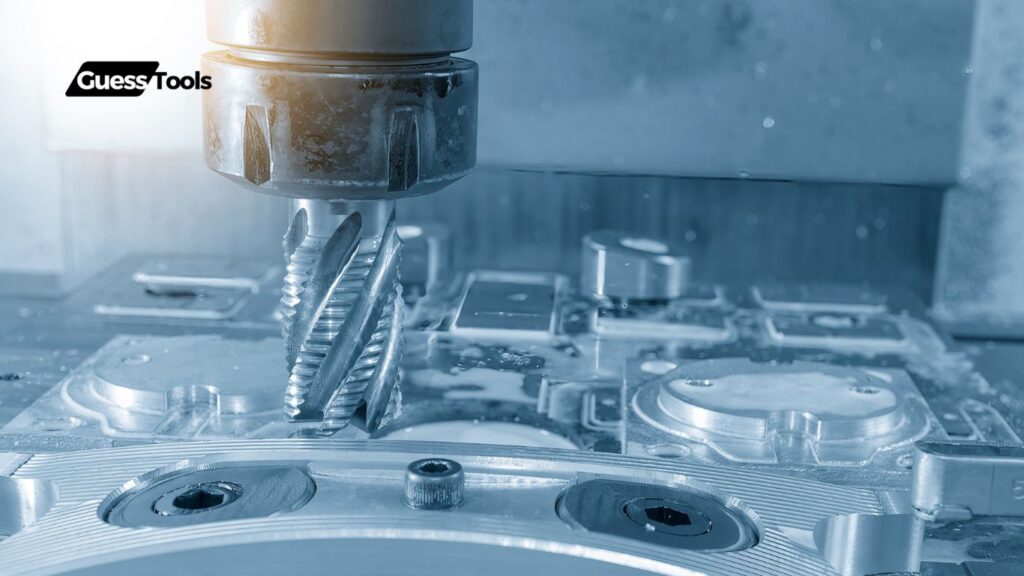
You might wonder why we’d pick φρεζάρισμα over other options. The big win is that it needs less power from your machine than tapping does. Plus, you can get thread mills in tough carbide material, which isn’t always possible with regular taps. This means better results on those tricky materials that give other threading methods a hard time.
We’ve found thread milling to be super flexible in our shop. Whether we’re working on tiny holes or big ones, threading soft aluminum or hardened steel, this method handles it all. You’ll need a CNC machine that can move in three axes at once, but trust us – the investment pays off in better threads and fewer scrapped parts.
Understanding Thread Milling Fundamentals

Thread milling creates precise internal and external threads using specialized cutting tools that move in a helical path. We’ll explore the essential mechanics, process steps, and key components that make this machining technique both versatile and accurate.
Core Principles And Mechanics
Thread milling relies on helical interpolation – the synchronized movement of the cutting tool in a spiral path. The tool rotates while following this helical path around the workpiece.
The process needs a CNC machine capable of simultaneous movement in the X, Y, and Z axes. This gives us complete control over the thread profile.
Two main tool options exist:
- Solid carbide thread mills: Best for smaller holes
- Indexable insert thread mills: Better for holes larger than 0.625 inches
The tool diameter affects thread accuracy. We recommend using cutters between 50-70% of the final thread diameter for internal threads.
The Thread Milling Process Explained
We start by creating a pilot hole for internal threads or preparing the outer surface for external threads.
The cutting process follows these steps:
- Tool positioning at the start point
- Helical movement to cut the thread profile
- Multiple passes for better chip control
- Final finishing pass for accuracy
The tool moves in a precise circular path while travelling along the thread’s length. This creates the characteristic helical thread form.
Key Components And Terminology
Essential elements of thread milling include:
- Thread pitch: Distance between thread peaks
- Μεγάλη διάμετρο: Largest diameter of the thread
- Δευτερεύουσα διάμετρο: Smallest diameter of the thread
- Thread depth: Distance from crest to root
The cutting tool features multiple flutes with precisely ground profiles matching the desired thread form.
Tool selection depends on:
- Thread size
- Τύπος υλικού
- Required finish quality
- Production volume
Thread Milling Vs. Traditional Threading Methods

Thread milling and traditional threading methods like tapping take different approaches to creating threads. The key differences impact quality, flexibility, and efficiency in significant ways.
Comprehensive Comparison With Thread Tapping
Tapping uses a single tool that matches the exact thread size you need. When you tap threads, the tool pushes or pulls through the material to form the pattern.
Thread milling works differently. We use a rotating cutter that moves in a helical path to create the threads. This spreads the cutting forces across multiple edges.
The chips are much smaller with thread milling compared to tapping. This means:
- Less chance of chip buildup
- Better surface finish
- Reduced risk of tool breakage
Advantages And Limitations
Key Benefits of Thread Milling:
- One tool can make multiple thread sizes
- Lower cutting forces mean less tool stress
- Easier chip evacuation
- Less likely for tools to get stuck
- Better for harder materials
Limitations to Consider:
- Requires CNC capability
- More complex programming
- Higher initial tool costs
- Takes longer for simple threading jobs
When To Choose Thread Milling
We recommend thread milling for these situations:
- Working with expensive parts where mistakes are costly
- Making threads in σκληρά υλικά
- When you need flexibility to make different thread sizes
- For large-diameter holes
- In blind holes where chip evacuation is critical
Thread milling shines in precision applications. Your parts will have better thread quality and surface finish.
For small production runs in soft materials, tapping might be your better choice. It’s simpler to set up and can be faster for basic threading needs.
Getting Started With Thread Milling

Thread milling offers a precise and flexible way to create threads in your parts. Let’s walk through the essential elements you’ll need to get started and create perfect threads every time.
Essential Equipment Requirements
You’ll need a CNC milling machine with at least 3-axis capability. Make sure your machine has enough power and rigidity for thread milling operations.
Your machine must have:
- Programmable spindle speed control
- Reliable coolant system
- Accurate tool length measurement
- Modern CNC controller with thread milling cycles
We recommend having these additional items:
- Tool presetter for accurate length measurements
- Thread ring gages for quality checks
- Digital calipers for basic measurements
Core Hole Preparation
Λαμβάνοντας το core hole right is crucial for successful thread milling. We’ll help you nail this critical first step.
The core hole diameter must be precise. For internal threads, drill the hole slightly larger than the minor diameter of the thread.
Key factors to consider:
- Φινίρισμα επιφάνειας of the drilled hole
- Straightness και roundness
- Κατάλληλος depth for thread length plus tool clearance
Tool Selection Guide
Picking the right thread mill makes a huge difference in your results. Solid carbide thread mills work best for holes under 0.625 inches.
Tool selection factors:
- Thread size and pitch
- Υλικό being cut
- Production volume
- Φινίρισμα επιφάνειας requirements
For larger threads, indexable insert tools can be more cost-effective. We suggest using a cutter diameter between 50-70% of the thread diameter.
Setup Considerations
Proper setup prevents most common thread milling problems. Check your tool lengths carefully and verify your work offsets.
Essential setup steps:
- Measure and input correct tool offsets
- Set appropriate speeds and feeds
- Verify coolant flow and pressure
- Run a test cut on scrap material
Program your thread mill path to cut in a climb milling direction. This produces better surface finish and extends tool life.
The Thread Milling Process: Step-By-Step
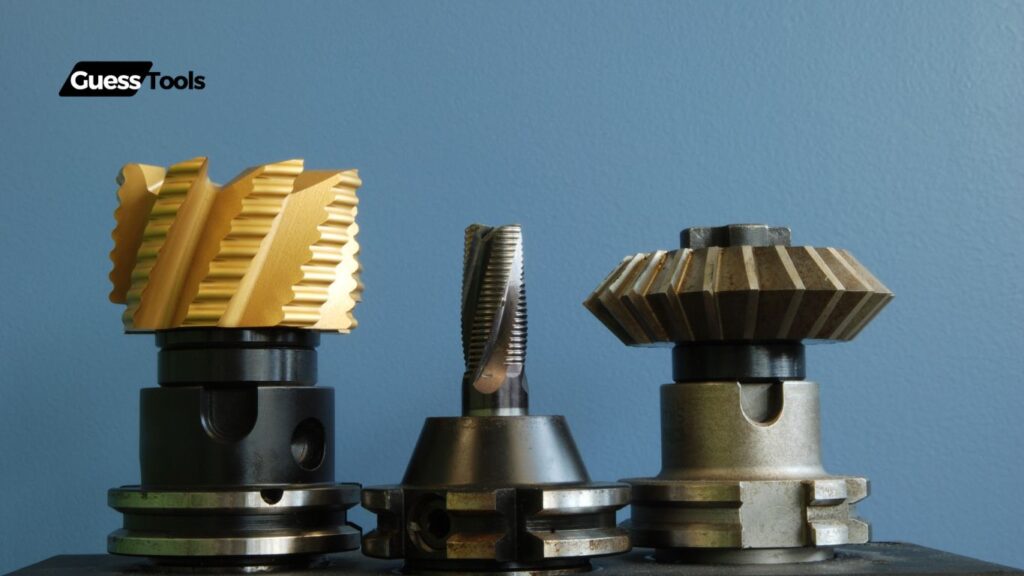
Thread milling requires careful planning and precise execution to create accurate threads. Let’s walk through each critical stage to help you achieve the best results.
Pre-Milling Preparation
First, we need to select the right thread mill for our job. Choose a tool based on thread size, material type, and the required finish quality.
We must pre-drill a hole slightly larger than the tool diameter. This gives the thread mill enough space to rotate freely.
Here’s what to check before starting:
- Workpiece material condition
- Tool holder balance
- Coolant flow and pressure
- Machine calibration
The hole diameter must match the thread’s major diameter. We recommend using this formula: Hole diameter = major diameter + (0.005" to 0.010")
Programming Requirements
The CNC program needs these key elements:
- Tool path coordinates
- Spindle speed settings
- Feed rate calculations
- Entry and exit moves
We set our παραμέτρους κοπής based on:
- Υλική σκληρότητα
- Thread pitch
- Διάμετρος εργαλείου
- Δυνατότητες μηχανής
For optimal results, we program helical interpolation with the correct lead angle. This creates smooth, accurate threads.
Execution Steps
Start by positioning the tool at the correct Z-height. We begin with a chamfer cut to create a clean thread start.
The cutting process follows this sequence:
- Initial plunge to depth
- Helical interpolation
- Multiple radial passes (if needed)
- Final spring pass
Keep chip evacuation in mind. We use coolant pressure to clear chips from deep holes.
Remember to monitor:
- Δυνάμεις κοπής
- Tool wear
- Temperature
- Φινίρισμα επιφάνειας
Post-Milling Inspection
Check these critical measurements:
- Thread pitch
- Μεγάλη διάμετρο
- Δευτερεύουσα διάμετρο
- Thread depth
Use thread gauges to verify fit and function. We test both internal and external thread engagement.
Key inspection points:
- Ποιότητα επιφανειακής φινιρίσματος
- Thread profile accuracy
- Dimensional tolerance
- Lead accuracy
Document all measurements for quality control purposes.
Advanced Thread Milling Techniques
Thread milling offers flexible ways to create precise threads in challenging materials. The right technique lets us achieve better surface finish, tighter tolerances, and handle complex thread forms.
Thread Chamfer Milling
Want to start your threads perfectly every time? Thread chamfer milling is your answer. We use a specialized tool path to create a chamfer at the thread’s entry point.
This technique helps guide the mating part into position and prevents cross-threading. The chamfer angle typically ranges from 30° to 45°.
Key benefits of thread chamfer milling:
- Easier thread engagement
- Reduced risk of damage
- Better thread life
- Improved assembly speed
Custom Thread Forms
Not all threads follow standard profiles. We can create custom thread forms for special applications using single-profile thread mills.
These tools let us adjust:
- Thread pitch
- Thread depth
- Flank angles
- Root radius
Programming custom thread forms requires careful attention to tool paths. We recommend starting with slower speeds until you’re confident in the setup.
Multi-Start Threads
Multi-start threads increase the lead distance while maintaining the same pitch. Think of it as multiple thread profiles wrapped around each other.
Common applications include:
- Quick-release fasteners
- Motion control systems
- Fluid handling equipment
We use helical flute thread mills for better chip evacuation in these deeper cuts. The programming is more complex, but the results are worth it.
Special Applications
Thread milling shines in challenging situations. We can cut internal and external threads in tough materials like titanium and Inconel.
Advanced techniques we use:
- Climb milling for better surface finish
- Variable pitch threads for vibration control
- Left-hand threads with standard tools
- Interrupted threads for specialized fittings
The key is matching the right tool and technique to your specific needs. Straight flute tools work well in aluminum, while helical flutes excel in harder materials.
Εφαρμογές ειδικών για τη βιομηχανία

Thread milling plays a vital role across many industries, each with unique requirements for precision, materials, and thread specifications. Different sectors need specialized approaches to achieve their quality standards.
Aerospace Requirements
We see strict tolerances and specialized materials like titanium alloys in aerospace thread milling. Weight reduction is crucial, so we often create custom internal threads in lightweight components.
Βασικές εκτιμήσεις:
- Threads must meet AS9100 quality standards
- Heat-resistant materials require precise cutting speeds
- Both right-hand and left-hand threads are common in aircraft assemblies
The surface finish needs to be perfect, as these parts often face extreme conditions. We use solid carbide tools for smaller diameter holes, which are common in aerospace applications.
Κατασκευή Ιατρικών Συσκευών
Medical devices demand extremely clean and precise threads. We work with materials like stainless steel and titanium that must be biocompatible.
Critical Factors:
- Sterilization requirements affect thread design
- Mini-threads for small implants need special tools
- Surface finish must be smooth to prevent bacterial growth
Thread pitch accuracy is essential for medical implants and surgical instruments. We typically use high-speed thread mills for these delicate applications.
Automotive Applications
Car parts need durable threads that can handle vibration and stress. We frequently work with aluminum, steel, and cast iron components.
Common Applications:
- Engine block threading
- Transmission housing threads
- Suspension component connections
Many automotive threads require special coatings for corrosion resistance. We often use indexable insert thread mills for larger holes in engine blocks.
Oil And Gas Industry Needs
The oil and gas sector requires large, robust threads that can withstand extreme pressures and harsh environments.
Industry Standards:
- API thread specifications
- High-strength materials like super duplex stainless steel
- Large diameter threading for pipes and connectors
These applications often need thread mills with special geometry for difficult-to-machine materials. Thread depth and profile accuracy are critical for preventing leaks.
Other Industrial Uses
We see diverse threading needs across general manufacturing. Each application brings its own challenges and specifications.
Various Applications:
- Power generation equipment
- Heavy machinery components
- Chemical processing equipment
- Mining equipment
Material choices range from standard steel to exotic alloys. We match cutting tools and speeds to specific material requirements.
Troubleshooting And Best Practices
Success in thread milling requires attention to detail and quick problem-solving skills. Let’s explore the essential tips and techniques to help you achieve optimal results.
Common Challenges And Solutions
We often see thread mismatches and rough finishes in our milling operations. Here’s how to fix these common issues:
Thread Mismatch Issues:
- Check your tool offset measurements
- Verify program parameters match thread specifications
- Ensure proper tool diameter compensation
Rough Thread Finish:
- Περιορίζω ταχύτητα κοπής by 10-15%
- Increase coolant flow
- Check for φθορά εργαλείων or damage
Tool breakage can stop production. We recommend monitoring δυνάμεις κοπής and reducing feed rates when working with harder materials.
Μέτρα Ποιοτικού Ελέγχου
We need consistent checks to maintain thread quality:
- Use thread gauges after every 10-15 parts
- Measure pitch diameter regularly
- Check surface finish quality
Key measurements to track:
- Thread pitch
- Major/minor diameters
- Thread depth
- Surface roughness
Συμβουλές συντήρησης
Regular tool maintenance saves time and money:
- Clean cutting edges after each shift
- Look for signs of wear every 50-100 parts
- Replace inserts before they fail completely
Keep detailed records of tool life for each material type. We’ve found this helps predict when to schedule replacements.
Τεχνικές Βελτιστοποίησης
Small adjustments make big differences in thread quality:
Speed and Feed Tips:
- Start at 70% of recommended speeds
- Adjust based on material hardness
- Monitor tool temperature
Program your lead-ins carefully. We get the best results with a gradual entry at 45 degrees.
Tool Life Extension:
- Use proper coolant concentration
- Maintain consistent chip evacuation
- Adjust cutting parameters based on wear patterns
Future Of Thread Milling

Thread milling technology keeps getting better with new tools, smarter machines, and improved methods. These changes are making thread milling faster, more precise, and easier to use in many industries.
Emerging Technologies
AI and machine learning are changing how we approach thread milling. Smart machines can now adjust cutting parameters in real-time for better results. We’re seeing new monitoring systems that can spot tool wear before it causes problems.
Digital twins let us simulate thread milling operations before cutting metal. This helps catch issues early and saves time and materials.
Advanced sensors track everything from vibration to temperature. This data helps us make better decisions about tool life and cutting speeds.
Industry Trends
More shops are switching from tapping to thread milling. The flexibility and reduced risk of tool breakage make it very appealing.
Multi-function machines are becoming popular. We can now thread mill, drill, and mill all in one setup. This cuts down on handling time and improves accuracy.
Green manufacturing is pushing us toward more efficient processes. Thread milling uses less energy than traditional methods and creates less waste.
Innovations In Tooling
New coating technologies are making thread mills last longer. We’re seeing tools that can run 2-3 times faster than older versions.
Key improvements in thread mill design:
- Better chip evacuation channels
- Stronger cutting edges
- More precise thread profiles
- Improved wear resistance
Custom tool designs are getting easier to order. 3D printing of carbide tools opens up new possibilities for special thread forms.
Smart tools with built-in chips can track their own wear and usage. This helps prevent failures and optimizes tool life.


