

Looking for the right tools to work with aluminum? We understand the challenge! Working with this soft metal requires special tools to avoid clogging and poor finishes. Aluma Cut carbide burr for aluminum are precision-ground tungsten carbide tools specifically designed for non-ferrous materials like aluminum, offering clean cuts without the frustration of material buildup.
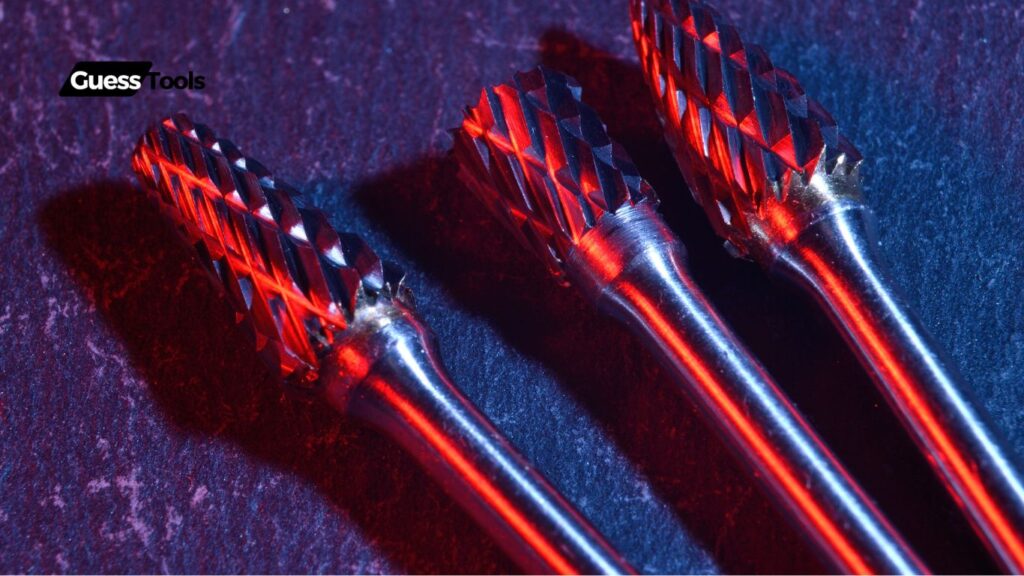
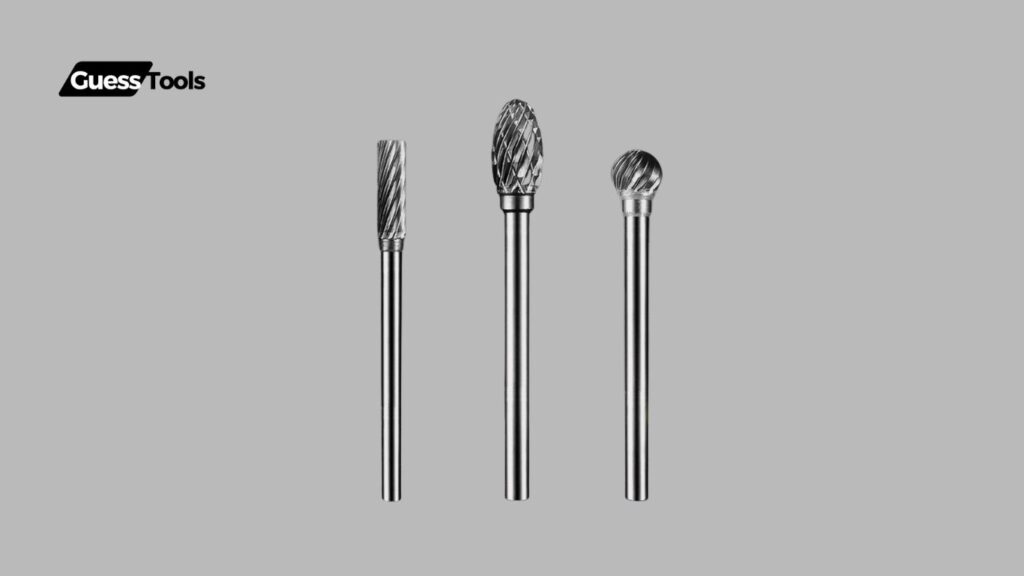
These specialized burrs feature unique flute designs that help prevent the aluminum from sticking to the cutting edges. Many professionals recommend using them with lubricants like WD-40 or paraffin wax to improve results even further. The burrs come in various shapes (like oval) and shank sizes (1/8″, 1/4″, and 3mm) to fit different die grinders and drills.
We’ve found that quality matters when choosing carbide burrs for aluminum. Premium options made in the USA using five-axis CNC machines deliver better performance and longer life. Whether you’re porting cylinder heads, woodworking, or doing general aluminum carving and engraving, these specialized tools make a noticeable difference in your results.
Understanding Carbide Burrs: Fundamentals for Aluminum Machining
Carbide burrs are essential tools for anyone working with aluminum. These specialized cutting tools help us shape, smooth, and finish aluminum surfaces with precision and efficiency.
Definition And Core Characteristics
Carbide burrs are rotary cutting tools made from tungsten carbide, a material known for its exceptional hardness and durability. These tools come in various shapes and sizes to meet different machining needs.
What makes them special? For starters, they’re much harder than standard steel burrs. This means they stay sharp longer when cutting soft metals like aluminum.
The teeth pattern on carbide burrs designed for aluminum is distinctive. They typically feature:
- Wider flute spacing
- Specific cutting angles
- Special coatings in some cases
These design elements prevent aluminum from sticking to the burr (a common issue called “loading”). When aluminum loads on a tool, it can ruin both the workpiece and the burr.
Good quality carbide burrs will have balanced construction to reduce vibration during use. This balance helps us achieve smoother finishes on aluminum projects.
Importance In Precision Metalworking
When working with aluminum, precision matters. Carbide burrs help us achieve the exact finish and shape we need.
Why are they so important? Aluminum is soft and can easily be damaged by the wrong tools. Carbide burrs designed for aluminum cut cleanly without tearing the metal. This clean cutting action preserves the integrity of your workpiece.
These tools excel at:
- Removing material quickly
- Deburring edges after machining
- Creating precise contours
- Smoothing welds
For DIY enthusiasts and professionals alike, carbide burrs make aluminum work much easier. They work well with hand tools like die grinders and with CNC machines.
We’ve found that using the proper carbide burr can cut finishing time in half compared to other methods. This efficiency is why they’re standard equipment in shops that regularly work with aluminum.
Key Industries Utilizing Carbide Burrs
Carbide burrs for aluminum are workhorses across many industries. Their versatility makes them valuable in numerous applications.
Aerospace relies heavily on these tools. Airplane components often require precise aluminum work, and carbide burrs deliver the necessary accuracy.
In automotive manufacturing, we see carbide burrs used for:
- Engine component finishing
- Custom parts fabrication
- Repair work
- Prototype development
The marine industry depends on carbide burrs too. Boats often incorporate aluminum components that need precise shaping and finishing.
Sign making professionals use these tools daily. Creating dimensional letters and shapes from aluminum sheet requires the control that carbide burrs provide.
Even the jewelry industry utilizes smaller carbide burrs for detailed aluminum work. The precision these tools offer is perfect for creating intricate designs.
DIY enthusiasts also benefit from these versatile tools when tackling home projects involving aluminum trim, flashing, or decorative elements.
Types Of Carbide Burrs For Aluminum
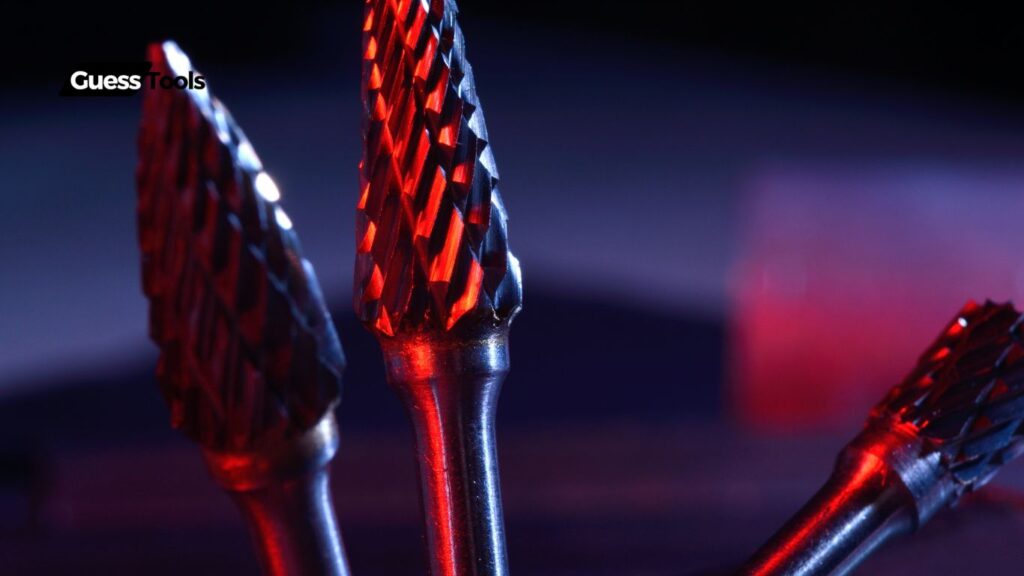
When working with aluminum, choosing the right carbide burr can make all the difference in your project results. We’ve found that different burr types offer unique advantages depending on the specific aluminum application and desired finish.
Single-Cut Burrs: Characteristics And Best Uses
Single-cut burrs feature teeth that run in one direction across the cutting surface. We’ve noticed these burrs remove material more slowly but produce a smoother finish, making them ideal for final detailing work on aluminum.
Key Benefits:
- Less likely to clog when cutting soft aluminum
- Reduced chatter during operation
- Better for precision work and controlled material removal
Single-cut burrs work best when you need a finer finish on your aluminum project. They generate less heat, which is important since aluminum conducts heat quickly. Remember to use a medium speed with light pressure to prevent the aluminum from gumming up the burr.
For delicate aluminum work, we recommend using a single-cut burr with a wax lubricant. Bee’s wax, as mentioned by experienced machinists, helps prevent material buildup and extends the life of your tool.
Double-Cut Burrs: Precision And Finishing Techniques
Double-cut burrs have teeth running in two directions, creating a cross-hatched pattern. We find these are the workhorses for most aluminum applications, offering a good balance between material removal and surface finish.
Characteristics:
- Faster material removal than single-cut
- Creates a medium-fine finish
- Versatile for both roughing and semi-finishing
When using double-cut burrs on aluminum, we suggest running your die grinder or rotary tool at 60-70% of maximum speed. This prevents overheating while still maintaining cutting efficiency.
Double-cut burrs come in various tooth patterns, with coarser teeth for faster stock removal and finer teeth for better finishes. For most aluminum work, a medium double-cut offers the best balance. Always clean your double-cut burrs regularly, as aluminum particles can accumulate between the teeth.
Specialized Aluminum-Cut Burrs
Aluminum-cut burrs (also known as “Aluma Cut”) are specifically designed for non-ferrous materials. We’ve found these specialized burrs offer superior performance when working exclusively with aluminum.
Features of Aluma Cut burrs:
- Wide chip clearance flutes prevent clogging
- Specialized tooth geometry for aluminum’s softness
- Often feature coatings that reduce friction
Aluma Cut burrs from manufacturers like Benchmark Abrasives are precision-engineered for efficiency when working with aluminum, wood, and other non-ferrous materials. Their unique design prevents the common problem of material buildup that occurs when cutting soft metals.
For the best results with specialized aluminum burrs, maintain consistent speed and pressure. Too much pressure can cause aluminum to melt and adhere to the carbide teeth. We recommend using these burrs for projects requiring extensive aluminum removal.
Comparative Analysis Of Burr Types
We’ve tested various burr types on aluminum projects and compiled this comparative analysis to help you choose the right tool.
| Burr Type | Material Removal | Surface Finish | Heat Generation | Best Application |
|---|---|---|---|---|
| Single-Cut | Slow | Very Smooth | Low | Finishing, detail work |
| Double-Cut | Medium to Fast | Medium | Medium | General purpose, versatility |
| Aluma Cut | Fast | Medium-Rough | Medium-High | Rough shaping, bulk removal |
The right burr choice depends on your specific project needs. For rough cutting and shaping, Aluma Cut burrs excel at quick material removal. For general-purpose work, double-cut burrs offer versatility.
When precision and fine finishing are required, single-cut burrs deliver the smoothest results. Many professionals keep all three types on hand, starting with Aluma Cut for rough work, then progressing to double-cut and finally single-cut for the finished product.
Selecting The Right Carbide Burr For Your Project
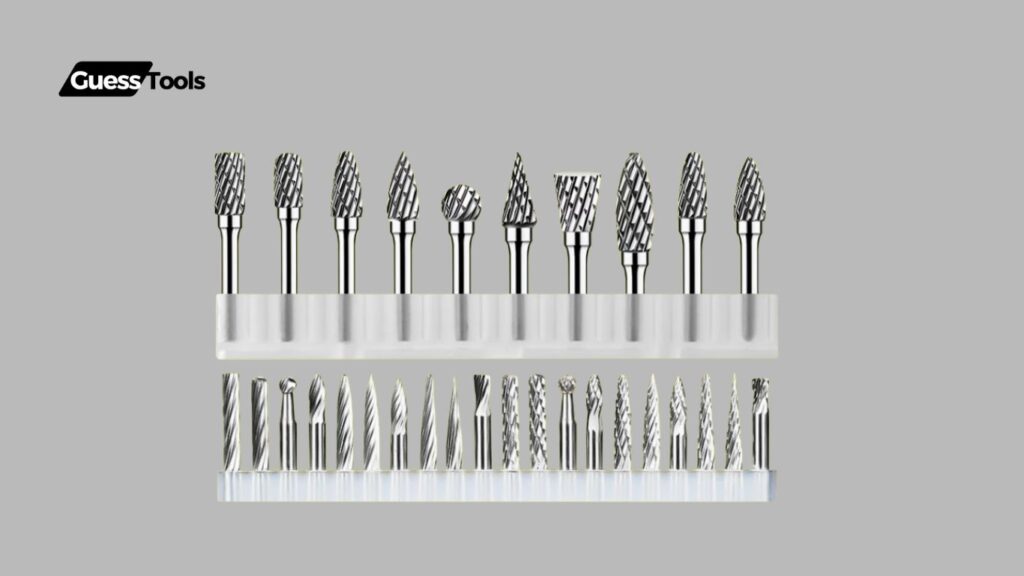
Choosing the perfect carbide burr for aluminum work can make all the difference between a frustrating experience and a smooth operation. The right tool will save you time, improve finish quality, and extend the life of your equipment.
Factors To Consider
When selecting a solid carbide burr for aluminum, tooth pattern is crucial. Single-cut burrs are often best for aluminum as they prevent clogging and provide smoother finishes. We’ve found that coarse-tooth patterns work well when paired with lubricants like WD-40 or bee’s wax.
Shank size matters too! A 1/4″ shank offers good versatility for most hobbyist projects, while a 2″ shank provides extended reach for deeper cavities. For heavier applications, consider a 1/2″ oval burr that can remove material quickly.
Pay attention to burr shape as well. Ball-end burrs work great for creating curved surfaces, while cylinder shapes excel at flattening and squaring edges.
Heat dissipation is another key factor. Aluminum can get gummy when hot, so choose burrs with design features that help manage heat.
Matching Burr Specifications To Specific Aluminum Machining Tasks
For precision detail work, we recommend fine-tooth solid carbide burrs with smaller head diameters. These provide excellent control and finish quality when working on intricate aluminum components.
Looking to remove lots of material quickly? Try a double-cut burr with a larger head diameter. These are perfect for rough shaping before switching to finer tools for finishing work.
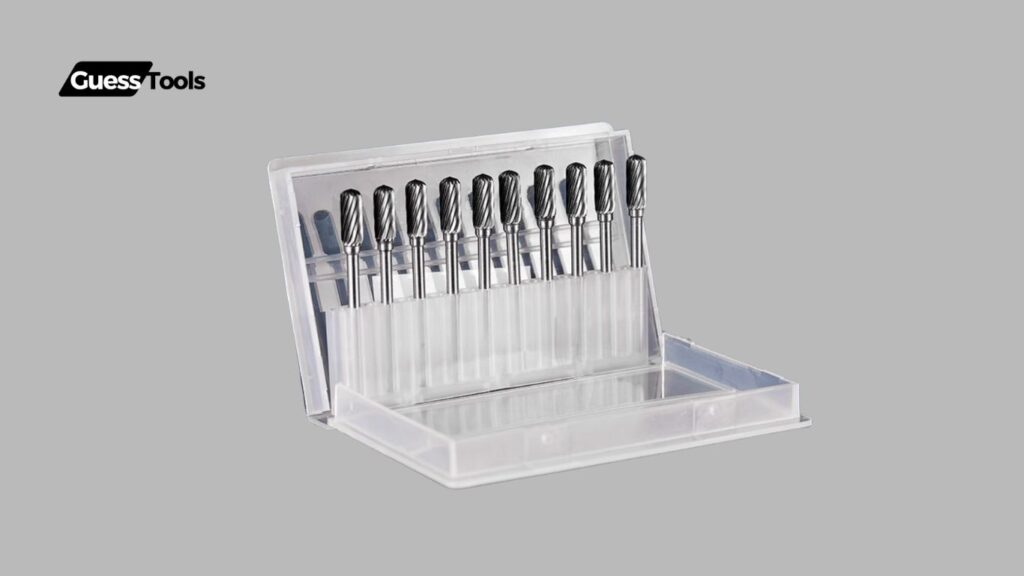
Burr kits offer great value when you’re just starting out. A quality kit typically includes various shapes and cuts, letting you experiment to find what works best for your specific projects.
For deep reach applications, consider a 6″ length burr that allows access to hard-to-reach areas. These longer burrs are ideal for working inside complex aluminum castings or deep cavities.
Remember to match your RPM settings to the burr size – larger burrs require lower speeds, while smaller ones can handle higher RPMs for finer finishing work.
Advanced Techniques And Best Practices
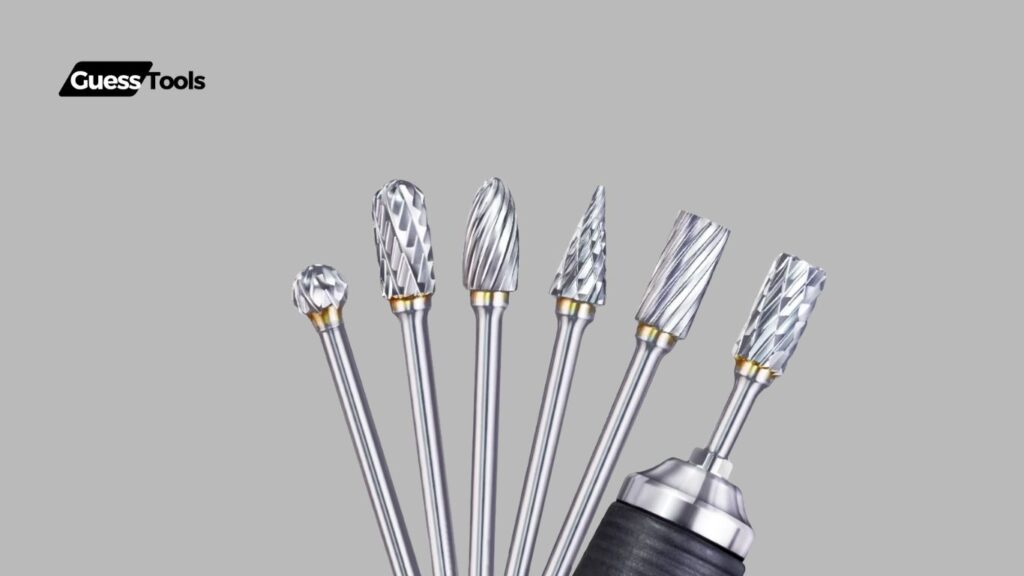
Working with carbide burrs on aluminum requires skill and knowledge to get the best results. The right techniques can make your project smoother, faster, and more professional-looking while avoiding common problems.
Proper Usage Techniques
When using carbide burrs on aluminum, proper technique makes all the difference. We recommend holding the tool at a 15-30 degree angle to the work surface for optimal cutting action. This angle helps prevent gouging and allows for better control.
Key grip techniques:
- Use a firm but relaxed grip on your tool
- Support your hands when possible to increase stability
- Use light to medium pressure – let the burr do the work
For finish grinding, try working in a consistent pattern – either circular or back-and-forth motions depending on your desired finish. We’ve found that overlapping your strokes by about 30% gives the most even results.
Always move the burr against the rotation (climb cutting) for roughing operations and with rotation for finishing work. This approach gives you better control over metal removal rates.
Speed And RPM Management
Finding the right speed for aluminum work is crucial. Aluminum requires lower RPMs than harder metals because it heats up quickly.
Recommended RPM ranges by burr diameter:
- Small burrs (1/8″ or less): 15,000-25,000 RPM
- Medium burrs (1/4″): 10,000-18,000 RPM
- Large burrs (1/2″ or more): 5,000-12,000 RPM
Start at the lower end of these ranges and adjust until you find the sweet spot for your specific project. We’ve noticed that speeds that are too high cause aluminum to melt and stick to the burr.
For precision finish grinding, maintain a consistent speed throughout the process. Varying speeds can create noticeable lines or texture differences in your work.
Lubrication Strategies
Proper lubrication is essential when working with aluminum and carbide burrs. It reduces heat, prevents clogging, and extends burr life significantly.
Effective lubricants for aluminum work:
- WD-40 (works in a pinch)
- Transmission fluid (excellent anti-clogging properties)
- Specialized aluminum cutting fluids
- Beeswax or paraffin (for light applications)
We recommend keeping a small cup of lubricant nearby for dipping the burr when it starts to load up. A quick dip often clears clogging instantly.
For continuous work, apply lubricant every 30-60 seconds or whenever you notice the burr starting to load up. This prevents heat buildup and ensures smooth cutting.
Heat Management
Aluminum conducts heat quickly, which can lead to problems when using carbide burrs. Excessive heat can warp your workpiece and damage your tools.
Heat management techniques:
- Work in short bursts (15-30 seconds on, then pause)
- Use adequate lubrication as mentioned above
- Have a cup of water nearby to cool burrs when needed
- Monitor the color of your chips – yellow/brown indicates too much heat
We’ve found that aluminum cut carbide burrs with their specialized flute design help reduce heat buildup compared to standard burrs.
For detailed work requiring precision metal removal, consider working in multiple light passes rather than one heavy cut. This approach generates less heat and gives you better control.
Preventing Common Challenges Like Clogging
Clogging is the most common issue when using carbide burrs on aluminum. The soft metal tends to stick to the cutter, reducing efficiency and quality.
Anti-clogging strategies:
- Use aluminum-specific burrs with special fluting designs
- Apply proper lubrication consistently
- Dip burrs in transmission fluid or cutting oil when loading occurs
- Try touching warm burrs to a block of wax while the spindle is stationary
If your burr does clog, don’t continue working. Stop immediately and clean the burr thoroughly. We recommend keeping a brass brush handy for cleaning burrs without damaging the carbide.
Regular cleaning extends burr life and maintains cutting efficiency. After your project, clean burrs with solvent to remove all aluminum particles before storage.
Safety And Maintenance Guidelines
Working with carbide burrs for aluminum requires proper attention to safety protocols and maintenance practices. The right precautions not only protect you from potential injuries but also extend the life of your tools.
Essential Personal Protective Equipment
When using carbide burrs, your safety should always come first. Eye protection is non-negotiable – flying metal chips can cause serious eye injuries. We recommend safety glasses with side shields or a full face shield for maximum protection.
Hearing protection is also crucial as die grinders can reach noise levels that damage your hearing over time. Good quality earplugs or earmuffs will protect your ears during extended use.
Don’t forget about respiratory protection! Aluminum dust can be harmful when inhaled. A quality dust mask or respirator prevents these particles from entering your lungs.
Gloves provide protection against sharp edges and hot materials. Choose cut-resistant gloves that still allow for dexterity and control.
What about clothing? Avoid loose clothing that could get caught in rotating tools. Roll up sleeves and remove jewelry before operating.
Tool Maintenance Protocols
Regular maintenance keeps your carbide burrs performing at their best. We suggest inspecting burrs before each use for signs of wear, chipping, or dulling. Damaged burrs should be replaced immediately to prevent accidents.
Check the shank for straightness and proper fit in your die grinder. A bent shank can cause dangerous vibration and poor cutting performance.
What about speed settings? Always follow manufacturer recommendations for RPM limits. Exceeding these limits can cause burr failure or workpiece damage.
Use a burr stand when not in use. This simple tool prevents damage to your burrs and keeps your workspace organized. It’s a small investment that pays off in extending tool life.
Keep your die grinder well-maintained too. Regular lubrication and cleaning of the tool itself ensures consistent power delivery to your carbide burrs.
Cleaning And Storage Recommendations
Proper cleaning prevents material buildup that affects cutting performance. After use, we recommend removing aluminum particles from burr flutes using a brass brush. The brass is soft enough not to damage carbide while effectively removing debris.
Avoid compressed air for cleaning unless in a controlled environment with proper PPE. Aluminum dust can be explosive in certain concentrations.
How should you store your burrs? Keep them in original packaging or dedicated containers that prevent them from touching each other. Contact between cutting edges can cause microscopic damage.
Consider using rust inhibitors in humid environments. While carbide itself resists corrosion, the binding agents and shanks may not.
Label and organize burrs by type, size, and purpose. This prevents selecting the wrong tool for a job, which can lead to premature wear or safety issues.
Extending Carbide Burr Lifespan
Maximizing tool life starts with proper use techniques. We suggest maintaining consistent feed pressure – too much force causes overheating and premature wear.
Cooling during operation can significantly extend burr life. For aluminum work, use cutting fluids designed for non-ferrous metals. These not only cool but also help prevent material buildup on cutting edges.
What about rotation direction? Always follow the manufacturer’s recommended direction. Using burrs against their designed rotation pattern accelerates wear and reduces efficiency.
When working with carbide burrs, use the right speed for the material. Aluminum generally requires medium to high speeds, but excessive RPMs generate heat that degrades cutting edges.
Allow the burr to do the work rather than forcing it. Let the tool cool periodically during extended use to prevent heat damage to both the burr and your workpiece.
Comparative Analysis: Carbide Burrs Vs. Alternative Materials

When working with aluminum and other non-ferrous materials, choosing the right cutting tool makes all the difference. Let’s examine how carbide burrs stack up against other common materials used in rotary cutting tools.
Carbide Vs. High-Speed Steel (HSS)
Tungsten carbide burrs offer significant advantages over HSS when working with aluminum. We’ve found that carbide maintains its cutting edge up to 10x longer than HSS when properly used on non-ferrous materials.
The key differences include:
- Hardness: Carbide rates 9.0+ on the Mohs scale compared to HSS at 7.0-8.0
- Cutting efficiency: Carbide removes aluminum material 30-40% faster
- Heat resistance: Carbide maintains integrity at temperatures up to 800°C while HSS begins to soften around 600°C
When cutting aluminum specifically, carbide’s superior hardness prevents the common problem of material buildup on cutting edges that HSS experiences.
For precision work on aluminum sheets or profiles, carbide burrs provide cleaner cuts with less chance of tearing or deformation.
Performance Characteristics
Carbide burrs excel at cutting non-ferrous materials due to their unique performance profile. The diamond-cut pattern commonly found on carbide burrs designed for aluminum creates aggressive cutting action while reducing heat buildup.
Some standout performance metrics include:
- Feed rates: Carbide allows for 25-35% higher feed rates than alternative materials
- Surface finish: Produces smoother surfaces requiring less post-processing
- Chip evacuation: Better flute design prevents clogging common with aluminum
We’ve noticed that uncoated carbide burrs work exceptionally well on aluminum because aluminum doesn’t require the specialized coatings needed for harder materials.
The cutting geometry of carbide burrs is often optimized specifically for non-ferrous metals with larger flute spacing and specialized tooth angles. This design helps prevent the “gumming up” that often happens with softer metals like aluminum.
Durability And Temperature Resistance
In our experience, durability is where carbide truly shines compared to alternatives. When working with aluminum components:
- Carbide burrs typically last 3-5x longer than similar HSS tools
- They maintain cutting edge integrity much longer during extended operation
- Less frequent replacement means reduced downtime
Temperature resistance is another crucial factor. Aluminum cutting generates significant heat, which can cause:
- Tool softening with lesser materials
- Melting of the aluminum onto the cutting surface
- Dimensional inaccuracies due to thermal expansion
Carbide’s superior heat dissipation properties prevent these issues, making it ideal for high-speed machining of non-ferrous materials. Even without coolant, carbide burrs resist the heat damage that quickly ruins HSS and other alternatives.
Cost-Effectiveness Considerations
While the initial price of carbide burrs is typically 40-80% higher than HSS alternatives, the total cost of ownership tells a different story:
| Material | Initial Cost | Lifespan (hrs) | Cost per Hour |
|---|---|---|---|
| Carbide | $25-45 | 20-30 | $1.25-1.50 |
| HSS | $15-25 | 5-8 | $3.00-3.15 |
| Diamond | $65-120 | 40-50 | $1.62-2.40 |
We’ve calculated that for most aluminum applications, carbide burrs provide the best value despite higher upfront costs. The reduced downtime for tool changes and consistent cutting quality throughout the tool’s life add further economic benefits.
For small shops, the durability advantage means fewer emergency replacements and consistent production quality. Large operations benefit from reduced tool management overhead and more predictable tool wear patterns when working with non-ferrous materials.
Practical Applications Across Industries
Carbide burrs for aluminum have become essential tools across multiple sectors where precision metalwork is required. These specialized cutting tools offer superior performance when working with aluminum components, enabling professionals to achieve high-quality results in various applications.
Aerospace Applications
In aerospace manufacturing, precision is non-negotiable. We’ve seen carbide burrs become indispensable for working with aluminum aircraft components.
Engineers use these tools for deburring critical parts like wing spars, fuselage components, and engine mounts. The burrs’ aluminum-specific design prevents clogging when removing material from complex internal passages.
Have you noticed how modern aircraft require increasingly intricate aluminum components? Carbide burrs make it possible to create precision cooling channels and lightweight structural elements with tight tolerances.
For maintenance crews, these tools are perfect for repairing damaged components and preparing surfaces for welding operations. When working with high-grade aerospace aluminum alloys, the right carbide burr ensures clean cuts without work hardening the material.
Automotive Manufacturing
Why do top automotive manufacturers insist on carbide burrs for their aluminum components? The answer lies in efficiency and precision.
Engine builders rely on these tools for porting aluminum cylinder heads to improve airflow characteristics. A quality aluminum-cut carbide burr removes material consistently without chatter, allowing for smooth port transitions that enhance engine performance.
Transmission housings, intake manifolds, and custom wheels all benefit from carbide burr finishing. We’ve found that the reduced clogging and smooth material removal make these tools perfect for production environments.
Body shops use them for preparing aluminum panels before welding or bonding. The burrs’ design prevents heat buildup that could warp thin aluminum body panels.
When working on custom automotive projects, these tools excel at creating precise cutouts and openings in aluminum dashboard components and trim pieces.
Metalworking And Fabrication
In general metalworking shops, versatility matters most. Carbide burrs shine when fabricators need to shape, deburr, or finish aluminum workpieces of all types.
We’ve seen how these tools make quick work of removing weld seams on aluminum fabrications. Their design allows for controlled material removal without digging in or creating unwanted gouges.
For custom fabrication projects, carbide burrs help create precise edges and contours in aluminum plates and extrusions. The reduced clogging means less downtime and more productivity.
Sheet metal workers appreciate how these burrs create clean edges when finishing cut aluminum panels. They’re also perfect for creating access holes and modifying existing aluminum components.
Have you tried using them for creating decorative patterns in architectural aluminum pieces? The precision control makes it possible to create textured surfaces and artistic details.
Specialized Precision Engineering
When tolerance requirements reach their tightest, specialized precision engineering demands the best tools available.
Medical device manufacturers use carbide burrs to create aluminum components for surgical instruments and diagnostic equipment. The burrs’ ability to produce smooth, burr-free surfaces is crucial for parts that may contact sensitive medical environments.
We’ve observed that electronics enclosure manufacturers rely on these tools for modifying aluminum housings. The clean cuts prevent metal shavings that could damage sensitive components.
For scientific instruments, carbide burrs help create precise optical mounts and sensor housings from aluminum blocks. Their accuracy ensures components meet exacting specifications.
Robotic system designers use them when fabricating custom aluminum structural elements and end effectors. The ability to make precise adjustments to aluminum components makes these burrs invaluable for one-off prototypes and custom solutions.
Troubleshooting Common Carbide Burr Challenges
Working with aluminum using carbide burrs can present several challenges that affect your results and tool life. These issues are common but can be overcome with the right approach and techniques.
Clogging Prevention
Aluminum tends to stick to carbide burrs, causing clogging that reduces cutting efficiency. This happens because aluminum is soft and can melt slightly during machining.
Simple solutions to prevent clogging:
- Apply a thin coat of wax to your burr before use. Simply touch a stationary burr to a wax block, letting it melt slightly onto the cutting surfaces.
- Use aluminum-specific lubricants or cutting fluids that prevent material buildup.
- Try specialized aluminum tapping fluid when you notice clogging starting to occur.
Working in short intervals helps too. We recommend stopping every few minutes to clean your burr rather than waiting until it’s completely clogged.
For existing clogs, a brass wire brush works well to remove aluminum without damaging the carbide teeth.
Managing Heat Buildup
Excessive heat is a common issue when using carbide burrs on aluminum. Too much heat can damage both your workpiece and tool.
Heat management strategies:
- Use lower speeds than you would for harder materials (3,000-8,000 RPM is ideal for most applications)
- Apply more pressure but move the burr faster across the surface
- Take breaks to let the tool cool down
Aluminum conducts heat efficiently, so the entire workpiece can become hot. Keep a spray bottle with cooling solution nearby to mist the work area occasionally.
We’ve found that using multi-flute burrs with aluminum-specific geometry helps dissipate heat better than standard burrs. The extra cutting edges distribute the work more evenly.
Addressing Wear And Tear
Even high-quality carbide burrs eventually show signs of wear when used on aluminum.
Signs of burr wear include:
- Increased effort needed to remove material
- Rougher finishes than when the burr was new
- Louder operation or unusual vibration
- Visible dulling of cutting edges
When you notice these symptoms, don’t continue using a worn burr. This can lead to poor results and potentially dangerous breakage.
For extending burr life, we recommend rotating through several burrs rather than using the same one continuously. This gives each tool time to cool between uses.
Storage tip: Keep your burrs in a dry environment. Moisture can affect the bond between the carbide and the shank over time.
Performance Optimization Strategies
Getting the best results from your carbide burrs on aluminum requires the right technique and setup.
Speed considerations:
| Material Hardness | Recommended Speed |
|---|---|
| Soft Aluminum | 3,000-5,000 RPM |
| Medium Aluminum | 5,000-8,000 RPM |
| Hard Aluminum | 8,000-15,000 RPM |
The direction of cut matters too. We always recommend moving against the rotation of the burr (climb cutting) for aluminum. This produces less heat and a smoother finish.
Use consistent pressure and keep the burr moving. Staying in one spot too long causes excessive heat buildup and potential clogging.
For fine finishing work, switch to burrs with more flutes but smaller cutting teeth. These remove less material but leave a smoother surface.


