

End mills are essential Инструменти за рязане that shape and carve materials in machining projects. We use these versatile tools every day in our workshop to create precise cuts and detailed designs in metal, plastic, and wood. The two main sizing systems for крайни фрези are metric (measured in millimeters) and inch-based (measured in fractions or decimals of inches), with common inch sizes including 1/4, 5/16, and 1/2 inch, while metric sizes are typically expressed in whole millimeters.
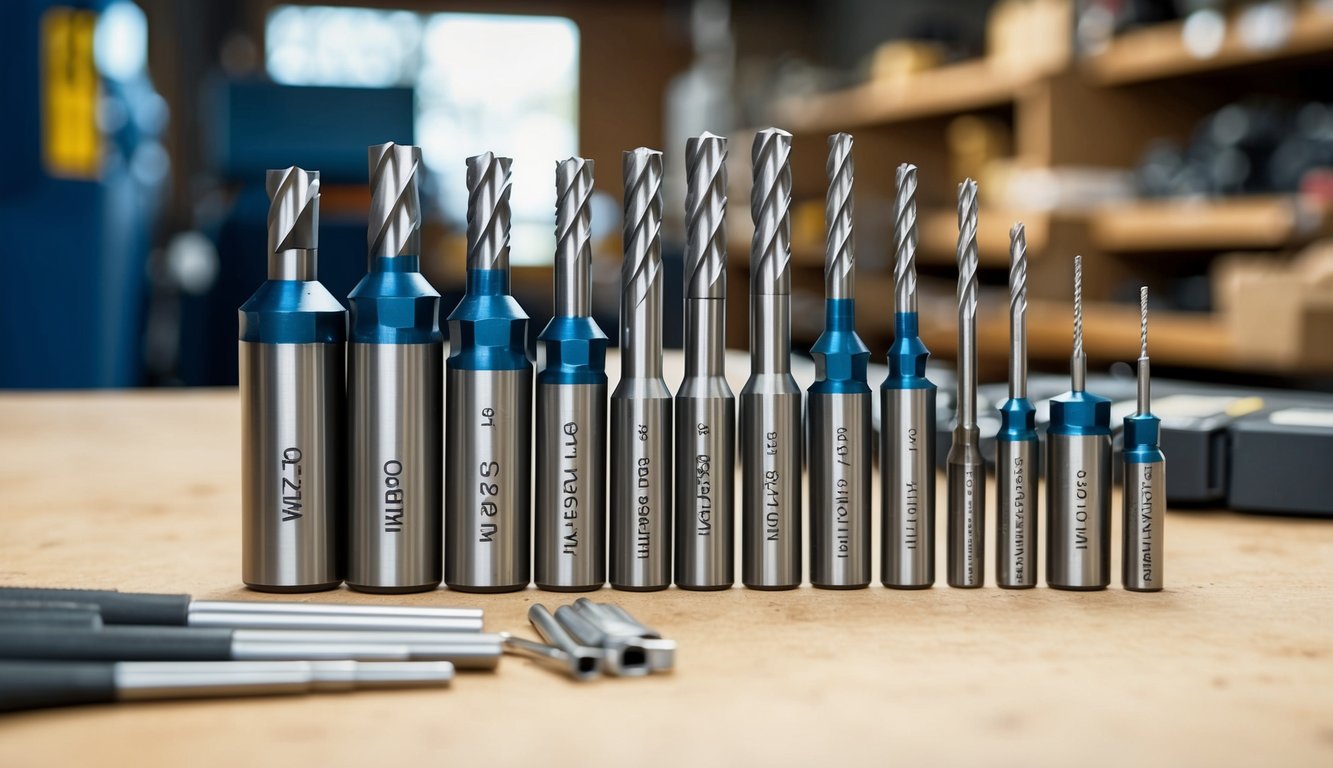
Choosing the right end mill size makes a big difference in your machining results. A properly sized tool helps you achieve better surface finishes and extends the life of both your cutting tool and CNC machine. We’ve found that matching the end mill size to your specific project needs can save time and money while producing better quality work.
Ключови изводи
- End mills come in both metric and imperial sizes to match different machine specifications and project requirements
- Proper end mill size selection impacts Изключване на производителността, tool life, and final product quality
- Standard end mill sizes range from micro-precision tools to larger diameter cutters for heavy material removal
End Mill Size Systems: Metric Vs. Inch
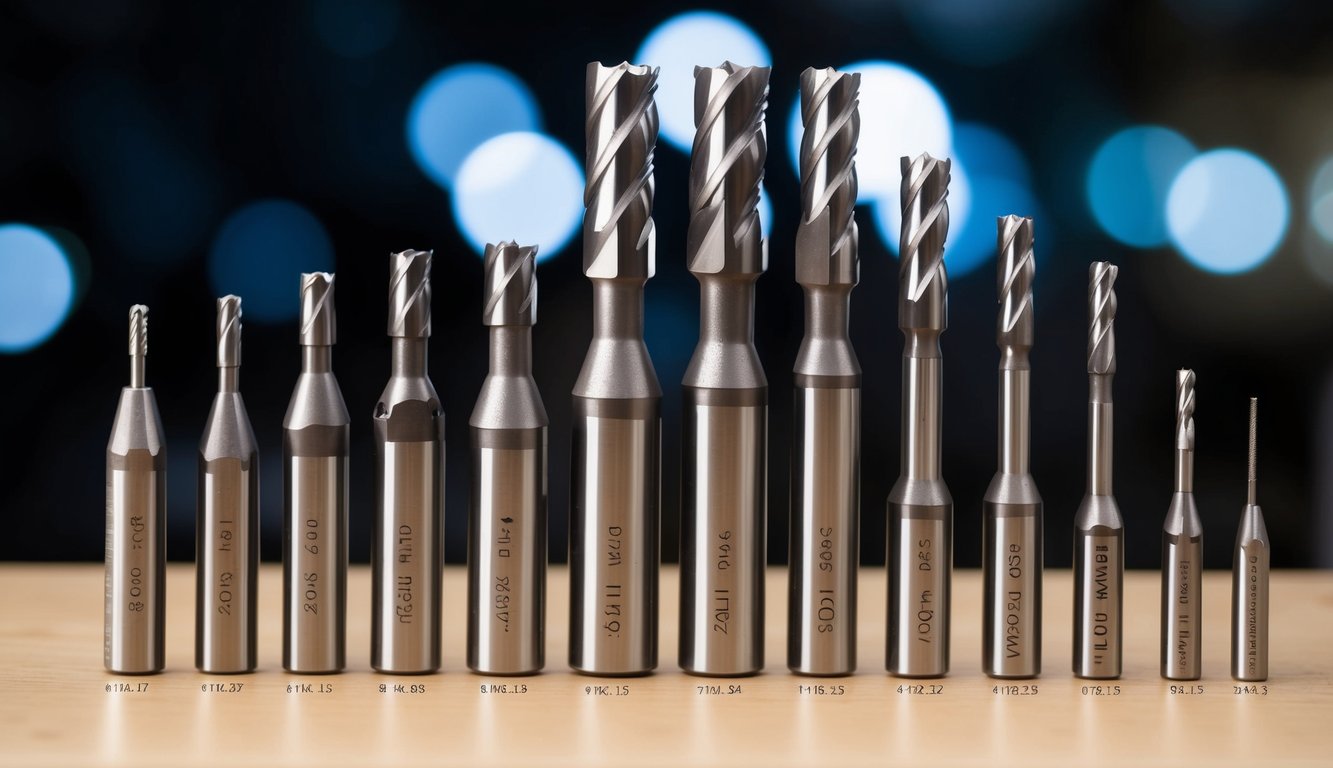
End mills come in two main measurement systems that machinists use worldwide. We’ll explore how these systems differ and why both remain important in modern machining.
Clear Comparison Of Measurement Systems
Metric end mills use millimeters for measurements, while inch-based end mills follow the imperial system with fractional measurements. A 1/4-inch end mill equals roughly 6.35mm, showing how these systems don’t perfectly align.
Чести imperial sizes включват:
- 1/4 inch
- 5/16 inch
- 1/2 inch
- 3/4 inch
Metric sizes typically come in:
- 3mm
- 6mm
- 10mm
- 12mm
Common Size Ranges In Both Systems
We find that imperial end mills often start at 1/32 inch and go up to 1 inch for standard sizes. The smallest sizes work great for detail work and tight corners.
Metric end mills usually range from 1mm to 25mm. Many shops keep both measurement types on hand to match project requirements.
Popular Size Combinations:
- 1/4″ (6.35mm)
- 1/2″ (12.7mm)
- 3/8″ (9.525mm)
Why Both Systems Coexist In Modern Machining
We need both systems because different industries and regions prefer different standards. Many U.S. manufacturers use imperial measurements, while European and Asian companies typically work in metric.
Global trade means we often work on projects requiring both systems. Having tools in both measurements helps us match customer specifications exactly.
Machine shops often stock both types to handle:
- International projects
- Different customer preferences
- Various industry standards
This flexibility lets us take on more work and serve a wider range of clients.
Standard End Mill Sizes And Their Applications
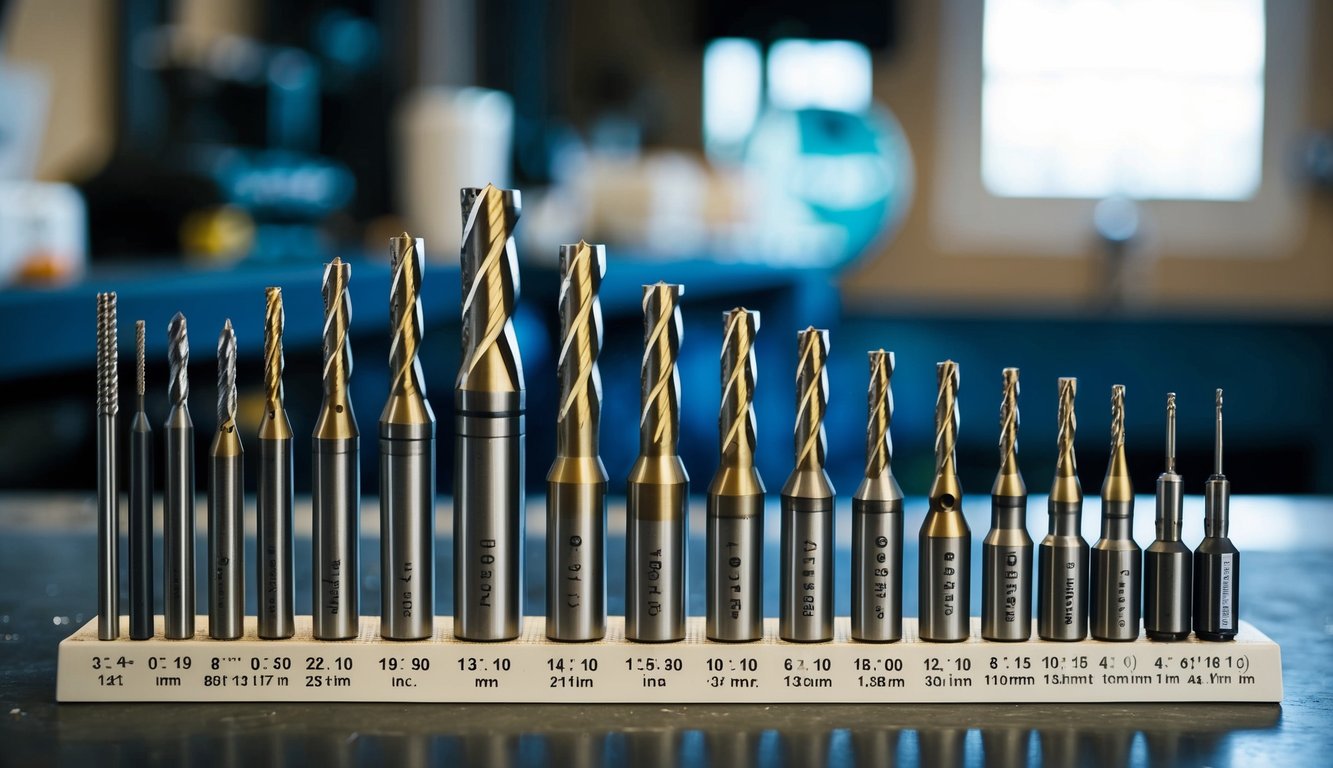
End mill sizes play a crucial role in achieving the right balance between cutting performance and precision. The size you choose directly impacts tool life, surface finish, and machining efficiency.
Most Common Sizes
Standard inch-sized end mills typically range from 1/64″ до 1″ in diameter. Common fractional sizes include 1/8″, 1/4″, 3/8″и 1/2″.
Metric end mills come in sizes from 0.5mm to 25mm. Popular metric diameters are 3mm, 6mm, 10mm, and 12mm.
We recommend keeping these standard sizes in your toolbox:
- Small (under 1/8″): Perfect for detail work
- Medium (1/8″ – 3/8″): Best for general-purpose milling
- Large (over 3/8″): Ideal for roughing operations
Size-Specific Applications And Use Cases
Small diameter end mills (under 1/8″) work best for:
- Intricate detail work
- Fine slot milling
- Precision engraving
Medium-sized tools (1/8″ – 3/8″) excel at:
- General pocket milling
- Profile cutting
- Slot making
Large end mills (over 3/8″) are great for:
- Heavy material removal
- Roughing operations
- Wide slot cutting
Size Selection Considerations For Different Materials
Aluminum needs larger flutes and bigger diameters to handle chip evacuation. We suggest using end mills 1/4″ or larger.
Steel machining works best with smaller diameters to reduce cutting forces. Tools between 1/8″ and 1/4″ offer good stability.
For harder materials like titanium:
- Start with smaller diameters (1/8″ – 3/16″)
- Use carbide tools with specialized coatings
- Choose tools with increased core thickness
Material hardness affects size choice:
- Soft materials → Larger diameters possible
- Hard materials → Smaller diameters recommended
- Heat-resistant alloys → Conservative diameter selection
End Mill Size Categories & Specifications
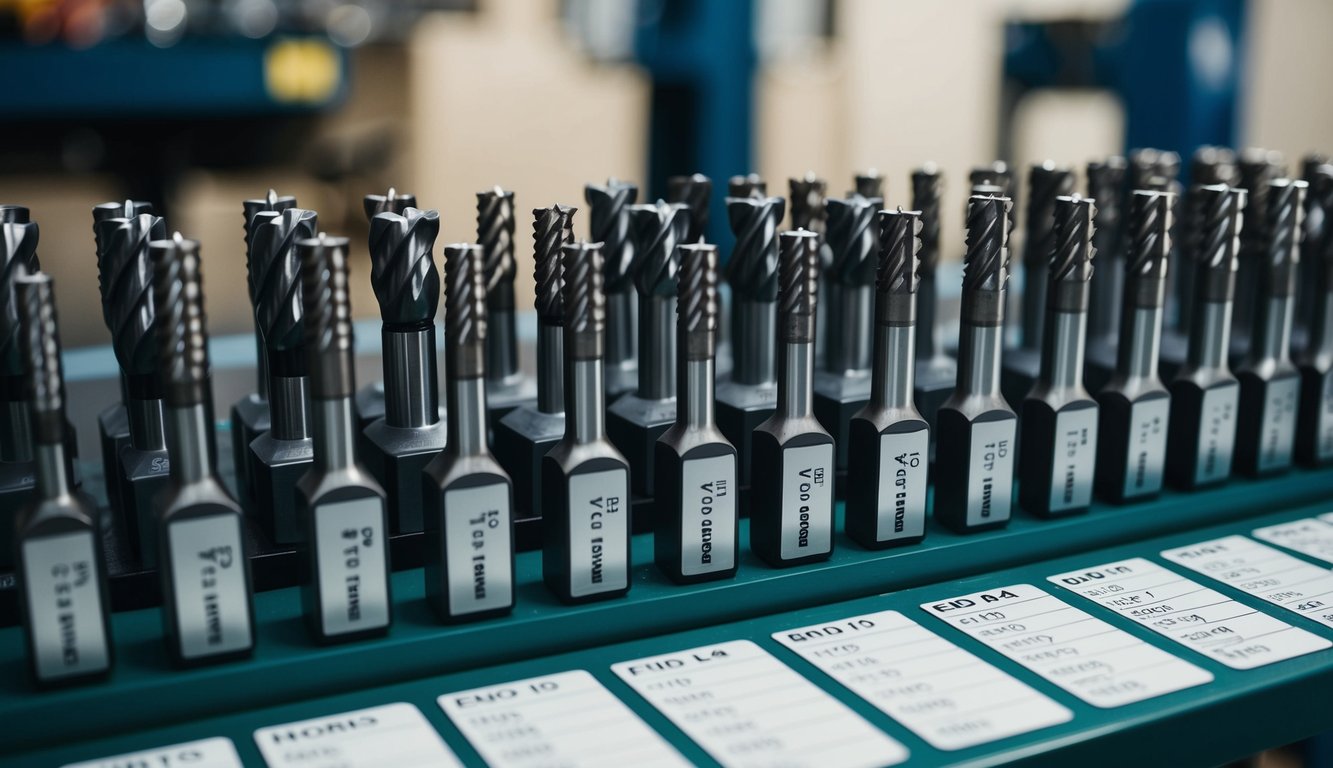
End mills come in several standard sizes and configurations to handle different machining needs. The right specifications make a big difference in getting clean cuts and achieving the results we want.
Квадратни крайни мелници
Square end mills are the most common type we use in CNC machining. They have flat ends and straight flutes that run parallel to the tool axis.
Standard diameters range from 1/64″ (0.3969 mm) up to 1″ (25.4 mm). We typically see them with 2-4 flutes, though some specialized tools have up to 8 flutes.
Key specifications to watch:
- Диаметър на рязане: 0.015″ to 1.0″ common range
- Flute length: Usually 2x diameter
- Обща дължина: 3x to 4x diameter
- Брой флейти: 2-4 standard, up to 8 for special applications
Челни фрези с топка
Ball nose end mills feature a rounded tip that’s perfect for 3D contours and curved surfaces.
The radius at the tip equals half the tool diameter. We find these most useful for:
- Повърхностно завършване
- Contour machining
- Die/mold work
Common specifications include:
- Tip radius: Equal to half the tool diameter
- Flute configuration: 2-4 flutes typical
- Cutting speeds: Generally 10-15% lower than square end mills
Крайни фрези с ъглов радиус
These tools combine features of square and челни мелници със сферичен нос. They have a small radius at the corner that helps prevent chipping.
The ъглов радиус typically ranges from 0.005″ to 0.060″. Larger radii provide:
- Better tool strength
- Подобрено покритие на повърхността
- По-дълъг живот на инструмента
Taper End Mills
Tapered end mills have a cone-shaped cutting surface. We use them for:
- Angled surfaces
- Chamfers
- Draft angles
Common taper angles:
- 3°
- 5°
- 15°
- 30°
- 45°
Detailed Specification Tables
Standard End Mill Sizes (Inch)
| Size | Decimal | Category |
|---|---|---|
| 1/64″ | 0.0156 | Micro |
| 1/32″ | 0.0313 | Micro |
| 1/16″ | 0.0625 | Standard |
| 1/8″ | 0.1250 | Standard |
| 1/4″ | 0.2500 | Standard |
| 1/2″ | 0.5000 | Standard |
Length Categories
| Type | Описание | Typical L/D Ratio |
|---|---|---|
| Stub | Shortest option | 2:1 |
| Standard | Most common | 3:1 |
| Long | Extended reach | 4:1 |
| Extra Long | Special applications | 5:1+ |
Practical Guide To Choosing The Right End Mill Size
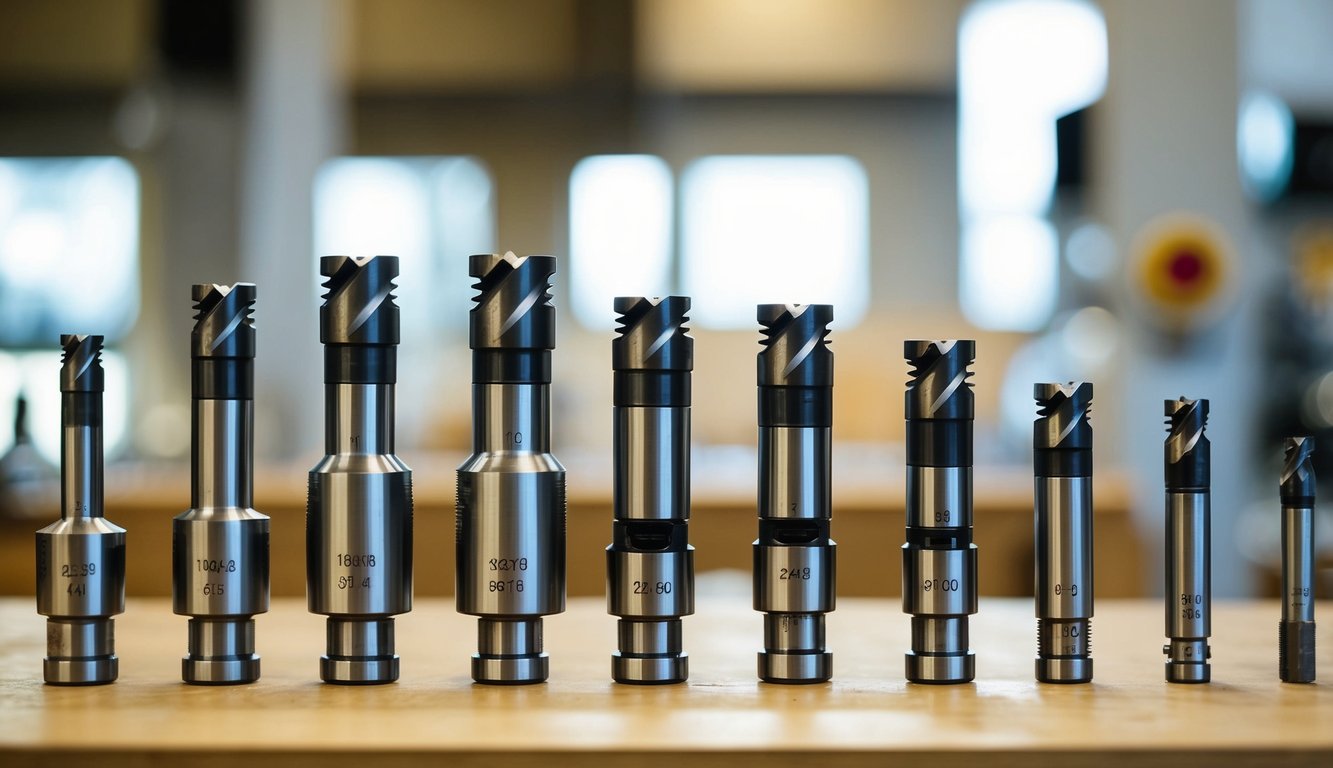
Picking the right end mill size directly impacts machining success. We’ve found that matching the tool diameter to both your project needs and material requirements helps achieve optimal results while avoiding costly mistakes.
Project Requirements Consideration
The size of your end mill needs to match your project’s specific features. For smooth 3D contouring, we recommend selecting a ball end mill between 1/8″ до 1/2″ depending on your surface detail requirements.
Small diameter tools (1/8″ до 1/4″) work best for:
- Intricate detail work
- Tight corner radii
- Fine feature machining
Larger diameters (1/2″ до 1″) are ideal for:
- Roughing operations
- По-високи нива на отнемане на материал
- Better tool rigidity
When profiling, match your tool diameter to about 75% of your smallest internal radius for best results.
Съвместимост на материалите
Different materials require specific size considerations. Here’s what we recommend:
Soft Materials (aluminum, brass):
- Larger diameter tools (1/4″- 1″)
- Fewer flutes for better chip evacuation
- Higher speeds possible
Hard Materials (steel, titanium):
- Smaller diameter tools (1/8″- 1/4″)
- More flutes for stability
- Необходими са по-ниски скорости
Tool rigidity becomes more critical in harder materials. We suggest keeping tool stick-out to no more than 3x diameter to prevent chatter.
Препоръки, специфични за приложението
For slotting operations, select an end mill diameter exactly matching your slot width. This ensures dimensional accuracy and proper chip evacuation.
Surface finishing requires special consideration:
- Small diameter tools = finer surface finish
- Larger tools = faster processing time
- Ball end mills for curved surfaces
- Flat end mills for planar surfaces
When roughing, we suggest using the largest diameter tool that fits your smallest feature. This maximizes material removal rates and reduces machining time.
Common Sizing Mistakes To Avoid
Don’t select oversized tools for small features. This leads to poor accuracy and possible workpiece damage.
Watch out for these common issues:
- Using too small a tool for roughing (causes excess wear)
- Selecting diameter larger than smallest feature
- Ignoring tool rigidity requirements
Match your tool holder to your end mill size. A mismatched combination can cause runout and poor surface finish.
Consider your machine’s power limitations. Larger tools require more horsepower – we recommend staying within 80% of your machine’s capacity.


