

Working with hardened steel can be a real challenge, especially when you need to create threads. Have you ever broken a tap while trying to thread hardened steel? We’ve been there too! Carbide taps are specifically designed for hardened steel with hardness ratings up to 50 HRC and beyond, making them the ideal choice for these challenging materials.

When selecting carbide taps for hardened steel, you’ll want to consider options like high-performance (HP) solid carbide taps. These come in various designs including spiral and straight flutes, perfect for both blind and through-hole applications. Companies like Kennametal and OSG offer excellent options that meet international standards.
Did you know that using a Gun Tap with just two flutes can provide the strength needed for hardened materials? It’s also helpful to drill a slightly larger hole for 50% thread engagement, making the tapping process easier. We’ve found this approach works well when dealing with particularly tough steels like alloy steel, die steel, and tool steel that have been hardened to high RC values.
Understanding Carbide Taps: Performance & Benefits
Carbide taps represent a significant advancement in threading technology, especially when working with hardened steel and other tough materials. These specialized tools offer remarkable durability and precision that can transform your machining process.
Comparison with HSS
When we compare carbide taps to traditional High-Speed Steel (HSS) options, the differences become immediately clear. Carbide taps are significantly harder – up to 3 times harder than HSS taps! This extreme hardness comes from the tungsten and carbon combination that creates an exceptionally durable cutting edge.
In terms of performance, carbide outshines HSS in several key areas:
- Higher cutting speeds: Carbide taps can operate at 2-5 times the cutting speed of HSS
- Better heat resistance: Can withstand temperatures up to 1000°C (compared to 600°C for HSS)
- Superior wear resistance: Maintains cutting edge integrity much longer
This makes carbide taps particularly effective for hardened steels (ISO H materials) where HSS would quickly dull or break. While HSS-E-PM (powder metallurgy) taps offer improvements over standard HSS, they still can’t match solid carbide’s performance in truly demanding applications.
Cost Justification
Are carbide taps worth their higher price tag? The numbers tell a convincing story. Though initial investment is 2-3 times higher than HSS alternatives, we’ve found carbide’s economic benefits quickly add up.
Let’s break down the cost factors:
| Cost Factor | Impact |
|---|---|
| Tool life | 3-10× longer than HSS |
| Downtime | Reduced by 70%+ due to fewer tool changes |
| Production speed | Increased by 30-50% through faster cutting |
| Scrap reduction | Less tool wear means fewer rejected parts |
For production environments, these advantages translate to significant savings. A single CoroTap® 100 carbide tap might cost $150 compared to a $50 HSS tap, but could thread 500+ holes versus 100-150 from the HSS option.
Specific Advantages
What makes carbide taps particularly valuable for threading hardened steel? Several key benefits stand out:
First, exceptional thread quality. Carbide’s rigidity and wear resistance produce more precise, consistent threads with better surface finish. This is crucial when threading expensive workpieces where rework isn’t an option.
Second, reduced threading torque. The cutting geometry of modern carbide taps requires less force to cut threads, decreasing the strain on both the tool and machine. This is why we often see up to 30% lower torque requirements compared to HSS alternatives.
Finally, versatility across materials. While excelling in hardened steels, solid carbide taps also perform exceptionally well in:
- Titanium alloys
- Inconel and heat-resistant superalloys
- Hardened stainless steels
- Abrasive composites
Have you tried carbide taps in your threading operations? The performance improvements can be dramatic, especially in challenging materials.
Selecting the Right Carbide Tap for Your Application

Choosing the perfect carbide tap for hardened steel applications doesn’t need to be complicated. The right selection depends on understanding the material you’re working with and matching it to appropriate tap characteristics for optimal performance and longevity.
Material Hardness Considerations
When selecting a carbide tap, you’ll first need to assess the hardness of your workpiece. Hardened steels typically range from 35 to 65 HRC (Hardness Rockwell C).
For materials between 35-45 HRC, standard carbide taps work well. When working with steel between 45-55 HRC, we recommend specially designed hardened material taps with enhanced cutting geometries.
For extremely hard materials (55-65 HRC), you’ll need premium-grade carbide taps with specialized coatings. These are designed specifically to handle the extreme cutting conditions.
Material Hardness Reference:
- 35-45 HRC: Standard carbide taps
- 45-55 HRC: Enhanced carbide taps
- 55-65 HRC: Premium carbide taps with specialty coatings
Remember that carbide taps excel where HSS (High-Speed Steel) taps fail, particularly above 40 HRC. They’re also excellent for working with cast iron and stainless steel.
Tap Styles
The design of your tap significantly impacts its performance in hardened materials. We’ve found that three main styles work best for different applications.
Straight flute taps provide excellent chip evacuation in through-holes. They’re best used when chips can fall through the workpiece and aren’t trapped in the hole.
Spiral flute taps excel in blind hole applications. Their design pulls chips upward and out of the hole, preventing chip packing that often causes tap breakage.
Spiral point taps (also called “gun taps”) push chips forward, making them ideal for through-hole applications but unsuitable for blind holes.
When choosing the right style, consider these factors:
- Hole type (blind vs. through)
- Depth-to-diameter ratio
- Material characteristics
- Required finish quality
The pitch and diameter are also critical considerations. Finer pitches (more threads per inch) generally perform better in hardened materials than coarse threads.
Coatings and Their Benefits
Carbide taps with proper coatings dramatically outperform uncoated options in hardened steel. Here’s how different coatings can benefit your application:
TiN (Titanium Nitride): This golden coating increases surface hardness and reduces friction. It’s a good general-purpose option that extends tool life by 3-5 times compared to uncoated taps.
TiCN (Titanium Carbonitride): With superior hardness to TiN, this bluish-gray coating offers better wear resistance and is excellent for moderate hardness steels.
TiAlN/AlTiN (Titanium Aluminum Nitride): These dark violet coatings form a protective aluminum oxide layer at high temperatures. They’re our top recommendation for the hardest materials.
Diamond-Like Carbon (DLC): This premium coating provides the lowest friction coefficient, making it ideal for situations where heat buildup is a major concern.
Each coating affects not just durability but also cutting performance and chip evacuation. For most hardened steel applications over 45 HRC, we strongly recommend at least a TiAlN coating.
Decision Factors
Your final selection should balance several practical considerations to ensure success.
Cost vs. Performance: Premium carbide taps cost more upfront but often deliver better value through longer life and higher quality threads. For high-volume production, the investment typically pays off.
Machine Rigidity: Carbide is less forgiving than HSS. Your machine must provide rigid tapping with precise alignment. Modern CNC equipment generally handles this well.
Coolant Requirements: Proper cooling is essential when tapping hardened steel. Through-tool coolant delivery is ideal for deeper holes.
Shank Type: For CNC operations, we recommend tension-compression holders with synchronized tapping cycles. The shank type must match your machine’s capability.
Start with recommended speeds: Typically 1/3 to 1/2 the speed used for HSS taps is a good starting point. You can adjust based on results.
Finally, consider the finish requirements of your final thread. Premium carbide taps with proper coatings will provide superior thread finish in hardened materials compared to HSS alternatives.
Best Practices for Using Carbide Taps

Working with carbide taps requires attention to detail and proper technique. These specialized tools demand specific handling to ensure successful threading in hardened steel while maximizing tool life.
Proper Setup Requirements
Rigid setup is absolutely critical when using carbide taps in hardened steel. Unlike HSS taps, carbide offers little forgiveness for misalignment.
We recommend using a CNC machine or drill press with a tapping head for best results. Your workpiece should be secured firmly in a vise or fixture that prevents any movement during the tapping operation.
For optimal performance:
- Ensure perfect alignment between the tap and pre-drilled hole
- Use a tap guide or bushing for straighter entry
- Check that your tap holder provides proper support
- Pre-drill holes to the recommended size (often 50% thread for harder materials)
When working with blind holes, leave extra depth to accommodate chips and prevent tap breakage.
Coolant and Lubrication Recommendations
Proper lubrication is non-negotiable when using carbide taps in hardened steel. The right lubricant reduces friction, dissipates heat, and extends tool life.
For hardened steel applications, we suggest using:
- Sulfur-based cutting oils for materials up to 45 HRC
- High-pressure tapping fluids designed specifically for hardened steel
- Moly-based lubricants for extreme hardness (above 50 HRC)
Apply coolant generously and consistently. Through-tool cooling is ideal for deeper holes.
Remember that carbide taps generate more heat than HSS taps due to their rigidity. Insufficient cooling can lead to premature tool wear or catastrophic tap failure.
For blind holes, make sure your lubricant is optimized for short chipping to prevent chip buildup that could lead to tap breakage.
Speed and Feed Guidelines
Carbide taps require different speeds and feeds than traditional HSS taps. Generally, we recommend:
| Material Hardness | Speed (SFM) | % of Cutting Speed |
|---|---|---|
| 35-45 HRC | 15-30 | 30-40% of drilling |
| 45-55 HRC | 10-20 | 20-30% of drilling |
| 55+ HRC | 5-15 | 10-20% of drilling |
Start with conservative speeds and gradually increase as you gain confidence. Carbide performs best with consistent feed rates – avoid stopping mid-cut.
For thread sizes smaller than 1/4″, reduce speeds by an additional 10-15%. Larger diameter taps can sometimes handle slightly higher speeds.
Remember that slower speeds with consistent feed often produce better results than pushing for maximum productivity.
Machine vs. Hand Tapping Considerations
Machine tapping is strongly recommended for carbide taps in hardened steel. The search results confirm that hand tapping is generally not advised with carbide tools.
Why machine tapping works better:
- Provides the rigid alignment carbide requires
- Delivers consistent speed and pressure
- Minimizes the risk of tap breakage
- Ensures straight threads with proper pitch
If you must tap by hand, use these precautions:
- Use a tap guide or bushing
- Apply even pressure without side loading
- Consider using a spiral point tap with 2 flutes for maximum strength
- Rotate slowly with frequent backing out to clear chips
We’ve found that through holes are much easier to tap than blind holes when using carbide. For blind holes, a gun tap (with only 2 flutes) offers maximum strength when hand tapping is unavoidable.
Industry Applications & Case Studies
Carbide taps for hardened steel have revolutionized threading operations across various industries. We’ve seen impressive results in terms of productivity, tool life, and cost savings when these specialized tools are properly implemented.
Aerospace Applications
The aerospace industry has widely adopted carbide taps for critical components requiring precise threading in hardened materials. Aircraft engine components, landing gear assemblies, and structural elements often use carbide taps to create threads in hardened alloy steels.
Key Applications:
- Turbine housings (up to 55 HRC)
- Titanium alloy fastening points
- Landing gear components
- Fuel system fittings
We’ve observed that aerospace manufacturers particularly value the CoroTap 100 series for its exceptional performance in titanium alloys. One major aircraft manufacturer reported a 40% reduction in threading time and a 300% increase in tool life after switching from conventional HSS taps.
The aerospace industry’s strict quality standards make carbide taps essential. These taps maintain dimensional accuracy even after multiple parts, reducing inspection needs and scrap rates.
Automotive Use Cases
Automotive manufacturers have embraced carbide taps for hardened steel in engine blocks, transmission components, and safety-critical parts.
Popular Applications:
- Cylinder head thread repairs
- Hardened crankshaft threading
- Valve body components
- High-strength fastener holes
We’ve found that the auto industry values the consistency of carbide taps. One premium automaker implemented CoroTap 100 for their hardened steel transmission cases and reported:
- 65% longer tool life
- 28% faster production time
- 17% reduction in per-unit threading costs
Modern electric vehicles present new challenges with specialized alloys. Carbide taps excel in creating threads in the hardened components needed for battery mounts and motor housings where reliability is critical.
Mold and Die Industry Examples
The mold and die industry relies heavily on carbide taps for threading operations in hardened tool steels that often exceed 50 HRC.
Common Applications:
- Injection mold cooling channels
- Die casting tool maintenance
- Stamping die repair
- Thread inserts in wear surfaces
We’ve seen dramatic improvements when mold makers switch to carbide options. One plastic injection mold manufacturer testing the CoroTap 100 in their H13 tool steel (52 HRC) components reported:
| Metric | HSS Tap | Carbide Tap | Improvement |
|---|---|---|---|
| Holes per tap | 8-12 | 200+ | 25× increase |
| Threading time | 45 sec | 18 sec | 60% faster |
| Surface finish | Good | Excellent | Better sealing |
The ability to thread directly in hardened state eliminates the need for heat treatment cycling, saving significant time and preventing potential distortion issues.
Success Stories and ROI Examples
The financial benefits of carbide taps for hardened steel are compelling when examining real-world implementations.
A medical device manufacturer switched to CoroTap 100 for their surgical instrument components made from 440C stainless steel (52 HRC). Their results:
- Tool life increased from 50 to 500 parts per tap
- Setup time reduced by 30%
- Annual tooling costs decreased by $42,000
We’ve documented another case where an oil field equipment producer implemented carbide taps for hardened steel valve bodies:
- Production increased by 35%
- Rework rates dropped from 8% to under 1%
- Payback period on premium tool investment: just 6 weeks
These success stories highlight an important point: while carbide taps cost more initially, their extended life and performance advantages in hardened steel applications deliver significant ROI through reduced downtime, higher productivity, and consistent quality.
Troubleshooting Common Challenges
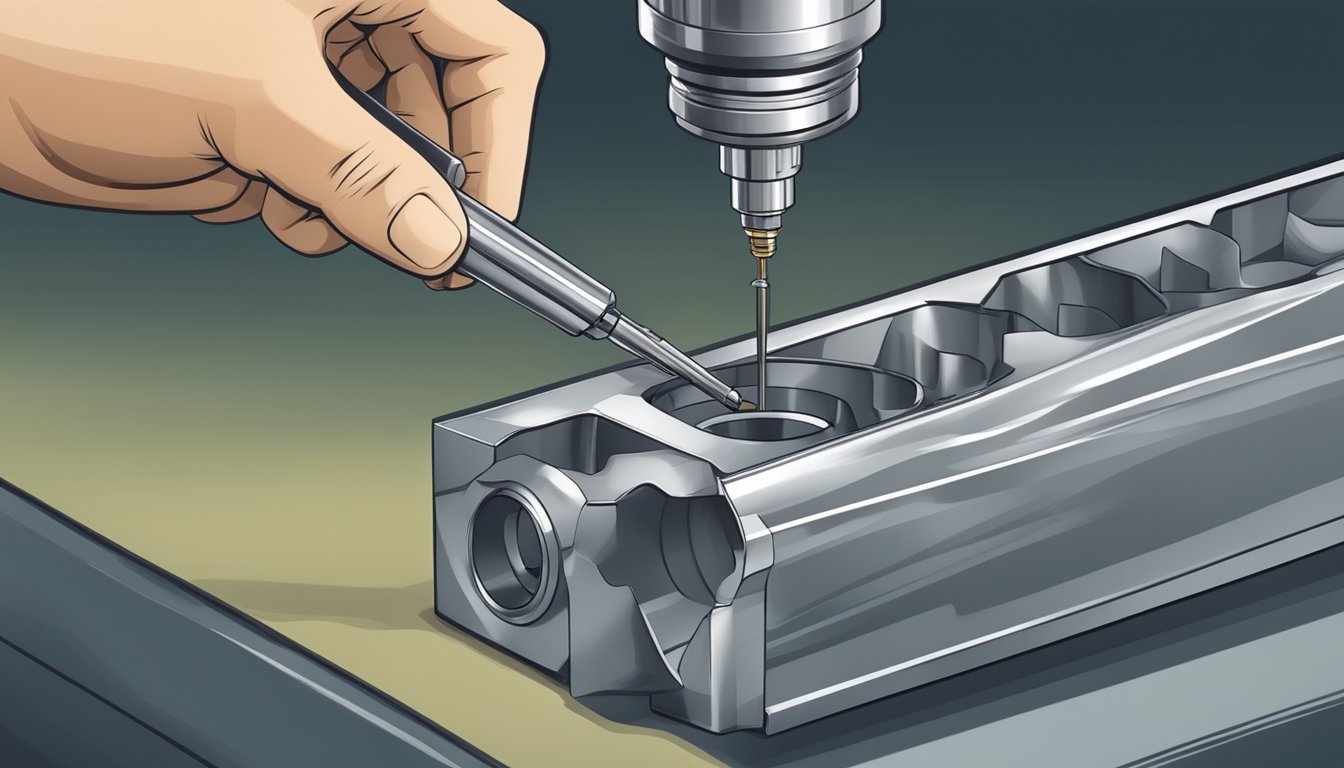
Working with carbide taps in hardened steel presents several challenges that can impact your results. When issues arise, knowing how to identify and solve them quickly keeps your project on track and helps avoid costly mistakes.
Preventing Tap Breakage
Tap breakage is one of the most frustrating problems when working with hardened steel. To prevent this issue, always start with the right tap for the job. Carbide taps specifically designed for hardened materials have the strength needed for these demanding applications.
Key prevention tactics include:
- Use a rigid setup with minimal runout
- Start with a pilot hole about 75-80% of the thread’s major diameter
- Apply cutting fluid specifically formulated for hardened steel
- Reduce cutting speed by 20-30% compared to standard tapping operations
When tapping hardened steel, consider using a spiral point tap for through holes, as they push chips forward. For blind holes, a spiral flute design works better as it pulls chips up and out of the hole.
Warning signs of imminent breakage:
- Sudden increase in torque
- Unusual sounds or vibrations
- Change in chip formation
Managing Chip Evacuation
Poor chip evacuation leads to tool failure and damaged threads. When chips pack into flutes, they create excessive pressure and heat that can destroy your tap and workpiece.
Effective chip management strategies:
- Use high-pressure coolant to flush chips away
- Choose taps with deeper flutes for better chip flow
- Implement peck tapping cycles for deeper holes
- Ensure proper cutting fluid reaches the cutting edge
We’ve found that periodic retraction during tapping helps clear chips in challenging applications. For depths greater than 1.5x diameter, this becomes particularly important.
The right lubricant makes a huge difference. Oil-based cutting fluids with extreme pressure additives work best for hardened steels above 45 HRC.
Solutions for Thread Accuracy Issues
Thread accuracy problems often stem from tool deflection, improper speeds, or worn tools. When your threads don’t gauge properly, check these common causes.
For undersized threads:
- Your tap may be worn
- Material might be springing back after cutting
- The pilot hole could be too small
For oversized threads:
- Excessive tool deflection
- Too much cutting pressure
- Improper alignment
Using a thread ring gauge helps identify issues early. For critical applications, we recommend cutting the thread in two passes—a rough pass followed by a finishing pass.
Tool rigidity is crucial for accuracy. Short taps with thick shanks reduce deflection and improve thread quality in hardened materials.
Extending Tool Life in Extreme Applications
Carbide taps are expensive, so maximizing their life is important for cost efficiency. In extreme applications like tapping materials over 55 HRC, special attention to tool care is essential.
Tips for extending tool life:
- Use TiAlN or AlCrN coatings for enhanced heat resistance
- Implement through-tool coolant systems when possible
- Monitor tool wear and resharpening intervals
- Reduce cutting speed by 10% from recommended values for longer life
Pre-drilling with carbide drills helps reduce the work the tap needs to do. When possible, form tapping (thread forming) rather than cutting can extend tool life by 3-5 times in certain hardened materials.
Many shops overlook proper tool storage. Keep carbide taps in protective cases to prevent edge damage from contact with other tools.
Future Innovations in Carbide Tap Technology
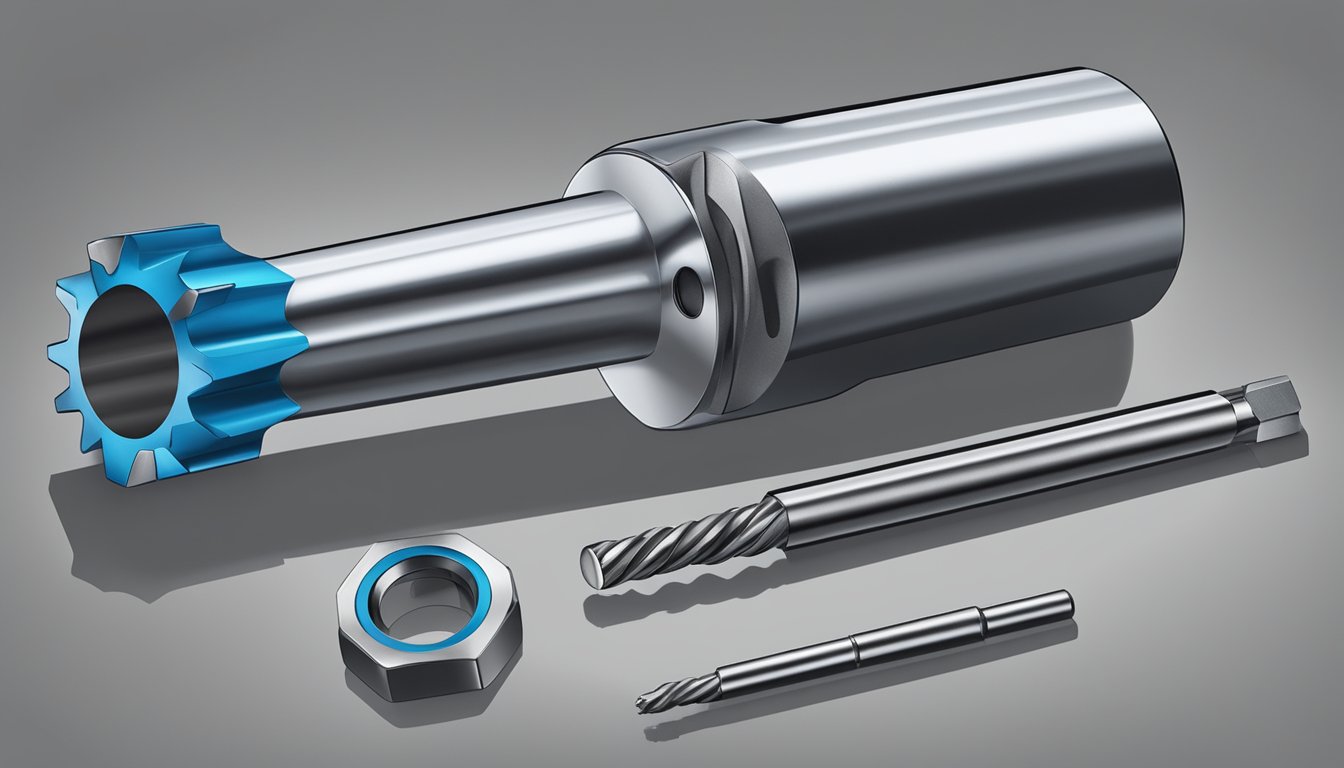
The world of carbide tapping is evolving rapidly with exciting developments on the horizon. These innovations promise to make tapping hardened steel more efficient, cost-effective, and precise than ever before.
Emerging Coatings and Materials
The next generation of carbide taps will feature revolutionary coatings that reduce friction and heat. We’re seeing promising research in nano-composite coatings that combine multiple materials at the microscopic level, creating surfaces with unprecedented hardness and wear resistance.
HiPMS (High Power Impulse Magnetron Sputtering) technology, already used by manufacturers like Walter, is being refined to create even smoother surface finishes. This means better thread quality and longer tool life.
New carbide formulations are also in development, with manufacturers experimenting with:
- Ultrafine grain carbides (grain size under 0.5 μm)
- Gradient carbides with varying compositions from core to surface
- Carbon nanotube reinforced matrices for improved strength
These materials show promise for maintaining sharp cutting edges even when working with steel hardened to 65+ HRC.
Advancements in Design and Manufacturing
3D modeling and simulation software is revolutionizing tap design. Engineers can now test virtual prototypes against specific materials, predicting wear patterns and optimizing geometries before physical production.
We’re seeing innovative flute designs that improve chip evacuation, a critical factor when tapping hardened materials. Some manufacturers are testing:
- Variable helix angles within the same tap
- Asymmetrical cutting edges for reduced torque
- Micro-textured surfaces to control chip flow
Advanced manufacturing methods like additive metal printing are opening new possibilities for creating internal cooling channels and complex geometries that were previously impossible to produce.
Industry Trends to Watch
Automation and smart tooling are transforming how taps are used in production. Sensors embedded in tooling systems can now:
- Monitor torque in real-time
- Detect tool wear before failure
- Adjust cutting parameters automatically
The integration of carbide taps with CNC systems is becoming more sophisticated, with adaptive control systems that can respond to material variations during the tapping process.
We’re also seeing a sustainability focus, with manufacturers developing recycling programs for used carbide tools. This addresses both environmental concerns and the rising costs of cobalt and tungsten raw materials.
Digital twins of tapping operations allow for virtual optimization and predictive maintenance, reducing downtime and extending tool life in hardened steel applications.
Conclusion: Maximizing Your Investment in Carbide Taps

Investing in carbide taps for hardened steel can significantly boost your productivity and reduce overall machining costs. The key is knowing how to get the most value from these premium tools.
Maintenance Best Practices
Proper care of your carbide taps will extend their life and maintain cutting performance. Always clean your taps after use to remove chips and cutting fluids that could cause corrosion. We recommend using compressed air or a soft brush for cleaning.
Store your carbide taps in protective cases or sleeves to prevent accidental damage to the cutting edges. Even small chips can affect thread quality and tap performance.
Regular inspection is crucial. Check for signs of wear or damage before each use. Look for:
- Dulled cutting edges
- Chipped teeth
- Buildup on flutes
For taps used in production environments, establish a rotation schedule. This distributes wear evenly across your tool inventory and helps you track usage patterns.
Summary of Key Selection Criteria
When selecting carbide taps for hardened steel, focus on matching the tool to your specific application. Material compatibility is paramount – ensure the carbide grade is appropriate for the hardness of your workpiece.
Consider these factors:
- Workpiece hardness range (typically 35-65 HRC)
- Thread specifications (pitch, thread count, thread form)
- Cutting conditions (dry or with coolant)
- Production volume requirements
Coatings play a vital role in extending tap life. TiN, TiCN, and AlTiN coatings each offer benefits for different applications. We’ve found that AlTiN coatings often perform best in high-temperature hardened steel applications.
For challenging materials over 45 HRC, thread form becomes especially important. Specialized thread forms can reduce torque requirements and improve chip evacuation.
ROI Considerations and Justification
The higher initial cost of carbide taps is justified by their superior performance. Let’s break down the math: a carbide tap might cost 3-5 times more than an HSS tap but can last 10-15 times longer in hardened materials.
Reduced downtime is where the real savings happen. Fewer tool changes mean more production time. In our experience, this can increase throughput by 15-30% in high-volume operations.
Calculate your ROI by factoring in:
- Initial tool cost
- Tool life (number of holes)
- Machine hourly rate
- Operator wages
- Production rates
For small batch production, consider the flexibility of carbide taps for multiple materials. You might tap aluminum parts one day and hardened steel the next with the same tool.
Remember that proper speeds and feeds are essential for maximizing tool life. Following manufacturer recommendations will ensure you’re getting the best possible return on your investment.


