

A spot drill is a specialized cutting tool that plays a crucial role in metalworking and manufacturing. These short, sturdy tools create precise starting points for larger drill bits by making small dimples or indentations in the workpiece surface, which helps prevent drill bits from wandering off course during drilling operations.

Want better accuracy and longer tool life in your drilling projects? A spot drill makes it possible. This handy tool creates a pilot hole that guides larger drill bits exactly where they need to go, reducing the risk of damaged parts and broken tools. When used correctly, the spot drill diameter should be about 70% of the final hole size.
Many industries rely on spot drills daily, from automotive manufacturing to general machining work. These tools come in different angles to match various drill bit types, with 120 degrees being common for general-purpose jobs. They can even do double duty as chamfering tools when needed, making them versatile additions to any machinist’s toolkit.
Understanding Spot Drills
Spot drills play a crucial role in creating precise starting points for drilling operations. These specialized tools prevent drill wandering and ensure accurate hole placement in metalworking and woodworking applications.
Definition and Basic Concept
A spot drill is a specialized cutting tool that creates shallow indentations called “spots” on workpiece surfaces. These spots guide larger drill bits to the exact drilling location.
The process starts with marking the drilling point. The spot drill then creates a conical depression with a specific angle, typically between 90 and 120 degrees.
Think of spot drills as making a tiny pilot hole that helps bigger drills stay on track. They’re like putting an “X marks the spot” directly into the metal.
Key Components and Characteristics
Spot drills feature several distinct parts:
- Point angle: Usually matches the larger drill bit’s angle
- Flutes: Help remove material and provide cutting edges
- Shank: Fits into the machine spindle
- Cutting edges: Create the initial depression
Typical sizes range from:
- Diameter: 1/8″ to 1″
- Length: 2″ to 6″
The tool’s rigidity and precision-ground surfaces ensure accurate spotting every time.
How Spot Drills Differ from Other Drilling Tools
Spot drills are not the same as center drills or standard twist drills. Here’s what makes them unique:
- Spot drills: Single-angle point, more rigid design
- Center drills: Double-angle point, mainly for lathe centers
- Twist drills: Longer flutes, designed for deep holes
Spot drills create wider, more stable starting points compared to center drills. They’re shorter and stronger than regular twist drills.
Common Misconceptions and Myths
Many people confuse spot drills with center drills. They serve different purposes. Spot drills focus on creating starting points for holes, while center drills make holes for lathe centers.
Some think any drill can start a hole. Without spot drilling, regular drills often wander off-center.
The spot drill diameter should be about 70% of the final hole size. Using too small a spot drill can lead to inaccurate holes.
A common mistake is skipping the spot drilling step to save time. This often results in poor hole quality and damaged tools.
The Critical Role of Spot Drills in Manufacturing
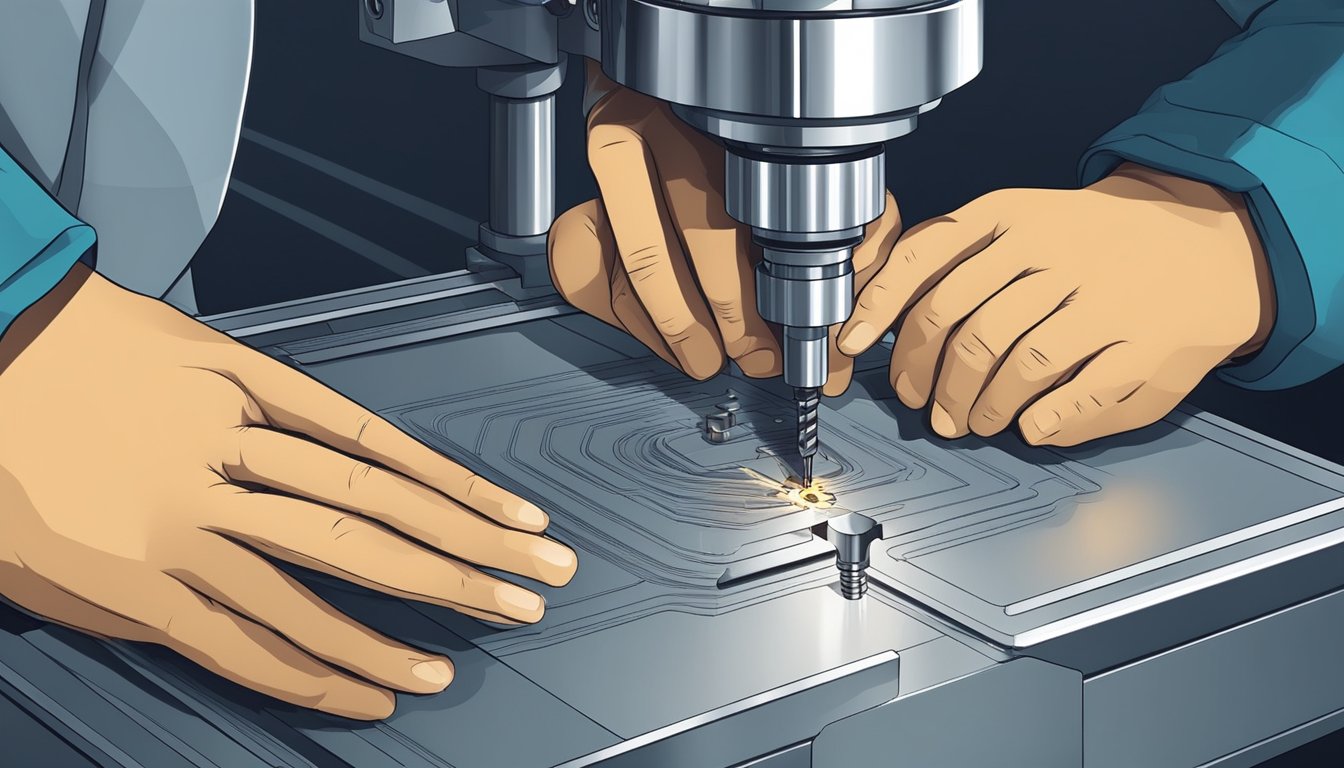
Spot drills serve as essential tools in modern manufacturing, creating precise starting points for drilling operations while improving accuracy and efficiency. These specialized tools help achieve consistent hole placement and superior surface finishes across multiple industries.
Why Spot Drilling Is Essential for Precision Work
A spot drill creates a small conical depression that guides larger drill bits to their exact target. This initial guide point prevents drill bits from “walking” or wandering across the workpiece surface.
The typical spot drill produces a 90-degree angle depression, offering optimal guidance for standard twist drills. This angle helps center the following drill bit perfectly.
Engineers and machinists rely on spot drills to achieve tolerances as tight as 0.001 inches. Without proper spot drilling, even expensive precision machinery can produce misaligned holes.
Key Benefits for Precision:
- Creates perfect starting points
- Prevents drill bit wandering
- Improves hole concentricity
- Extends tool life
Key Benefits and Advantages
Spot drills significantly boost manufacturing efficiency and quality. They reduce drill bit breakage by up to 70% compared to drilling without spot marks.
The proper use of spot drills leads to:
- Better surface finish quality
- More accurate hole placement
- Longer tool life
- Reduced manufacturing costs
Manufacturing teams see improved consistency across production runs. A single spot drill can mark hundreds of precise starting points before requiring replacement.
These tools work especially well with automated systems. CNC machines can maintain ultra-precise hole placement when starting with properly spot-drilled marks.
Cost Implications and ROI
Initial investment in quality spot drills pays off through reduced waste and rework. A single broken drill bit can cost more than an entire spot drill.
Cost Savings Areas:
- Fewer broken tools
- Less material waste
- Reduced machine downtime
- Lower labor costs for rework
Most manufacturing operations see full ROI within 3-6 months of implementing proper spot drilling procedures. The improved accuracy leads to higher quality products and fewer customer returns.
Tool life increases by 25-40% when operators use spot drills correctly. This extended lifespan applies to both the spot drills and subsequent drilling tools.
Types of Spot Drills: Making the Right Choice

Spot drills come in different materials and coatings, each designed for specific applications and materials. The right choice depends on factors like workpiece material, cutting speed, and required precision.
High-Speed Steel (HSS) Spot Drills
HSS spot drills offer good performance at an affordable price. These tools work well for general-purpose applications in softer materials like aluminum and mild steel.
The cutting speed range is 30-100 surface feet per minute (SFM), making them suitable for low to medium-speed operations.
Key benefits of HSS spot drills:
- Cost-effective option for basic applications
- Good wear resistance at moderate speeds
- Easy to resharpen when needed
- Ideal for hobby and light industrial use
Carbide Spot Drills
Carbide spot drills deliver superior hardness and wear resistance. They maintain sharp cutting edges longer than HSS tools.
These drills operate at speeds up to 500 SFM in most materials. The rigid carbide construction reduces deflection during cutting.
Best uses for carbide spot drills:
- High-volume production
- Hard materials like stainless steel
- Applications requiring tight tolerances
- Extended tool life needs
Cobalt Spot Drills
Cobalt spot drills contain 5-8% cobalt mixed with HSS. This blend creates better heat resistance than standard HSS.
These tools excel in cutting tough materials like titanium and Inconel. The cobalt content helps maintain hardness at higher temperatures.
Applications include:
- Heat-resistant superalloys
- Aerospace materials
- Heavy-duty machining
- Medium to high-speed cutting
Titanium-Coated Spot Drills
Titanium nitride (TiN) coating adds durability to HSS or carbide base materials. The gold-colored coating reduces friction and heat.
The coating extends tool life up to 3 times compared to uncoated drills. Surface speeds can increase 20-30% with TiN coating.
Benefits of TiN coating:
- Improved wear resistance
- Higher cutting speeds possible
- Better chip evacuation
- Reduced built-up edge
Diamond-Coated Spot Drills
Diamond coating provides exceptional wear resistance for non-ferrous materials. These specialized tools excel in abrasive materials like graphite and composites.
The coating thickness ranges from 8-12 microns. Diamond-coated drills can last up to 10 times longer than uncoated tools in the right applications.
Selection Criteria and Considerations
Material compatibility ranks as the primary selection factor. Match the spot drill material to the workpiece properties.
Speed requirements affect tool choice. Higher speeds need more heat-resistant materials and coatings.
Required tool life influences cost decisions. Premium materials cost more but last longer.
Key selection factors:
- Workpiece material
- Production volume
- Speed requirements
- Tolerance needs
- Budget constraints
- Machine capabilities
Best Practices for Spot Drill Usage

Proper spot drilling technique requires attention to detail and careful consideration of equipment setup, speeds, angles, and maintenance. Following established best practices helps achieve accurate hole placement and extends tool life.
Proper Setup and Preparation
Always secure your workpiece firmly in a vise or with proper clamping. Clean the work surface thoroughly before marking hole locations.
Use a collet chuck instead of a standard drill chuck for better accuracy and less runout. This gives more precise control over the spot drilling operation.
Check your equipment alignment:
- Ensure spindle is perpendicular to work surface
- Verify machining center is properly calibrated
- Mark hole centers clearly with a center punch
Speed and Feed Recommendations
The right speed and feed rates prevent tool wear and ensure clean spots:
Recommended Speeds by Material
- Aluminum: 2000-2500 RPM
- Mild Steel: 1000-1500 RPM
- Stainless Steel: 750-1000 RPM
Feed rates should be steady and controlled. Start slow and increase gradually until reaching optimal cutting speed.
Let the tool do the work – avoid excessive pressure that can damage the cutting edges.
Angle Selection Guidelines
Match your spot drill angle to your twist drill’s point angle for best results. Common angles include:
- 90° for general purpose work
- 120° for harder materials
- 60° for shallow spots
The spot drill diameter should be about 70% of the final hole size. This creates an ideal pilot indent without oversized chamfers.
Common Mistakes to Avoid
Don’t skip spot drilling on precision holes – it’s essential for accuracy.
Watch for these issues:
- Using dull or damaged tools
- Incorrect speed/feed combinations
- Mismatched angles between spot and twist drills
- Insufficient clamping force
- Dirty work surfaces
Running spot drills at too high speeds can cause premature wear and poor hole quality.
Maintenance and Care Tips
Clean spot drills after each use with solvent to remove chips and cutting fluid residue.
Store tools properly:
- Keep in protective holders
- Avoid contact with other tools
- Maintain dry storage conditions
Inspect cutting edges regularly for wear or damage. Replace tools when they show signs of dulling or chipping.
Sharpen spot drills only with proper equipment and technique. Consider professional sharpening services for critical tools.
Industry-Specific Applications
Spot drills play key roles across many industrial sectors, providing essential starting points for precision holes and helping maintain tight tolerances in critical manufacturing processes. Their specialized designs meet unique challenges in each field.
Aerospace Manufacturing Requirements

Aerospace components demand exceptional accuracy in hole placement and preparation. Spot drills create precise pilot holes for critical aircraft parts like wing components and fuselage sections.
The typical tolerance in aerospace spot drilling is ±0.001 inches. This precision helps ensure proper assembly of safety-critical components.
Key aerospace applications include:
- Engine mount points
- Landing gear attachments
- Structural frame components
- Control system housings
Automotive Industry Standards
Auto manufacturers rely on spot drills for consistent hole preparation across thousands of parts. These tools help create accurate starting points for engine blocks, chassis components, and brake systems.
Common automotive uses:
- Engine block preparation
- Transmission housing holes
- Suspension mounting points
- Brake caliper assemblies
The automotive sector typically uses 90° and 120° spot drills to match standard drilling angles used in production.
General Machining Applications
Machine shops use spot drills daily for various metalworking tasks. They’re essential for both manual and CNC operations.
Popular general applications:
- Flat workpiece preparation
- Uneven surface drilling
- Guide hole creation
- Chamfering operations
Spot drills work well on both mills and lathes. They help machinists maintain accuracy across different materials and hole sizes.
Electronics and Precision Components
The electronics industry needs extremely precise holes for circuit boards and device housings. Spot drills as small as 1mm diameter help create accurate starting points.
Key electronics applications:
- PCB mounting holes
- Connector housings
- Heat sink attachments
- Device enclosures
Spot drills for electronics often use special coatings to prevent static buildup during use.
Heavy Industry Usage
Heavy industrial applications require robust spot drills for large-scale projects. These tools often work with thick materials and challenging conditions.
Common heavy industry uses:
- Steel beam preparation
- Pipeline fabrication
- Mining equipment repair
- Construction equipment manufacturing
Special coating options like TiN help extend tool life in demanding industrial environments.
Troubleshooting and Optimization
Successful spot drilling requires attention to common issues and regular maintenance practices to achieve optimal results. Proper tool selection, setup, and monitoring help prevent problems before they occur.
Common Challenges and Solutions
Drill walking is a frequent issue that causes misaligned holes. The fix involves using the correct spot drill diameter – about 70% of the final drill size. This creates a proper starting point for the main drill.
Common problems and fixes:
- Oversized holes: Check alignment and reduce feed rate
- Poor surface finish: Clean debris regularly and verify coolant flow
- Excessive vibration: Ensure secure workpiece clamping
- Alignment issues: Use a pilot hole for longer drills
Performance Optimization Techniques
Selecting the right cutting parameters makes a big difference in spot drilling success. Speed and feed rates need to match the material being worked.
Recommended practices:
- Start with slower speeds for harder materials
- Use proper coolant concentration and flow
- Clean the work area between operations
- Check tool runout before starting
Quality Control Measures

Regular inspection helps maintain high-quality spot drilling results. Measure hole diameter and depth frequently during production runs.
Key inspection points:
- Hole diameter tolerance
- Surface finish quality
- Spot depth consistency
- Tool wear patterns
Keep detailed records of measurements to track trends and identify potential issues early.
Tool Life Maximization Strategies
Good tool care extends spot drill life and reduces costs. Regular maintenance and proper usage help prevent premature wear.
Tool life tips:
- Clean tools after each use
- Store in protective cases
- Rotate tools to distribute wear
- Replace tools at first signs of dulling
Monitor cutting edges for chips or wear. Sharp tools produce better results and last longer.
Advanced Considerations
Modern spot drilling requires careful attention to technological integration and automation. The latest developments focus on precision, efficiency, and smart manufacturing capabilities.
Integration with CNC Systems
CNC systems transform spot drilling through digital accuracy and programmed consistency. The software calculates optimal feed rates and spindle speeds based on material properties.
Smart tool management systems track spot drill wear and predict maintenance needs. This prevents unexpected failures during critical operations.
Integration features include:
- Automatic tool changes
- Real-time position monitoring
- Digital depth control
- Precision alignment verification
Modern Innovations in Spot Drill Technology
New coating technologies extend spot drill life by 40% compared to uncoated tools. Diamond-like carbon (DLC) coatings reduce friction and heat buildup during operation.
Advanced materials like carbide composites improve durability and cutting performance. These materials maintain sharper edges for longer periods.
Smart sensors embedded in tool holders measure:
- Cutting forces
- Temperature
- Vibration levels
- Tool deflection
Automation Considerations
Robotic tool changers speed up spot drilling operations by 25%. Vision systems ensure precise positioning and alignment.
Automated spot drilling cells can run unattended for hours. Built-in quality checks verify hole depth and position accuracy.
Key automation features:
- Tool wear compensation
- Adaptive feed control
- Error detection
- Auto-recovery routines
Future Trends and Developments
AI-powered systems optimize spot drilling parameters in real-time. Machine learning algorithms predict tool life and suggest maintenance schedules.
Connected spot drilling systems share data across factory networks. This enables better process control and quality tracking.
New developments include:
- Smart tool holders
- Augmented reality guidance
- Cloud-based monitoring
- Predictive maintenance
IoT sensors track spot drill performance metrics. This data helps improve efficiency and reduce downtime.
Buying Guide

Choosing the right spot drill requires careful consideration of several key aspects like diameter size, point angle, and material quality. The right tool will enhance drilling precision while saving time and money.
Key Factors to Consider
The spot drill diameter should be about 70% of your final drill size. This ensures proper guidance without creating oversized pilot holes.
Point angle is crucial – match it to your drill bit’s angle to prevent damage. Common angles are 82° and 90°.
Tool material matters too. High-speed steel (HSS) works well for basic jobs, while carbide-tipped drills last longer for heavy use.
Important specifications to check:
- Shank diameter
- Point angle
- Overall length
- Flute design
- Surface coating
Cost-Benefit Analysis
Entry-level HSS spot drills start at $15-30, while premium carbide options range from $50-150.
The investment pays off through:
- Reduced drill bit breakage
- More accurate holes
- Faster drilling operations
- Extended tool life
A quality spot drill can last 6-12 months with regular use. Lower-quality tools might need replacement every 2-3 months.
Recommended Manufacturers
Top spot drill manufacturers include:
- Kennametal: Known for precision and durability
- OSG: Excellent for high-speed applications
- Mitsubishi Materials: Superior coating technology
- Sandvik Coromant: High-end performance tools
Each brand offers different price points and specialized features.
Quality Indicators
Look for these signs of a good spot drill:
- Even grinding marks
- Sharp cutting edges
- Consistent coating
- Clear markings
Check the tool’s runout tolerance – it should be within 0.002 inches.
Surface finish quality affects performance. A smooth, polished surface reduces friction and heat.
Warranty and Support Considerations
Most manufacturers offer 30-90 day warranties against defects.
Premium brands provide technical support and replacement services.
Keep warranty documentation and purchase receipts. Many companies require proof of purchase for claims.
Read return policies carefully. Some sellers only accept unopened tools.


